Author name: Xsis Valves

How Does a Ball Valve Work: Simple Explanation with Diagram
Blog

How Does a Ball Valve Work: Simple Explanation with Diagram

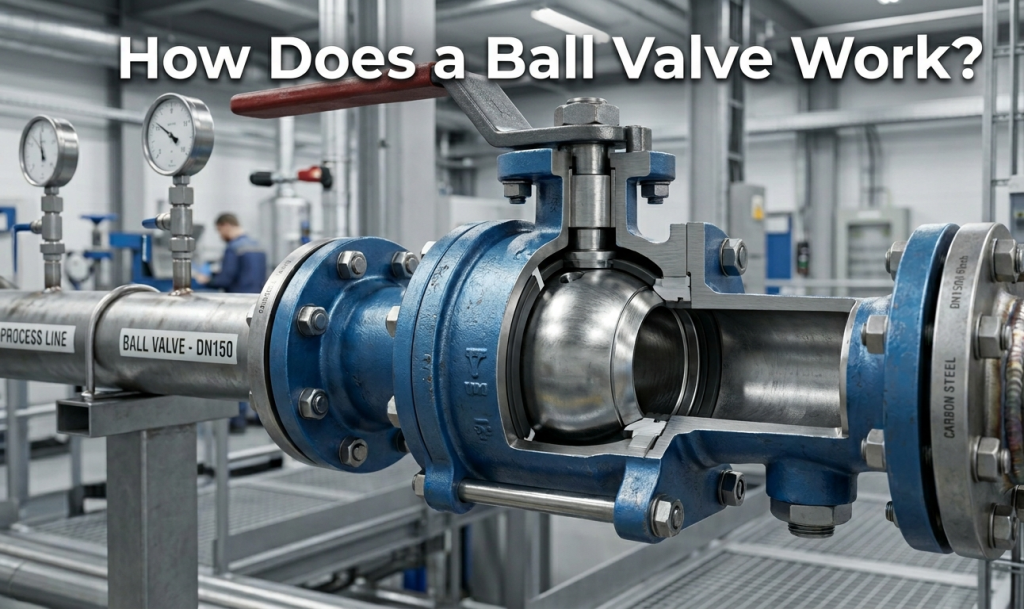
Understanding how a ball valve paints is critical for engineers and business specialists. Many clients find ball valves smooth in layout but war to apprehend their specific operation and alertness. The hassle arises at the same time as mistaken choice or misconception of the valve’s characteristic effects in tool inefficiency, leakage, or unexpected downtime. A lack of readability can cause high priced safety or operational delays. This manual explains how a ball valve works in easy phrases, observed with the aid of diagrams for clarity. It moreover covers sorts, packages, and protection guidelines, supplying information for pipeline system customers. What is a Ball Valve? A ball valve is a shape of enterprise valve that controls fluid drift the use of a spherical disc or ball. The ball has a hollow via its middle. When aligned with the pipeline, fluid flows freely, and while it grows to emerge as, the drift stops simply. Ball valves are broadly used in pipelines, chemical industries, and water treatment flora because of their clean layout and immoderate reliability. They provide tight sealing and require minimal upkeep. These valves are nicely applicable with Automatic valves, Gate valves, and Butterfly valves for entire waft manipulation. Their operation ensures steady and inexperienced system normal overall performance. Components of a Ball Valve Understanding the additives facilitates the cause of how ball valve paintings. The key additives embody: These additives art work collectively to achieve particular go with the float manage and reliable sealing. Working Principle of a Ball Valve The operation explains how ball valve art works in sensible systems. Ball valves may be guided or automatic, integrated with Automatic valves for precise manipulation in big industrial structures. Types of Ball Valves There are several varieties of ball valves that help offer an motive behind how does a ball valve paintings in a unmarried-of-a-type packages: Each type adapts to unique pipeline necessities and operational situations. Advantages of Ball Valves Ball valves offer multiple advantages, which give an explanation for their reputation in commercial corporation structures. Understanding those facilitates clarify how does a ball valve paintings in practical phrases: These advantages make ball valves a reliable preference for pipelines in oil, gas, chemical, and water industries. Applications of Ball Valves Understanding how a ball valve artwork requires exploring its applications. Ball valves are bendy and extensively used at some stage in industries: Their adaptability makes ball valves vital for hundreds of business techniques. Installation and Maintenance Proper set up guarantees top-high-quality overall performance and explains how a ball valve paints reliably. Maintenance practices make certain sturdiness and prevent operational disasters. Common Issues with Ball Valves Even with easy operation, know-how how does a ball valve paintings consists of data potential issues: These issues ensure secure and inexperienced operation in enterprise pipelines. Diagram of Ball Valve Operation Ball Valve vs Other Valves Comparing how does a ball valve paintings with one-of-a-kind valves clarifies its unique benefits: Understanding those comparisons allows picking the proper valve for every pipeline device. Conclusion Understanding how a ball valve paints is crucial for business and pipeline device ordinary overall performance. Its easy layout ensures short operation, tight sealing, and lengthy durability. Ball valves are flexible, properly matched with Automatic valves, Gate valves, Globe valves, and Check valve systems. They are used during oil, water, chemical, and HVAC industries. Proper set up, inspection, and protection enhance overall overall performance and reliability. By informing the operation and advantages of ball valves, customers should make knowledgeable selections for his or her pipeline structures. FAQs
Difference Between Check Valve and Non Return Valve
Blog

Difference Between Check Valve and Non Return Valve

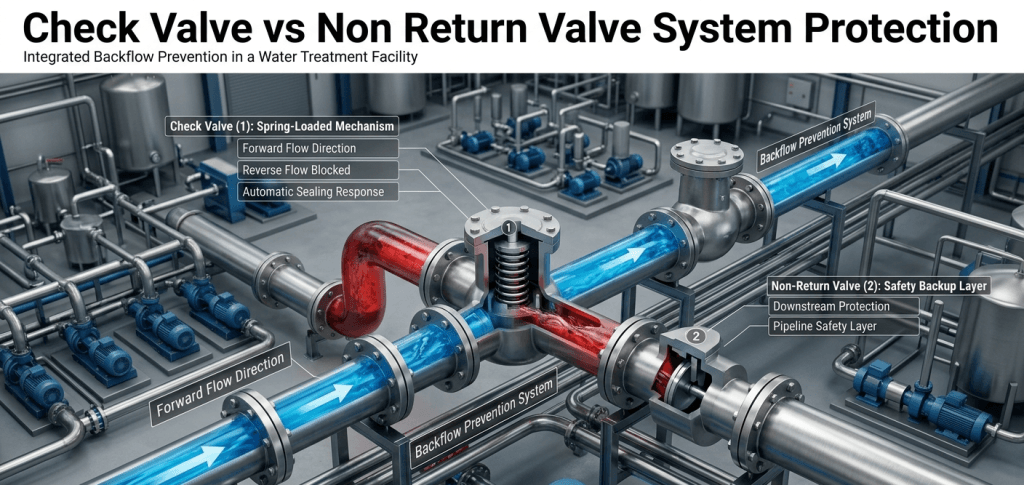
Selecting the proper valve on your pipeline system may be hard for masses of engineers and clients. The distinction between taking a look at valve and non return valve often creates uncertainty sooner or later of device format and selection. Many specialists assume every are identical, which results in confusion. This misconception can cause immoderate issues in pipeline systems. Incorrect valve selection can also bring about backflow, gadget damage, and multiplied renovation expenses. These troubles can lessen overall performance and have an impact on extended-term ordinary performance. This guide explains the distinction amongst test valve and non move once more valve in an easy and realistic way. You will understand their strolling concepts, versions, and applications. By the stop, you will hopefully pick the proper valve in your gadget. Difference Between Check Valve and Non Return Valve: Basic Understanding The distinction amongst test valve and non move back valve begins with their smooth function. Both valves are used to save you opposite go with the flow in pipelines. They are essential enterprise valves in several industries. A Check valve permits fluid to flow in a single route and automatically blocks reverse go together with the waft. It operates without guide manipulation, making it distinctly inexperienced in pipeline systems. A Non return valve plays the identical function of stopping backflow. In many instances, miles are simply some different time period used for a check valve. However, mild versions may additionally exist based totally on format and alertness. Understanding this subtle distinction allows us to keep away from confusion. It additionally guarantees proper valve preference for unique business requirements. How Check Valves Work in Pipeline Systems? Check valves perform routinely based totally definitely totally on fluid stress and float route. They do not now require manual operation or outside manipulate structures. This makes them dependable and green in numerous programs. When fluid flows inside the right path, the valve opens and permits smooth passage. When glide reverses, the valve closes straight away to save you backflow. This protects the device and continues system stability. Check valves are widely used with Automatic valves and Butterfly valves in industrial enterprise structures. They additionally complement Gate valves and Globe valves for complete glide control answers. How Non Return Valves Function in Industrial Applications? Non return valves function similarly to test valves but may additionally range in layout and naming conventions. The distinction among check valve and non go back valve often lies in terminology in desire to functionality. These valves prevent opposite glide with the useful resource of using last routinely even as waft direction changes. Their operation guarantees device safety and forestalls harm to pumps and gadgets. Non circulation once more valves are regularly used with Non return valve systems and Strainer valve setups. This mixture ensures clean waft and prevents particles from affecting performance. Their clean layout makes them smooth to install and keep in diverse pipeline systems. Key Differences: Difference Between Check Valve and Non Return Valve Understanding the distinction among test valve and non go returned valve permits in deciding on the proper opportunity for precise packages. Although comparable, subtle variations exist in utilization and layout. Terminology and Usage Design Variations Application Context Advantages of Check Valves Check valves provide several advantages in enterprise systems. The distinction amongst check valve and non pass again valve evaluation highlights their significance. Advantages of Non Return Valves Non go back valves offer comparable benefits with moderate variations in usage. In the distinction among check valve and non cross returned valve assessment, they’re similarly treasured. When to Use Check Valves? Choosing among each is based upon device necessities. The difference between taking a look at the valve and non cross lower back valve allows determining the right desire. Check valves are great for structures requiring computerized backflow prevention. They are extensively applied in pump systems and commercial enterprise pipelines. They also are suitable for programs wanting immoderate reliability and minimum upkeep. Their format ensures normal overall ordinary performance in worrying situations. When to Use Non Return Valves? Non go back valves are suitable for comparable applications with slight versions in naming and specification. The difference amongst take a look at valve and non pass lower back valve regularly relies upon on business enterprise terminology. They are typically carried out in water supply systems and occasional-stress applications. Their easy layout makes them easy to mix into existing systems. Non go lower back valves also are desired in duties wherein terminology varies by using the use of vicinity or specification necessities. Role of Other Valves in Industrial Systems Industrial structures rely on a couple of valve kinds for efficient operation. The difference between taking a look at the valve and non return valve is part of a bigger valve surroundings. Valves like Butterfly valves and Gate valves control flow in pipelines. Globe valves provide specific law in essential systems. You can discover extra valve answers on Xsis Valves. For company standards, go to https://www.Asme.Org for targeted pointers and first rate practices. Difference Between Check Valve and Non Return Valve: Final Thoughts The difference amongst test valve and non return valve is frequently minimum in phrases of capability. Both serve the same motive of preventing opposite flow in pipelines. The primary difference lies in terminology and slight variations in format or software program. Understanding this facilitates making better selections in some unspecified time in the future of valve preference. Both valves are important for keeping device performance and safety. Choosing the proper one relies upon your specific necessities and employer necessities. Conclusion Understanding the difference between taking a look at a valve and a non go back valve is critical for green pipeline layout. Both valves play an essential feature in stopping backflow and protecting devices. While their functionality is similar, their naming and alertness also can vary for the duration of industries. This difference is important while selecting valves for precise responsibilities. By comparing your machine desires carefully, you could pick the proper valve with self

Globe vs Ball vs Gate Valve: Complete Comparison
Blog

Globe vs Ball vs Gate Valve: Complete Comparison

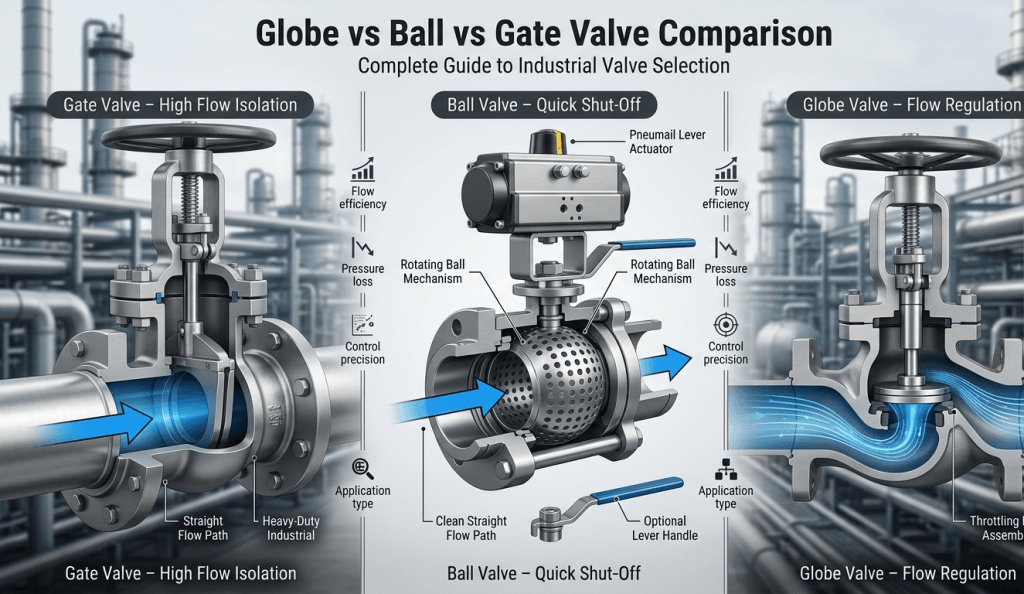
Choosing the proper valve to your commercial device can feel overwhelming and complicated. Many engineers warn when comparing Gate valve vs Globe valve at the side of ball valves. The variations are not continuously apparent, in particular for complex pipeline structures. The problem will become vital whilst the wrong valve impacts performance and will boost renovation charges. Poor choice can cause strain loss, leakage, and decreased device not unusual overall performance. These issues can impact productiveness and prolonged-term reliability. This complete guide on Gate valve vs Globe valve and ball valves will simplify your choice-making approach. You will examine key differences, operating mind, and fine applications. By the end, you can with any luck choose the top notch valve on your dreams. Gate Valve vs Globe Valve: Understanding Core Valve Types The assessment of Gate valve vs Globe valve begins off evolving with information on how those valves are characteristic. Along with ball valves, they’re vital commercial valves used throughout industries. Each valve type serves a selected cause in go with the waft control systems. Gate valves are designed for whole go with the go with the flow or whole near-off programs. They use a sliding gate mechanism that lets in fluid to skip freely. This layout guarantees minimum resistance at the same time as in reality open. Globe valves are built for particular go with the flow law and throttling applications. They use a movable disc and seat association to control the flow. This makes them perfect for structures requiring accuracy. Ball valves use a rotating ball to control the flow with superb sealing simple usual overall performance. They are appreciably utilized in excessive-pressure systems. Their layout ensures reliable close to-off and minimal leakage. How Gate Valves Work in Pipeline Systems Gate valves function the usage of a vertical gate that moves up and down inside the valve body. When raised, the gate lets in fluid to float without restriction. When faded, it absolutely blocks the go together with the waft route. These valves are excellent for packages in which wafts need to be either virtually open or closed. They are not appropriate for throttling due to functionality harm to the gate. Their format ensures low pressure drop in open function. Gate valves are usually used with Gate valves and Automatic valves for higher tool manipulation. They also are paired with Forged Steel gate valve systems in excessive-strain environments. How Globe Valves Function in Flow Regulation? Globe valves are designed to adjust fluid drift with excessive precision and reliability. They use a disc that moves perpendicular to the seat. This allows slow adjustment of float rate. When the valve operates, the disc moves nearer or similarly from the seat. These modifications go along with the glide vicinity and control the fluid motion. This layout is right for throttling packages. Globe valves are often used with Globe valves and Check valve structures. This combination guarantees managed float and stops backflow troubles in pipelines. How Ball Valves Work in Industrial Systems? Ball valves use a rotating ball with a hole to govern fluid flow efficiently. When aligned, the hollow permits fluid to skip via. When it grows to become round, the flow is completely blocked. This layout offers top notch sealing and minimum leakage. Ball valves are extensively applied in oil, fuel, and chemical industries. They are appropriate for immoderate-pressure and excessive-temperature environments. Ball valves are often covered with Non return valve systems for advanced safety. They also are used along Butterfly valves in complicated pipeline networks. Key Differences: Gate Valve vs Globe Valve vs Ball Valve Understanding variations among the ones valves permits in making the right selection. The assessment of Gate valve vs Globe valve at the aspect of ball valves highlights key factors. Flow Control Capability Pressure Drop Sealing Performance Cost and Maintenance Advantages of Gate Valves Gate valves offer several blessings in commercial applications. The Gate valve vs Globe valve assessment highlights their strengths in fact. Advantages of Globe Valves Globe valves are desired for particular glide control in enterprise structures. In the Gate valve vs Globe valve evaluation, they excel in regulation. Advantages of Ball Valves Ball valves provide stability amongst general overall performance and reliability in business structures. The Gate valve vs Globe valve evaluation will become clearer with their inclusion. When to Choose Each Valve Type? Choosing between Gate valve vs Globe valve and ball valves relies upon device requirements. Each valve type suits precise packages. Choose gate valves for systems requiring whole go along with the glide with minimal resistance. They are ideal for large pipelines and water distribution systems. Choose globe valves for programs requiring specific float manipulation and throttling. They are suitable for commercial techniques looking for accuracy. Choose ball valves for structures requiring tight sealing and brief close to-off. They are perfect for excessive-stress and perilous environments. Role of Other Valves in Industrial Systems Industrial systems depend on a couple of valve sorts running collectively. The Gate valve vs Globe valve assessment is part of a broader tool design. Valves like Check valve and Non cross back valve prevent backflow and guard tools. They ensure secure and inexperienced pipeline operation. You can find out more valve answers on xsisvalves.Com. For organization standards, visit https://www.Asme.Org for wonderful guidelines and first-class practices. Gate Valve vs Globe Valve: Final Comparison The very last choice in Gate valve vs Globe valve relies upon application desires and machine situations. Both valves provide particular benefits for outstanding use of. Gate valves are nice for complete drift applications with low resistance. Globe valves are nice for particular management and law duties. Ball valves offer robust sealing and quick operation in annoying environments. Understanding those variations lets in in making the proper desire. Conclusion The evaluation of Gate valve vs Globe valve along aspect ball valves is essential for choosing the right valve. Each valve type serves a selected reason in business systems. Understanding their differences ensures better universal overall performance and overall performance. Gate valves are

Gate Valve vs Globe Valve - Key Differences Explained
Blog

Gate Valve vs Globe Valve – Key Differences Explained

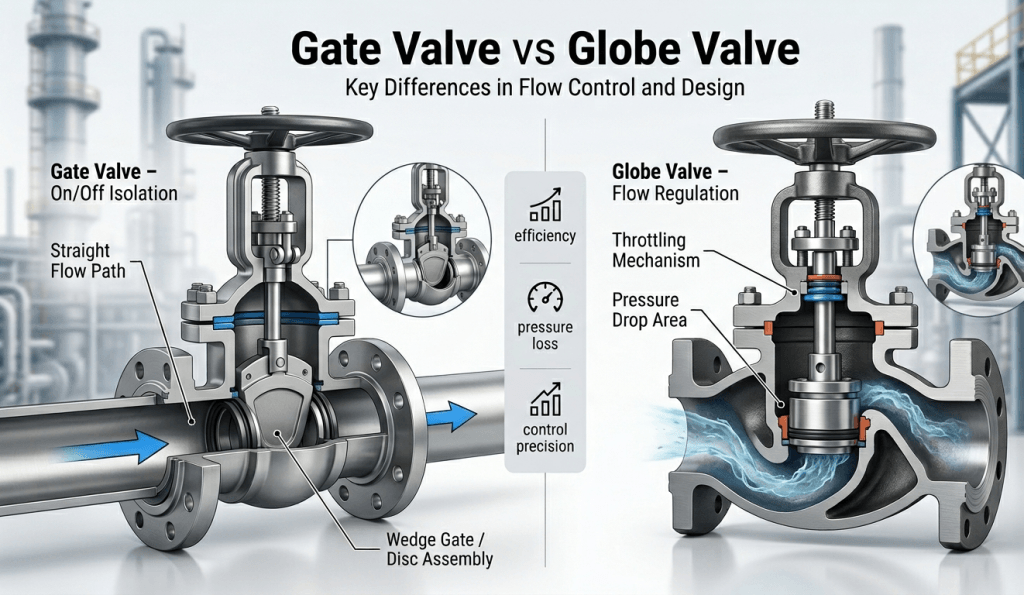
Choosing the proper valve to your device can be complicated and time-consuming for engineers and clients. The contrast of Gate valve vs Globe valve often creates uncertainty within the path of crucial choice tiers. Many specialists battle to understand which valve fits their gadget desires. The hassle turns into excessive even as the incorrect valve reduces common overall performance and could boost safety costs. Poor preference can cause stress loss, leakage troubles, and device downtime. These worrying situations can impact productivity and lengthy-time period operational reliability. This special manual on Gate valve vs Globe valve will assist you’re making an assured and informed choice. You will find out about working ideas, variations, benefits, and best packages in reality. By giving up, deciding on the right valve turns into tons less difficult. Gate Valve vs Globe Valve: Understanding the Basics The evaluation of Gate valve vs Globe valve starts off evolving with records of their format and capability. Both are crucial industrial valves applied in pipelines to govern fluid go along with the waft. However, their reason and operation fluctuate appreciably. A gate valve makes use of a sliding gate or wedge to control float. It both lets in complete go along with the go with the drift or in reality stops it. This makes it best for on-off applications in which going along with the float law is not required. A globe valve uses a movable disc and stationary ring seat. This layout allows precise go along with the go together with the go with the flow law and throttling. It is normally used wherein control over drift rate is essential. How Gate Valves Work in Pipeline Systems? Gate valves carry out the use of a vertical gate that actions up and down in the valve body. When lifted, the gate lets in fluid to bypass freely thru the pipeline. When decreased, it blocks the waft honestly. These valves are designed for minimal drift resistance at the same time as absolutely open. This makes them green for structures requiring uninterrupted flow. They are notably applied in water delivery and oil pipelines. Gate valves are frequently mixed with Gate valves and Automatic valves for higher device control. They additionally art work nicely with Forged Steel gate valve setups in excessive-stress environments. How Globe Valves Function in Flow Regulation? Globe valves are designed to modify and manipulate waft precisely in pipelines. They use a disc that moves perpendicular to the seat. This lets in sluggish adjustment of drift charge. When the valve takes care of turns, the disc moves closer or a long way from the seat. These modifications go with the flow area and control the fluid movement. This format makes them perfect for throttling applications. Globe valves are generally used with Globe valves and Check valve structures. This combination ensures managed flow and stops backflow problems in pipelines. Key Differences: Gate Valve vs Globe Valve Understanding the variations in Gate valve vs Globe valve allows in deciding on the proper valve for specific packages. Each valve kind offers particular benefits relying on device requirements. Design and Structure Flow Control Capability Pressure Drop Maintenance and Durability Advantages of Gate Valves Gate valves provide numerous benefits in business packages. The Gate valve vs Globe valve assessment highlights their strengths certainly. Advantages of Globe Valves Globe valves are preferred for packages requiring specific control. In the Gate valve vs Globe valve evaluation, they stand out for his or her law talents. When to Choose Gate Valves? Choosing between Gate valve vs Globe valve is predicated upon software application requirements. Gate valves are terrific suitable for structures requiring full go together with the flow or whole near-off. They are fine for pipelines in which flow law is not wished. Their layout guarantees minimal strain loss and inexperienced operation. This makes them suitable for water supply structures. Gate valves also are desired in high-pressure environments. They are often used with Strainer valve systems to preserve smooth flow with the flow. Their durability makes them dependable for prolonged-term use. When to Choose Globe Valves? Globe valves are fine for programs requiring unique go with the flow management. The Gate valve vs Globe valve evaluation shows their effectiveness in regulating fluid motion. They are extensively applied in systems wherein go along with the waft desires to be adjusted often. Their layout allows correct manipulation over go with the drift rate. This makes them suitable for business techniques. Globe valves also are desired in systems requiring tight sealing. They are regularly used with Dual plate check valve setups. This ensures inexperienced and stable operation. Role of Other Valves in Industrial Systems Industrial structures depend upon multiple valve types strolling collectively for performance and safety. The Gate valve vs Globe valve assessment is a nice one, a part of an entire gadget. Valves like Check valve and Non move again valve save you backflow and guard tools. They ensure easy operation and reduce damage risks in pipelines. You can find greater valve answers on Xsis Valves.  Gate Valve vs Globe Valve: Final Comparison The very last desire in Gate valve vs Globe valve relies upon your device necessities and on foot conditions. Both valves offer specific advantages for exquisite packages. Gate valves are awesome for systems requiring low resistance and complete go with the flow. They are appropriate for big pipelines and immoderate-strain environments. Globe valves are exceptional for particular go with the flow control and throttling applications. They are suitable for structures requiring accuracy and reliability. Conclusion The contrast of Gate valve vs Globe valve is critical for selecting the right valve on your device. Both valves serve precise talents and offer great benefits. Understanding those variations ensures higher everyday overall performance and common overall performance. Gate valves provide efficient waft with minimal resistance in huge pipelines. Globe valves offer precise control and reliable sealing in essential programs. Each valve type performs an essential function in business systems. By evaluating your tool necessities cautiously, you may make

Ball Valve vs Butterfly Valve: Which One is Better?
Blog

Ball Valve vs Butterfly Valve: Which One is Better?

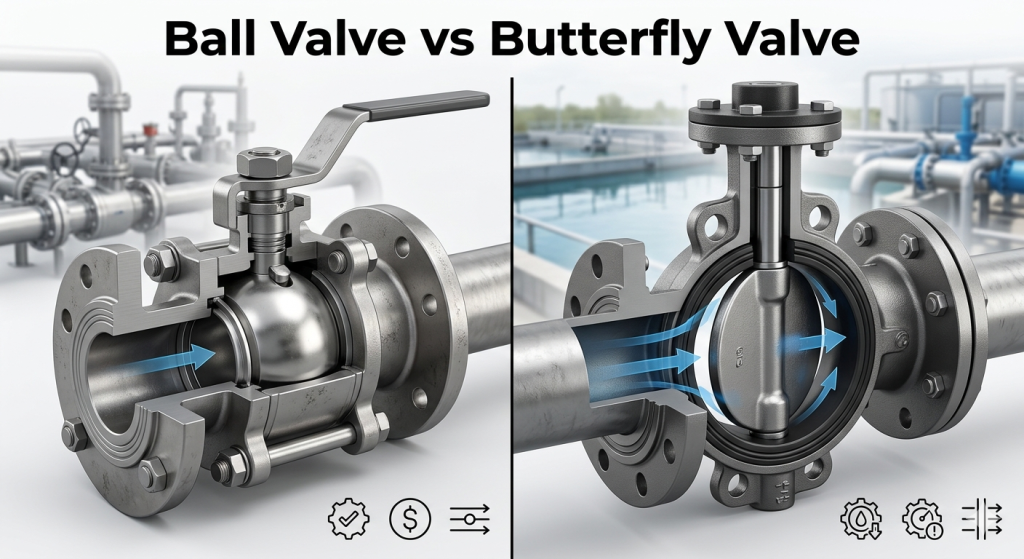
Choosing the proper valve to your tool can be complicated and traumatic for loads of clients and engineers. The evaluation of Ball valve vs butterfly valve frequently creates uncertainty in some unspecified time inside the future of essential selection-making tiers in commercial obligations. Many experts warfare to stabilise normal overall performance, rate, and sturdiness even as choosing the right valve type. The problem will become extreme whilst the incorrect valve influences tool average overall performance and will boom protection prices over the years. Poor valve desire also can result in leakage troubles, operational downtime, and protection risks in worrying environments. These challenges make it essential to understand the differences in reality earlier than making an investment. This specific guide on Ball valve vs butterfly valve will assist you in making a knowledgeable and confident preference. You will have a look at jogging requirements, blessings, limitations, and ideal programs in a smooth and set up way. By the prevent, you may surely realise which valve fits your machine necessities. Ball Valve vs Butterfly Valve: Understanding the Basics The assessment of Ball valve vs butterfly valve begins off evolving with information about their fundamental form and strolling mechanism. Both are broadly used commercial valves designed to manipulate fluid float in pipelines for the duration of numerous industries. However, their internal layout and performance traits range significantly. A ball valve makes use of a round ball with a hollow via its center to alter glide successfully. When the valve manipulator rotates, the hollow aligns with the pipeline and lets in fluid motion. This layout ensures precise manipulation and strong sealing in stressful conditions. A butterfly valve uses a rotating disc mounted on a shaft to govern the drift within the pipeline. The disc rotates to open or near the passage, making it a smooth however effective answer. Its compact format makes it appropriate for huge pipelines and location-constrained installations. How Ball Valves Work in Flow Control Systems? Ball valves are noted for their reliability and excellent shut-off performance in several industries. Their operation entails a hole, perforated ball that rotates within the valve body to manipulate fluid drift. This easy mechanism ensures regular standard performance over extended periods. When the control turns, the ball rotates and aligns its establishment with the pipeline, allowing smooth go with the flow. When they have come to be all over again, the ball blocks the go with the float virtually, presenting tight sealing without leakage. This makes them perfect for packages requiring whole near-off. Ball valves are frequently included with Automatic valves systems for more desirable approach manipulation and performance. They also are generally used along Gate valves in employer setups to control go along with the waft law effectively. Their strong format makes them suitable for excessive-pressure and excessive-temperature environments. How Butterfly Valves Function in Industrial Pipelines? Butterfly valves perform using a rotating disc that controls the waft of fluid inside a pipe. The disc is positioned at the middle and rotates on a shaft, starting or closing the go with the flow path as wanted. This format makes them lightweight and easy to deal with. When the disc turns parallel to the glide, fluid passes through without hassle with minimal resistance. When it becomes perpendicular, it restricts or stops the waft correctly in the pipeline. This mechanism lets in quick operation and inexperienced glide management. Butterfly valves are often used with Butterfly valves structures in water remedy and HVAC packages. They also are paired with Check valve answers to prevent backflow and make sure tool safety. Their compact form makes them great for massive-diameter pipelines. Key Differences: Ball Valve vs Butterfly Valve Understanding the key versions in Ball valve vs butterfly valve permits clients to make knowledgeable alternatives based totally on everyday ordinary overall performance desires. Each valve type offers unique advantages counting on the software and working conditions. Below are targeted comparisons to simplify the choice device. Design and Structure Flow Control Efficiency Cost and Affordability Installation and Space Requirements Advantages of Ball Valves Ball valves offer several benefits that make them a desired choice in worrying commercial enterprise environments. The assessment of Ball valve vs butterfly valve frequently highlights the ones strengths virtually. Their normal performance and durability make them appropriate for essential packages. Advantages of Butterfly Valves Butterfly valves offer numerous benefits that cause them to be fantastic for specific packages. In the Ball valve vs butterfly valve evaluation, they stand out for his or her simplicity and price performance. Their design makes them suitable for big-scale structures. When to Choose Ball Valves? Choosing among Ball valve vs butterfly valve is predicated upon software requirements and operating situations. Ball valves are high-quality relevant for situations where tight sealing and reliability are critical. Their usual overall performance makes them splendid for crucial structures. They are typically applied in immoderate-stress packages in which leakage prevention is crucial for safety. Industries coping with dangerous fluids depend cautiously on ball valves for solid operation. Their format ensures constant common usual overall performance over the years. Ball valves are also favored whilst durability and long-term reliability are crucial factors. They are regularly used along Forged Steel gate valve systems in business enterprise setups. This aggregate enhances device electricity and operational performance. When to Choose Butterfly Valves? Butterfly valves are excellent for applications requiring ordinary overall performance and easy set up in massive systems. The Ball valve vs butterfly valve evaluation suggests their effectiveness in low-strain environments. Their slight-weight layout simplifies handling and preservation. They are extensively applied in water distribution systems, HVAC applications, and huge pipelines. Their compact duration permits installation in confined areas without problem. This makes them suitable for cutting-edge infrastructure obligations. Butterfly valves also are preferred even as fee variety constraints are a hassle in large-scale operations. They are regularly used with Strainer valve structures to maintain smooth and green go together with the waft. Their affordability makes them a realistic preference. Role of Other Valves in Industrial Systems Industrial structures rely on

Best Valve for Oil and Gas Pipelines
Blog

Best Valve for Oil and Gas Pipelines

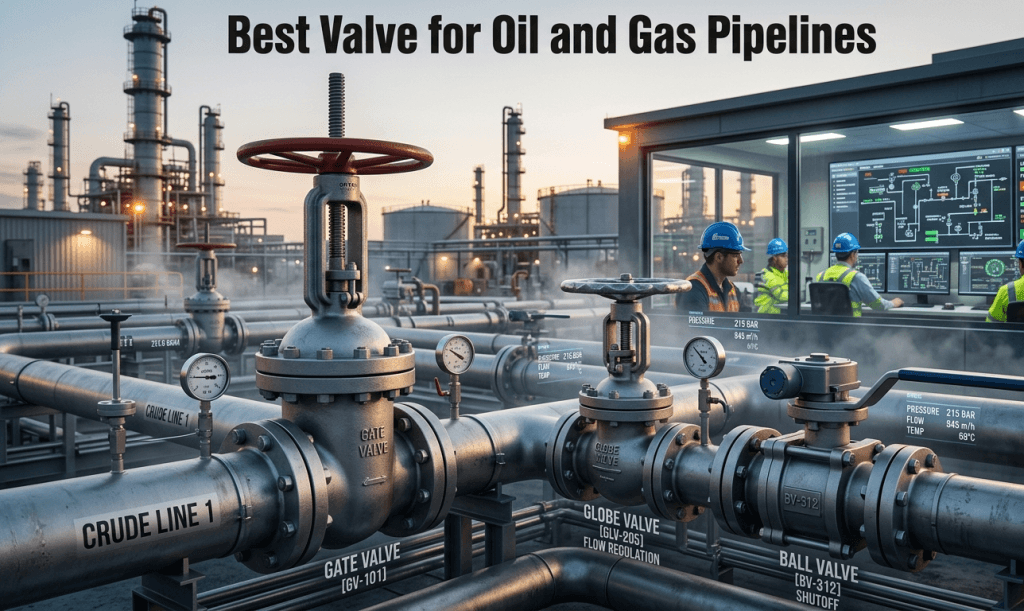
A single leak in an oil or gas pipeline has closed entire refineries, caused environmental disasters and cost businesses hundreds of millions within a matter of hours. This isn’t an exaggeration, it’s a reality that pipeline engineers and procurement teams have to deal with daily. When the question is asked: which valve for gas and oil pipelines is the most appropriate one? The answer is much more than the majority of people who aren’t in the field. If you’re looking for valves to an upstream manufacturing facility or a Midstream Transmission Pipeline, or an downstream refinery this manual is designed specifically for those of you. We go through each major industrial valve that is used in the oil and gas industry and gas, describing exactly what each type of valve is for and give you the confidence to make the correct choice with confidence, and without doubting your decision. Reason that putting in the Valve incorrectly can be more costly than You Imagine In the oil and gas system there is no such issue as a minor issue with a valve. The fluids transported can be toxic, flammable and high-pressure, as well as all three of these at one time. A valve used for oil and gas pipelines must deal with high pressure ratings, huge temperature variations, and aggressive or corrosive fluids often in a vacuum, without any human interaction for months at a time. The industry of oil and gas comprises three distinct segments, each putting entirely different requirements on valves. The upstream operation exposes valves to unprocessed, raw fluids carrying water, sand and hydrogen sulphide, with varying pressures. Midstream pipelines need to be sealed and resistant to corrosion for long periods of inactivity for hundreds of kilometers. Downstream refineries test valves to their temperature limit with harsh chemicals and require precise flow control. The wrong selection of the valve doesn’t just result in an issue with maintenance; it could lead to safety hazards as well as regulatory shutdowns and financial losses that are greater than the expense of selecting the correct valve at the beginning. Four Factors Every Gas and Oil Valve Must Satisfy Before examining particular valves, each purchase decision for oil and gas must pass through four standards that are not negotiable. These are your filters of choice. Ball Valves – The Industry Standard for Gas Isolation If there’s a valve that the oil and gas industry trusts over all others to perform critical isolation duties this is the ball valve. With just a quarter-turn, it can be moved from being fully open to being fully closed. The fully bore design causes virtually no pressure drop and the seal that is bubble-tight is able to withstand the most extreme conditions. Trunnion-mounted ball valves are the ideal option for large diameter high pressure gas and oil service. The ball is anchored by fixed bearings instead of floating in a fluid state, meaning that operating torque is consistent and sealing is reliable and reliability is maintained through many thousands of cycles. This is the reason why trunnion-mounted ball valves that are certified to API 6D are used for almost every LNG transmission line, gas transmission line pipeline, offshore platform isolation applications worldwide. In situations where processed fluids are contaminated with abrasive particles, sand as well as extreme temperature, a ball valve with a metal seat is the best choice. The valve replaces the hard PTFE seats with a hardened metal and is able to withstand conditions that could cause the destruction of a valve with a soft seat within months. For upstream oil production, where the raw fluids of the wellhead are not processed and unpredictably The metal-seated ball valve is not an option -it’s the only viable option. Gate Valves designed for Large Diameter and Long-Service Isolation Ask any experienced pipeline engineer which valve they rely on for long-service, large-diameter pipeline transmissions that are isolated from crude oil then the response will always be the gate valve. It’s not the most efficient working valve but once it is fully open it accomplishes something that like no other valve exactly the same way -it completely gets out completely. The gate completely retracts away from the flow path leaving a hole that is the same as the total diameter of the pipeline without obstruction. In a massive pipeline for crude oil even a tiny drop in pressure can result in significant energy consumption for pumping, over a number of many hours of operating. This unobstructed, full-bore operation is extremely useful in these scenarios and is the reason Gate Valves remain the most popular choice for large diameter oil transmission systems, the water-injection systems as well as storage tanks. Forged Steel Gate Valve forged Steel Gate Valve is specifically made for high pressure, high temperature gas and oil service. The forged construction eliminates internal voids as well as inclusions in valves made of cast and gives it greater durability and resistance to stress caused by thermal cycling which makes it the best choice in refinery line processing and boiler feed systems and steam networks with high pressure. Check Valves – The lone Protectors in Every Pipeline Reverse flow in an oil or gas pipeline is more than an inconvenience, it can pose a risk to every pump compressor and vessel that is part of the system. If a pump fails suddenly or a compressor stops mid-cycle, the resultant surge of fluid could rupture pipelines, cause damage to impellers on pumps, and even contaminate the entire stream of product in a matter of moments. The check valve sometimes referred to as the non return valve is a buffer between normal operation and the result. Its Dual Plate Check Valve is the ideal option for the majority of pipelines that transport gas and oil. Two half-disc plates loaded with springs shut off the moment forward flow velocity falls — prior to even a significant reverse flow could begin to develop. In high-pressure line discharges from gas compressors, where reverse flow may

Ball Valve vs Gate Valve Key Differences
Blog

Ball Valve vs Gate Valve Key Differences

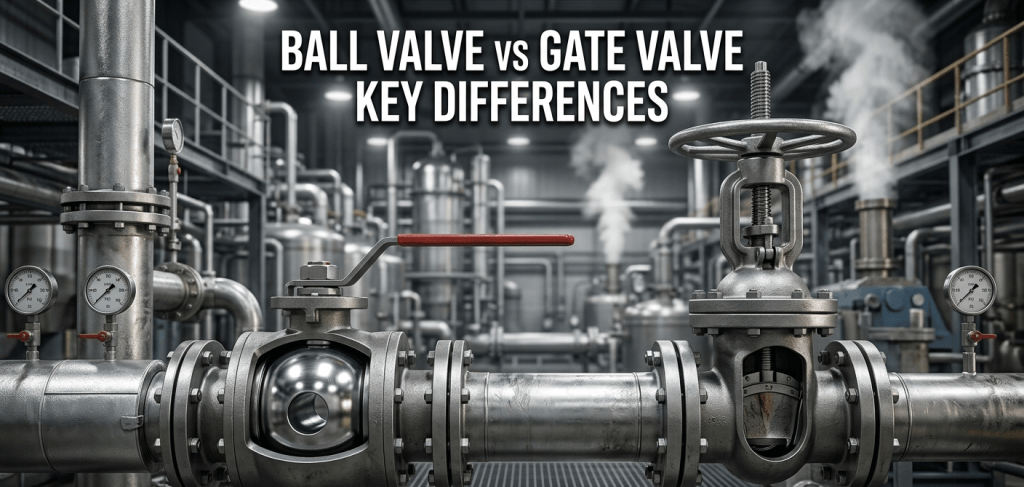
Choosing between a ball vs a gate valve is one the most frequently-asked questions procurement and engineers face when creating or maintaining a pipeline system for industrial use. If you choose the wrong one, you could be facing the possibility of pressure drops and frequent maintenance, early failure, and in the worst situations, total system shut downs. If you’ve ever sat before a catalogue and tried to figure out the flow control valve that is best suited for your particular application then you’re well aware of the complexities of this decision be. This guide explains everything in simple terms, easily and without the technical jargon so that you can make a sound decision the first time around. What is a Ball Valve and how does it Function? Ball valves are half-turn Rotary valves that make use of perforated, hollow balls to regulate the flow of fluid in an underlying pipeline. If the ball’s hole is aligned to the pipeline, the fluid flows freely. When it rotates 90 degrees and the flow is completely blocked. This simple, yet highly efficient process makes ball valves among the most frequently used kinds of industrial valves around the world. The most important feature of the ball valve is its efficiency and dependability. One 90-degree turn will allow you to switch from completely open to fully closed, making it perfect for situations that require quick shut-off. This is the reason you’ll see ball valves extensively employed in gas and oil pipelines and LNG facilities, in chemical plants and other areas that require an inseparable leak-proof seal at high pressure. The design with a full bore of a majority of ball valves guarantees a minimal drop in pressure across the valve which is an important benefit in industrial systems with high flow. What is a Gate Valve and How Does It Function? The gate valve can be described as a linear motion device which uses the wedge-shaped or flat gate disc that is moved across and down perpendicularly towards the direction of flow in order to regulate the flow of fluid. Once the gate has been completely elevated, fluid flows smoothly through the valve with virtually no obstruction. If the gate is completely reduced, it forms an absolute seal that blocks the flow completely. That’s why gate valves are specifically designed to be fully open or completely closed positions. They are not suited for throttles or partial flow control. Gate valves are the best choice for applications where the valve is in one place for prolonged durations — either shut or open with no regular operations. Industries such as water treatment plants refineries for oil, chemical manufacturing or fire-protection systems depend in large part on gates valves due to their capacity to handle huge pipe diameters, large pressures, as well as a broad variety of fluid types, such as viscous fluids, slurries and steam. XSIS Valves manufactures a wide variety of Gate Valves in Ahmedabad and Forged Steel Gate Valves designed for harsh industrial environments. Ball Valve vs Gate Valve The Core Differences Defined Understanding the key difference between a ball or gate valve goes far beyond simply examining their form. They differ in many ways -in everything from their operation and how quickly they react to the industries that prefer their use and the reasons for that. This is a comprehensive analysis of the most crucial differences: Speed of operation and ease of Utilization A ball valve is operated by an easy quarter-turn mechanism, that means the valve can open and close in less than one second. This is extremely convenient when you need to have quick on-off flow control, like emergency shut-offs in pipelines for gas and oil as well as LNG pipelines. A gate valve, however, requires several full handwheel rotations to completely open or close. In valves with large diameters it can take a lot of time and physical exertion making them unsuitable for applications where speed of operation is important. Characteristics of Flow and Pressure Drop One of the major technical advantages of the ball valve is the fact that its full bore design lets fluid traverse through with virtually no pressure drop once it is fully opened. The inside diameter of the valve is equal to the diameter of the pipe, which means the flow is unimpeded. A gate valve can also offer extremely low pressure drop when it is fully open since the gate completely retracts away from the flow route. Both valves work well in this regard, however the ball valve has a slight edge due to its smooth, circular bore that produces less turbulence as well as resistance to flow when compared with the body chamber of gate valves. Sealing Performance and Prevention of Leaks Ball valves are renowned for their bubble-tight shut-off capabilities. The design of the seat and ball provides a metal-to-metal or soft-seated seal that’s extremely robust even after countless operating cycles. This is among the primary reasons why ball valves are favored in chemical pipelines and gas pipelines systems, where even the tiniest leak could pose grave risk to the environment or safety. Gate valves provide an effective seal even when they are new. However, as time passes the gate and seat may wear out particularly in the event that the valve is operated frequently or the fluid is contaminated with solid particles that strike the seats. Throttling Capacity There is a distinct difference in the 2. Gate valves shouldn’t be used for throttle control which means they shouldn’t be kept in an open position. If a gate valve is only partially closed, fluid’s high velocity causes severe turbulence which rapidly causes erosion of the gate and seat surfaces, causing premature failure. Ball valves aren’t optimal for continuous throttles, however they can manage partial positions much more effectively than gates that are used in medium to low pressure systems. If your project needs precise flow control then a Globe Valve is the better option. Maintenance and Longevity Ball valves typically need less

Scroll to Top