

Industries handling chemicals, pharmaceuticals, food processing, and water treatment require valves that offer exceptional sealing, corrosion resistance, and contamination-free flow control. This is where Diaphragm Valves in Ahmedabad: How They Work and Where They’re Used becomes an important topic for engineers, plant managers, and industrial buyers seeking reliable flow management solutions.
Ahmedabad has become one of India’s leading industrial manufacturing hubs, offering premium-quality diaphragm valves for diverse applications. Understanding Diaphragm Valves in Ahmedabad: How They Work and Where They’re Used helps industries choose the right valve design, improve operational efficiency, minimize maintenance costs, and ensure safe handling of aggressive or sensitive fluids.
What Are Diaphragm Valves and Why Are They Popular in Ahmedabad?
Diaphragm valves in Ahmedabad are linear motion valves designed to regulate or isolate the flow of liquids, slurries, gases, and corrosive chemicals using a flexible diaphragm. Unlike conventional valves that rely on metal-to-metal sealing, these valves use an elastomer or polymer diaphragm that presses against a seat to create a leak-proof seal. This unique construction makes them highly suitable for industries where cleanliness and chemical compatibility are essential.
The growing industrial infrastructure in Ahmedabad has significantly increased the demand for diaphragm valves across chemical manufacturing plants, pharmaceutical facilities, food processing units, textile industries, and water treatment plants. The popularity of Diaphragm Valves in Ahmedabad: How They Work and Where They’re Used continues to rise because these valves provide reliable performance, longer service life, and minimal maintenance compared to many conventional industrial valves.
Why industries prefer diaphragm valves
- Excellent Leak Prevention: The flexible diaphragm creates a complete seal between the process fluid and the valve mechanism. This prevents leakage, protects operators, and reduces product loss in critical industrial applications.
- Superior Corrosion Resistance: Since the fluid only contacts the diaphragm and valve body lining, diaphragm valves are ideal for handling corrosive acids, alkalis, and aggressive chemicals commonly used in Ahmedabad’s industrial sectors.
- Low Maintenance Requirements: Their simple internal design contains fewer moving components than many other valve types, making inspection, servicing, and replacement easier while reducing operational downtime.
- Contamination-Free Operation: The operating mechanism remains isolated from the process media, making diaphragm valves particularly suitable for pharmaceutical manufacturing, biotechnology, and food-grade applications.
- Versatile Material Options: Manufacturers offer bodies in cast iron, stainless steel, ductile iron, and plastic, combined with diaphragms made from EPDM, PTFE, or rubber to suit different industrial environments.
- Reliable Flow Control: These valves provide smooth throttling capabilities for many applications while maintaining tight shut-off performance, ensuring consistent process control.
How Do Diaphragm Valves Work?
Understanding Diaphragm Valves in Ahmedabad: How They Work and Where They’re Used begins with knowing their working principle. A diaphragm valve operates by moving a flexible diaphragm downward until it seals against the valve seat. When the handwheel or actuator lifts the diaphragm, fluid passes through the valve body.
Because the diaphragm completely separates the operating mechanism from the process fluid, internal components remain protected from corrosion and contamination. This straightforward design improves reliability and extends service life, particularly in industries where aggressive chemicals or sterile processing conditions are involved. The valve can be operated manually, pneumatically, or electrically depending on the level of automation required by the production facility.
Main Components of a Diaphragm Valve
- Valve Body: The body provides the main flow passage and is manufactured from materials compatible with the intended application, including stainless steel, ductile iron, cast iron, or engineered plastics.
- Flexible Diaphragm: This is the heart of the valve. The diaphragm opens and closes the flow path while creating a tight seal that isolates the fluid from moving mechanical components.
- Compressor: The compressor evenly transfers force from the stem to the diaphragm, allowing uniform sealing pressure and improving diaphragm life.
- Valve Stem: The stem connects the handwheel or actuator to the compressor, converting rotational or actuator movement into vertical diaphragm motion.
- Bonnet Assembly: The bonnet encloses the valve mechanism and protects internal operating parts from external environmental conditions.
- Handwheel or Actuator: Depending on the valve design, operation may be manual or automated using pneumatic or electric actuators for precise process control.
What Are the Different Types of Diaphragm Valves?
Different industrial applications require different diaphragm valve configurations. Understanding the available designs helps industries select valves that match pressure requirements, flow characteristics, and maintenance preferences. Manufacturers of Diaphragm Valves in Ahmedabad: How They Work and Where They’re Used typically supply multiple valve configurations to suit various industries.
Selecting the correct valve type improves efficiency, reduces operational costs, and increases equipment lifespan. The most common diaphragm valve designs include weir-type and straight-through-type valves, each offering unique advantages depending on the process media and operating conditions.
Weir-Type Diaphragm Valve
- Longer Diaphragm Life: The raised weir reduces diaphragm movement during operation. This minimizes wear and increases the valve’s service life.
- Reliable Leak-Tight Sealing: It provides excellent shut-off performance for clean fluids. This helps prevent leakage and maintain process efficiency.
- Ideal for Hygienic Applications: It is widely used in the pharmaceutical and food processing industries. The design supports contamination-free and sanitary operations.
Straight-Through Diaphragm Valve
- Excellent Flow Capacity: The straight-through design allows unrestricted fluid movement. It is ideal for thick liquids and slurry applications.
- Minimises Blockage: The full-bore passage reduces the chances of clogging. This ensures smooth operation even with solid-containing media.
- Suitable for Heavy-Duty Services: It performs well in mining, wastewater, and chemical industries. The valve offers dependable operation under demanding conditions.
Where Are Diaphragm Valves Used in Ahmedabad Industries?
Ahmedabad is home to diverse manufacturing sectors that rely heavily on safe and efficient flow control systems. From pharmaceutical manufacturing to textile processing and chemical production, diaphragm valves have become an essential component for handling aggressive chemicals, purified water, and hygienic process media.
Understanding Diaphragm Valves in Ahmedabad: How They Work and Where They’re Used enables industries to choose valves that meet regulatory standards while improving production efficiency and reducing maintenance expenses.
Major Industrial Applications
- Chemical Processing Plants: Corrosion-resistant diaphragm valves safely handle acids, alkalis, solvents, and hazardous chemicals without exposing internal operating components to aggressive media.
- Pharmaceutical Manufacturing: Their contamination-free design makes diaphragm valves ideal for sterile processing, purified water systems, and clean-room manufacturing operations.
- Water Treatment Facilities: Municipal and industrial water treatment plants use diaphragm valves for chemical dosing, filtration systems, and purified water distribution.
- Food and Beverage Industry: Hygienic valve designs help maintain product quality while complying with strict food safety regulations and sanitation requirements.
- Textile Manufacturing: Ahmedabad’s textile sector uses diaphragm valves for dyeing processes, chemical handling, and water treatment operations requiring corrosion resistance.
- Power and Utility Plants: Diaphragm valves assist in cooling water systems, chemical feed lines, and auxiliary utility services where reliable shut-off performance is essential.
What Are the Key Benefits of Using Diaphragm Valves in Ahmedabad Industries?
The increasing demand for Diaphragm Valves in Ahmedabad: How They Work and Where They’re Used is driven by their outstanding performance in demanding industrial environments. Unlike many conventional valves, diaphragm valves provide reliable shut-off, excellent corrosion resistance, and hygienic operation. These qualities make them an ideal choice for industries that require precise flow control and long-term reliability.
Whether used in pharmaceutical plants, chemical processing units, or water treatment facilities, diaphragm valves help reduce maintenance costs while improving operational safety. Their ability to isolate the process fluid from the valve’s operating mechanism also extends service life and minimizes the risk of contamination.
Key Advantages of Diaphragm Valves
- Exceptional Corrosion Resistance: Diaphragm valves are designed to handle aggressive chemicals, acids, alkalis, and corrosive liquids. Since the process media only comes into contact with the diaphragm and valve body lining, internal components remain protected from chemical damage.
- Leak-Proof Sealing: The flexible diaphragm forms a tight seal against the valve seat, preventing leakage even in challenging operating conditions. This helps improve workplace safety and reduces the loss of valuable process fluids.
- Low Maintenance Costs: With fewer moving parts and a straightforward design, diaphragm valves require less frequent servicing than many other industrial valves. Replacing a diaphragm is also relatively simple, reducing maintenance downtime.
- Ideal for Hygienic Applications: These valves are widely used in pharmaceutical, biotechnology, dairy, and food processing industries because their design minimizes contamination and supports strict hygiene standards.
- Smooth Flow Control: In addition to reliable isolation, diaphragm valves offer effective throttling for many applications. This allows operators to regulate flow accurately without sacrificing sealing performance.
- Long Operational Life: When properly selected and maintained, diaphragm valves deliver years of dependable service, making them a cost-effective investment for industrial facilities.
How Do You Choose the Right Diaphragm Valve for Your Application?
Selecting the correct valve is essential for achieving efficient and safe industrial operations. While there are many types of industrial valves available, choosing the right diaphragm valve depends on the fluid characteristics, operating pressure, temperature, and industry-specific requirements. Understanding Diaphragm Valves in Ahmedabad: How They Work and Where They’re Used helps buyers make informed purchasing decisions.
Working with experienced diaphragm valve manufacturers in Ahmedabad also ensures that the selected valve complies with industry standards and delivers reliable long-term performance. A carefully chosen valve can significantly reduce maintenance expenses and improve production efficiency.
Factors to Consider Before Buying
- Type of Process Fluid: Determine whether the valve will handle corrosive chemicals, clean water, slurries, food products, or pharmaceutical fluids. Fluid compatibility directly influences the choice of diaphragm and body materials.
- Pressure and Temperature Ratings: Ensure the selected valve can withstand the operating pressure and temperature of your system. Choosing an undersized or incorrectly rated valve can reduce efficiency and shorten service life.
- Valve Body Material: Stainless steel is ideal for hygienic applications, while cast iron, ductile iron, or plastic bodies may be more suitable for general industrial use, depending on the process conditions.
- Diaphragm Material: Common diaphragm materials include EPDM, PTFE, Neoprene, and natural rubber. Each material offers different levels of chemical resistance, flexibility, and temperature tolerance.
- Manual or Automated Operation: Modern industrial facilities often prefer pneumatic or electrically actuated diaphragm valves for automated process control, while manual valves remain suitable for smaller systems.
- Industry Standards and Certifications: Verify that the valve complies with applicable industrial standards, particularly for pharmaceutical, food processing, and chemical manufacturing applications.
What Maintenance Practices Help Extend the Life of Diaphragm Valves?
Although diaphragm valves are known for their low maintenance requirements, regular inspection remains essential for reliable performance. Proper maintenance not only extends the service life of the valve but also reduces unexpected failures and production downtime. Facilities that understand Diaphragm Valves in Ahmedabad: How They Work and Where They’re Used often implement preventive maintenance schedules to maximize operational efficiency.
Routine usedicing allows operators to identify worn diaphragms, damaged seals, or early signs of corrosion before they become major problems. Replacing inexpensive components at the right time can prevent costly shutdowns and maintain smooth industrial operations.
Best Maintenance Practices
- Inspect the Diaphragm Regularly: Check the diaphragm for cracks, hardening, deformation, or excessive wear. Replacing a damaged diaphragm promptly prevents leakage and maintains effective sealing.
- Operate the Valve Periodically: Valves that remain unused for long periods may become difficult to operate. Regular cycling helps keep moving components functioning smoothly.
- Monitor Fasteners and Connections: Ensure bonnet bolts and flange connections remain properly tightened according to the manufacturer’s recommendations to prevent leaks.
- Keep the Valve Clean: Remove accumulated deposits, dirt, or chemical residues from the valve exterior and surrounding pipeline to improve inspection and maintenance efficiency.
- Use Genuine Replacement Parts: Always replace diaphragms and internal components with manufacturer-approved parts to maintain performance and safety standards.
- Schedule Preventive Maintenance: Planned inspections reduce unexpected failures, improve plant reliability, and extend the overall lifespan of industrial flow control systems.
Why Choose Diaphragm Valve Manufacturers in Ahmedabad?
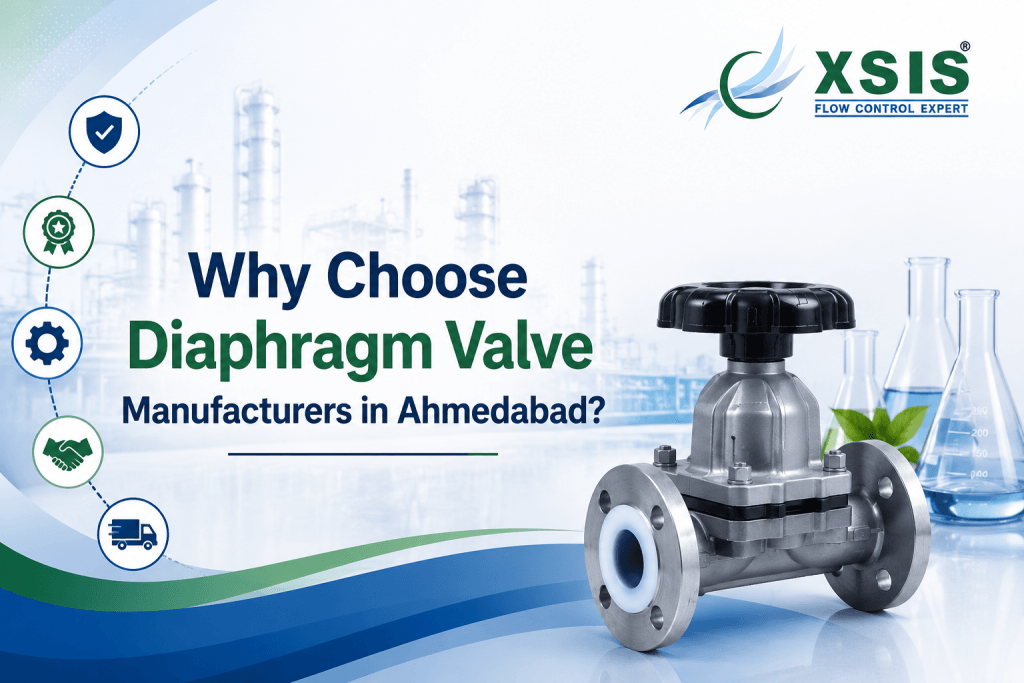
Ahmedabad has earned a strong reputation as one of India’s leading industrial manufacturing hubs, supplying high-quality valves to customers across domestic and international markets. The city’s manufacturers are known for combining advanced engineering, strict quality control, and industry-specific expertise to produce reliable diaphragm valves for chemical processing, pharmaceuticals, food and beverage, water treatment, and other industrial sectors.
Choosing trusted manufacturers of Diaphragm Valves in Ahmedabad: How They Work and Where They’re Used ensures access to durable products, customized solutions, competitive pricing, and dependable technical support that help industries improve operational efficiency and long-term performance.
Benefits of Choosing Diaphragm Valve Manufacturers in Ahmedabad
- High Manufacturing Quality: Manufacturers follow strict quality standards and precision engineering practices. This ensures reliable performance and a longer service life.
- Wide Product Selection: A variety of diaphragm valves are available in different sizes and materials. This makes it easy to find the right valve for any industrial application.
- Customized Valve Solutions: Many manufacturers offer customized designs based on process requirements. This helps industries achieve better efficiency and system compatibility.
- Competitive Pricing: Ahmedabad manufacturers provide quality products at competitive market prices. Buyers receive excellent value without compromising on performance.
- Strong Technical Support: Expert teams assist with product selection, installation, and maintenance guidance. This helps ensure smooth and trouble-free valve operation.
- Timely Delivery: Well-established production facilities and supply chains ensure faster order fulfillment. This helps industries avoid project delays and operational downtime.
Conclusion
Understanding Diaphragm Valves in Ahmedabad: How They Work and Where They’re Used enables industries to select reliable flow control solutions that improve efficiency, safety, and long-term performance. Their leak-proof design, corrosion resistance, and hygienic construction make diaphragm valves indispensable across chemical, pharmaceutical, food processing, textile, and water treatment industries.
As industrial requirements continue to evolve, diaphragm valves remain a dependable choice for handling demanding applications with minimal maintenance. Partnering with experienced diaphragm valve manufacturers in Ahmedabad ensure access to high-quality products, expert guidance, and customized solutions that meet both operational and regulatory requirements.
Explore Our Recent Blog
- Industrial Valve Maintenance: Common Problems and How to Prevent Them
- How to Select Industrial Valve for Your Pipeline System in Ahmedabad
- Valves for Oil and Gas Industry: Types, Functions, and Selection Guide
- Butterfly Valves in Ahmedabad: Working, Types, and Industrial Applications
- Plug Valves in Ahmedabad: Construction, Uses, and Advantages
Frequently Asked Questions
1. What is a diaphragm valve used for?
A diaphragm valve is primarily used to start, stop, or regulate the flow of liquids, gases, and slurries in industrial piping systems. It is especially suitable for handling corrosive chemicals, hygienic fluids, and contaminated media because the diaphragm isolates the operating mechanism from the process fluid. This design improves safety and reduces maintenance requirements.
2. Which industries commonly use diaphragm valves in Ahmedabad?
Diaphragm valves are widely used in Ahmedabad’s chemical processing, pharmaceutical, textile, food and beverage, biotechnology, and water treatment industries. These sectors require reliable sealing, corrosion resistance, and contamination-free operation. Their versatility makes them suitable for both manual and automated systems.
3. What is the difference between a weir-type and a straight-through diaphragm valve?
A weir-type diaphragm valve has a raised seat that reduces diaphragm movement, making it ideal for clean fluids and frequent operation. A straight-through diaphragm valve has a full-bore flow path, allowing it to handle slurries, viscous liquids, and fluids containing suspended solids more effectively. The choice depends on the specific application and process requirements.
4. How often should diaphragm valves be maintained?
Maintenance frequency depends on the operating conditions, fluid characteristics, and service environment. Regular inspections should include checking the diaphragm, fasteners, and sealing surfaces for wear or damage. Preventive maintenance helps avoid unexpected failures and extends the valve’s operational life.
5. What materials are commonly used in diaphragm valves?
Valve bodies are commonly manufactured from stainless steel, cast iron, ductile iron, PVC, or other engineered plastics. Diaphragms are typically made from EPDM, PTFE, Neoprene, or natural rubber, depending on the chemical compatibility and temperature requirements of the application. Selecting the correct material ensures reliable long-term performance.
6. Why should businesses purchase diaphragm valves from Ahmedabad manufacturers?
Ahmedabad manufacturers are recognized for producing high-quality industrial valves using advanced manufacturing processes and strict quality standards. They offer a wide range of customizable options, competitive pricing, dependable after-sales support, and products suitable for domestic as well as international industrial applications. This makes them a trusted choice for businesses seeking durable and efficient flow control solutions.