
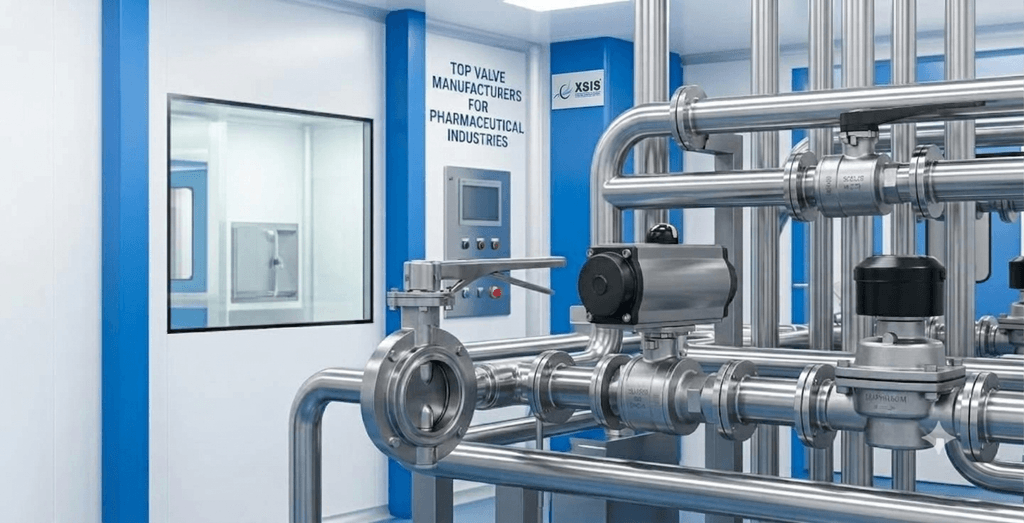
The Top Valve Manufacturers for Pharmaceutical Industries in Ahmedabad help businesses explore valve solutions for maintaining product quality, process consistency, and hygienic manufacturing conditions. Valves control the flow of liquids, gases, purified water, and other process fluids throughout pharmaceutical production facilities. Choosing suitable valves helps minimise leakage, manage contamination risks, and support efficient operations.
Pharmaceutical companies should evaluate manufacturers based on material quality, hygienic design, surface finish, pressure and temperature ratings, technical documentation, and after-sales support. Ahmedabad offers access to industrial valve manufacturers and suppliers serving pharmaceutical and other process industries. However, not every industrial valve meets pharmaceutical requirements.
Applications involving purified water, liquid processing, and cleaning systems may require specific materials, compatible seals, and easy-to-clean designs. Understanding these requirements helps procurement teams compare suppliers and make informed decisions. This guide explores important valve types, supplier evaluation criteria, quality standards, pricing factors, and maintenance practices to help pharmaceutical businesses select reliable valve solutions for their facilities.
What Should Pharmaceutical Companies Look for in the Top Valve Manufacturers in Ahmedabad?
Pharmaceutical companies should begin by identifying manufacturers that understand the technical and hygienic requirements of pharmaceutical processing. A suitable supplier should be able to explain which valve designs are appropriate for the intended application, whether it involves purified water, liquid ingredients, cleaning systems, or general utility services. The supplier should also provide clear information about materials, pressure ratings, temperature limits, connection types, and operating conditions.
When evaluating the Top Valve Manufacturers for Pharmaceutical Industries in Ahmedabad, buyers should request product catalogues, technical datasheets, material specifications, and relevant inspection documents. These records help engineers compare available products and determine whether they meet the requirements of a particular pharmaceutical facility. Buyers should also check manufacturing capabilities, product consistency, delivery timelines, and the supplier’s ability to provide replacement parts when required.
Important supplier evaluation criteria
- Material Quality: Check whether the valve body and wetted components use suitable materials, such as the specified grade of stainless steel. Material selection should reflect corrosion resistance, cleaning chemicals, and process-fluid compatibility.
- Hygienic Design: Examine internal surfaces, seals, joints, and connections for features that support effective cleaning. Pharmaceutical applications may require drainable designs and reduced areas where product residues can accumulate.
- Technical Documentation: Request specifications, material certificates where applicable, test reports, and traceability records. Documentation should match the product supplied and the requirements of the facility.
- Manufacturing Consistency: Ask about quality-control procedures, dimensional checks, pressure testing, and inspection practices. Consistent manufacturing helps reduce installation problems and premature component failure.
- Application Experience: Determine whether the supplier has experience with pharmaceutical plants or comparable hygienic process applications.
- After-Sales Support: Evaluate access to spare parts, maintenance guidance, troubleshooting, and technical assistance. Responsive support can reduce downtime when valves need inspection or replacement.
Which Valve Manufacturers in Ahmedabad Offer Solutions for Pharmaceutical Applications?
Ahmedabad has manufacturers and suppliers offering different types of industrial and hygienic valves. Pharmaceutical buyers should distinguish between companies producing general industrial valves and those offering products specifically designed for sanitary or pharmaceutical processing. The following companies are useful starting points for supplier research, but they should not be treated as a ranking based on independently verified performance. Buyers must confirm the exact product range, specifications, and compliance documents before placing an order.
1. XSIS Valves Pvt. Ltd.
XSIS Valves is an Ahmedabad-based industrial valve manufacturer offering products such as ball valves, butterfly valves, gate valves, globe valves, check valves, and strainers. Its website lists pharmaceutical applications among the industries it serves and describes its quality management certification as ISO 9001:2015.
Pharmaceutical companies can contact XSIS Valves to discuss their flow-control requirements, operating conditions, and product availability. Before selecting any model for a hygienic process, buyers should specifically confirm the wetted materials, internal surface finish, cleanability, seal compatibility, and availability of the documentation required by their facility. General industrial suitability alone does not establish suitability for sterile or aseptic service.
Website: https://xsisvalves.com/
2. Aegis Valves Industries Private Limited
Aegis Valves lists hygienic and sanitary valve solutions for pharmaceutical, biotechnology, food, semiconductor, and drinking-water applications. Its published range includes sanitary ball valves, three-way valves, butterfly valves, check valves, and related fittings. The company also describes features intended to support cleanability and drainability in its sanitary ball valve design.
Website: https://www.aegisvalves.org/
3. SAP Industries Ltd.
SAP Industries is an Ahmedabad-based manufacturer offering industrial products that include gate valves, globe valves, check valves, plug valves, ball valves, and butterfly valves. Its website displays pharmaceutical company names among its clients, which may make the company relevant for preliminary industrial valve sourcing enquiries.
Website: https://www.sapvalves.com/
4. Z-Tork Automation Co.
Z-Tork Automation Co. lists pharmaceutical valve products, including flush-bottom ball valves, pharmaceutical butterfly valves, and pharmaceutical control valves. The company also lists other industrial valve categories and provides Ahmedabad contact and factory details on its website.
Website: https://ztorkautomation.in/pharmaceutical-valve/
5. Aditya Equipment
Aditya Equipment publishes information about sanitary cGMP butterfly valves with different connection arrangements. Its listed designs include 316L stainless steel components, mirror-finished vanes, and platinum-cured silicone gaskets. The company provides an Ahmedabad-area address on its website.
Website: https://www.aelindia.co.in/cgmp-valves.php
What Types of Valves Are Best for Pharmaceutical Manufacturing Plants?
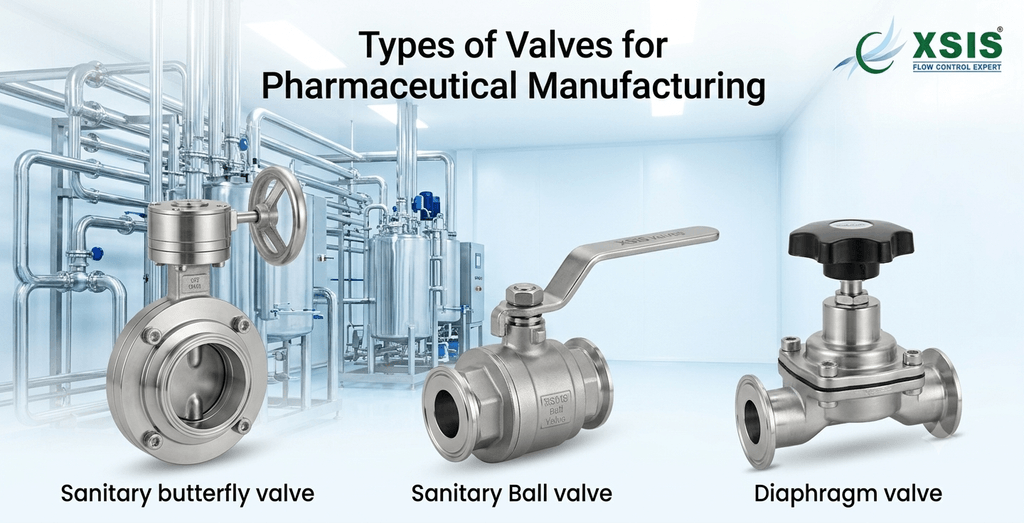
The best valve depends on its location within the production process, the characteristics of the fluid, and the required cleaning and operating conditions. Pharmaceutical plants may use different valve designs for product-contact pipelines, purified-water distribution, process vessels, compressed-air utilities, steam systems, and wastewater services. Selecting a valve based only on its nominal size or purchase price can lead to maintenance issues and process limitations.
When evaluating the Top Valve Manufacturers for Pharmaceutical Industries in Ahmedabad, buyers should match each proposed product to a defined application. A valve suitable for a non-product-contact utility line may not be appropriate for a sterile product transfer line. Engineering teams should document the service conditions and consult the manufacturer before finalising the selection.
Common valve types and their applications
- Sanitary Butterfly Valves: These valves are frequently used for isolation in hygienic pipelines. Their suitability depends on the body design, disc finish, seal material, connection type, and ability to meet cleaning requirements.
- Sanitary Ball Valves: Ball valves pharmaceutical use, buyers should check whether the internal geometry and sealing arrangements are appropriate for product contact and cleaning.
- Diaphragm Valves: These valves are widely used in hygienic process systems because their design can isolate the operating mechanism from the process fluid.
- Flush-Bottom Valves: Installed at suitable vessel outlets, these valves help discharge liquids or slurries while reducing product retention around the outlet.
- Control Valves: These valves sizing, response characteristics, actuator selection, and compatibility with the process are important for consistent production.
- Check Valves: Check valves orientation, cracking pressure, sealing performance, and cleanability should be assessed before they are specified for pharmaceutical service.
How Important Are Stainless Steel Grades and Hygienic Design in Pharmaceutical Valves?
Material selection is one of the most important considerations when purchasing valves for pharmaceutical manufacturing. Stainless steel grades such as 304 and 316L are used in various process and utility applications, but the appropriate choice depends on the fluid, corrosion exposure, cleaning chemicals, temperature, and required surface characteristics. Grade 316L may be preferred in some demanding product-contact environments because of its molybdenum content and low carbon content, but the suitability of any material must be assessed against the actual process conditions.
Hygienic design is equally important because the valve’s internal geometry can affect cleaning effectiveness and product retention. Poorly designed cavities, unsuitable seals, rough surfaces, and difficult-to-clean connections may increase the risk of residue accumulation. Pharmaceutical facilities should define acceptable surface-finish requirements, drainage characteristics, and connection standards before asking manufacturers to supply equipment. These requirements are particularly important for processes involving sensitive formulations or stringent contamination controls.
Key design and material considerations
- Stainless Steel Grade: Specify the required grade for the valve body and all wetted components. Request material identification or certificates where necessary to establish traceability.
- Surface Finish: Confirm the specified internal surface roughness and how it will be verified. A polished appearance alone does not prove that a surface meets the required technical specification.
- Seal Compatibility: Select gasket and diaphragm materials according to chemical exposure, operating temperature, cleaning agents, and sterilisation conditions.
- Drainability: Evaluate whether the valve and its installed orientation allow the system to drain as intended. Poor drainage can leave residual liquid and complicate cleaning.
- Connection Design: Choose compatible sanitary clamps, welded connections, or other approved arrangements based on the piping design. Connections should support the required installation and cleaning practices.
- Corrosion Resistance: Assess exposure to process ingredients, cleaning solutions, and steam. Material compatibility should be confirmed for the actual service rather than assumed from the stainless steel grade alone.
How Can Pharmaceutical Companies Verify Valve Quality and Regulatory Compliance?
Quality verification should begin before a valve is purchased. Pharmaceutical companies need to establish whether the proposed equipment meets the technical specifications, applicable regulatory expectations, and internal quality requirements of the facility. Depending on the application, this may involve reviewing material traceability, inspection records, pressure-test reports, dimensional checks, surface-finish records, and documentation for seals and other wetted components.
Regulatory and engineering requirements vary by process and market, so buyers should avoid assuming that one certificate proves universal pharmaceutical compliance. For example, ISO 9001 relates to a quality management system; it does not, by itself, demonstrate that a valve is suitable for sterile processing. Similarly, a supplier’s claim of pharmaceutical applications should be supported by the product-specific documentation required for the intended installation.
Checks to perform before approval
- Material Documentation: Request the relevant material certificates for the valve body and wetted components. Confirm that the supplied grade matches the approved specification.
- Pressure and Leak Testing: Review the manufacturer’s applicable test procedures and reports. Verify that the test conditions and acceptance criteria are suitable for the product and service.
- Dimensional Inspection: Confirm valve dimensions, connection standards, and installation requirements. Incorrect dimensions can create assembly difficulties or require expensive piping modifications.
- Surface-Finish Verification: Where specified, obtain records demonstrating that the internal finish meets the agreed requirements. Confirm how measurements are taken and which surfaces are covered.
- Seal and Component Records: Check gasket, diaphragm, and other relevant component specifications. Additional declarations may be necessary where materials contact regulated products or undergo repeated sterilisation.
- Traceability and Documentation: Establish how valves are identified and traced through production, delivery, and maintenance. Confirm whether batch records, serial numbers, inspection certificates, or other records are required.
What Factors Affect the Cost of Pharmaceutical Valves in Ahmedabad?
The cost of pharmaceutical valves depends on more than the nominal valve size. Material grade, valve design, internal finish, sealing arrangement, connection type, actuation, pressure rating, and documentation requirements can all influence the quotation. A basic industrial valve and a hygienically designed valve may look similar externally while differing considerably in construction, cleanability, and verification requirements.
Companies comparing the Top Valve Manufacturers for Pharmaceutical Industries in Ahmedabad should evaluate the total cost of ownership rather than focusing exclusively on the initial purchase price. A low-cost valve that requires frequent seal replacement, difficult cleaning, or premature replacement can become more expensive over its service life. Conversely, a higher-priced product may not offer additional value if its features exceed the actual needs of the application.
Main factors that influence the quotation
- Material Grade: Stainless steel grade, special alloys, and the materials used for seals and diaphragms affect the overall price. Material selection should reflect the documented process requirements.
- Valve Type and Size: Diaphragm, sanitary butterfly, ball, control, and flush-bottom valves have different design and manufacturing requirements. Larger sizes and specialised configurations may increase production costs.
- Surface Finish and Hygienic Design: Polishing, specialised internal geometry, and enhanced cleanability requirements can add to the manufacturing and inspection effort.
- Automation Requirements: Pneumatic or electric actuators, position indicators, control accessories, and integration requirements can affect the final cost. Buyers should specify the required level of automation.
- Testing and Certification: Additional inspections, material certificates, test reports, and traceability documentation may influence the total quotation. The scope should be clear before prices are compared.
- Delivery and Maintenance: Lead times, spare parts availability, servicing, packaging, and transport can affect project costs. Procurement teams should assess these factors when comparing suppliers.
How Do Pharmaceutical Valve Manufacturers Support Maintenance and Operational Efficiency?
Reliable valves contribute to pharmaceutical plant efficiency by supporting controlled flow, dependable isolation, and consistent process operation. A valve that seals correctly and operates smoothly can help reduce leakage, product loss, unplanned shutdowns, and maintenance interruptions. However, performance depends on selecting the correct equipment, installing it properly, and maintaining it according to the manufacturer’s instructions.
The Top Valve Manufacturers for Pharmaceutical Industries in Ahmedabad should be evaluated on their ability to provide practical technical support alongside the equipment itself. Useful support may include installation guidance, maintenance instructions, spare parts, troubleshooting assistance, and recommendations for inspection intervals. For pharmaceutical facilities, maintenance planning should also account for cleaning procedures, sterilisation cycles, process criticality, and documentation requirements.
Maintenance practices that help extend valve life
- Routine Leak Inspection: Examine valve bodies, stems, joints, and seals for signs of leakage. Investigate any leakage promptly to prevent product loss, equipment damage, or process disruption.
- Seal and Diaphragm Checks: Inspect seals and diaphragms for wear, deformation, cracking, or chemical deterioration. Replace components according to their condition and the manufacturer’s recommendations.
- Cleaning Procedure Compliance: Follow approved cleaning procedures for the installed valve and process system. Avoid chemicals, temperatures, or cleaning methods that exceed the component’s specified limits.
- Actuator and Control Checks: For automated valves, inspect actuators, position indicators, electrical connections, and control signals. Functional checks can help identify slow operation or control failures before they interrupt production.
- Preventive Maintenance Records: Record inspections, repairs, component replacements, and observed faults. Good records help identify recurring problems and support maintenance planning.
- Spare Parts Planning: Maintain appropriate stocks of critical seals, diaphragms, and other replacement components. Confirm part compatibility with the exact valve model to avoid installation errors.
How Can Businesses Choose the Right Pharmaceutical Valve Supplier in Ahmedabad?
Choosing the right supplier requires a structured comparison of technical capability, product suitability, documentation, delivery performance, and long-term support. Pharmaceutical companies should first define the application and identify the requirements that are mandatory for the installation. They can then request proposals from suitable manufacturers and compare the proposed products against the same technical criteria.
When assessing the Top Valve Manufacturers for Pharmaceutical Industries in Ahmedabad, buyers should verify each supplier’s claims rather than relying solely on marketing descriptions. A company may manufacture a broad range of industrial valves without offering every specialised feature needed for sterile or aseptic processing. Procurement teams should therefore confirm the suitability of the specific valve model and obtain written clarification wherever the specifications are incomplete.
Practical steps for supplier selection
- Define the Application: Identify the fluid, operating pressure, temperature, flow rate, cleaning method, and installation location. Specify whether the valve will contact the product or serve a general utility line.
- Prepare a Technical Specification: Document the required valve type, size, materials, finish, connections, actuation, and applicable standards. Include all essential testing and traceability requirements.
- Shortlist Relevant Manufacturers: Review suppliers whose published product ranges align with the application. Give priority to demonstrated product capability and relevant technical experience rather than unverified rankings.
- Request Comparable Quotations: Send the same specification and documentation requirements to each shortlisted supplier. Ask manufacturers to identify deviations, exclusions, and optional features clearly.
- Verify Quality and Delivery: Review relevant quality records, manufacturing capabilities, inspection arrangements, lead times, and spare parts support. Confirm critical commitments in writing before placing the order.
- Evaluate Long-Term Support: Consider technical responsiveness, warranty conditions, replacement-part availability, and maintenance assistance. These factors can be important for plants operating continuous or time-sensitive production processes.
Conclusion
Selecting the right valve manufacturer is an important part of building a reliable pharmaceutical production system. The Top Valve Manufacturers for Pharmaceutical Industries in Ahmedabad should be assessed according to product suitability, material quality, hygienic design, testing procedures, technical documentation, and after-sales support. These factors help pharmaceutical companies identify equipment that meets their process requirements and supports consistent plant operations.
XSIS Valves, Aegis Valves, SAP Industries, Z-Tork Automation, and Aditya Equipment are potential starting points for supplier research, depending on the type of valve required. Their published product ranges and application information differ, so buyers should verify the exact specifications and suitability of each proposed model before making a decision.
Ultimately, the best supplier is one that understands the application, provides transparent technical information, and delivers products that meet the facility’s documented requirements. By comparing manufacturers carefully and planning for maintenance and long-term support, pharmaceutical businesses in Ahmedabad can make more informed procurement decisions.
Explore Our Recent Blog
- Top Swing Check Valve Manufacturers in Ahmedabad
- Top Dual Plate Check Valve Suppliers in Ahmedabad
- Top Industrial Strainer Manufacturers in Ahmedabad
- Top Y Strainer Manufacturers in Ahmedabad
- Top Industrial Valve Manufacturers for Chemical Industries in Ahmedabad
Frequently Asked Questions
1. Who are the top valve manufacturers for pharmaceutical industries in Ahmedabad?
Companies worth evaluating include XSIS Valves, Aegis Valves, SAP Industries, Z-Tork Automation, and Aditya Equipment. Their published product ranges cover different industrial or hygienic valve applications. Buyers should compare the specific products, documentation, and technical capabilities relevant to their pharmaceutical processes.
2. Which valve types are commonly used in pharmaceutical plants?
Common options include sanitary butterfly valves, diaphragm valves, sanitary ball valves, check valves, control valves, and flush-bottom valves. Each type serves different flow-control, isolation, or discharge requirements. The appropriate choice depends on the fluid, cleaning process, operating conditions, and contamination-control requirements.
3. Which stainless steel grade is suitable for pharmaceutical valves?
Stainless steel 316L is frequently considered for demanding pharmaceutical product-contact applications because of its corrosion-resistance characteristics. Stainless steel 304 may be suitable for certain less demanding applications, depending on the fluid and operating environment. The final material selection should be based on documented compatibility and the requirements of the specific process.
4. How can pharmaceutical companies verify valve quality before purchasing?
Companies should review material certificates, technical datasheets, relevant inspection reports, pressure-test records, and traceability documentation. They should also confirm surface-finish requirements, seal compatibility, and connection dimensions where applicable. Any required regulatory or hygienic design claims should be verified for the exact valve model.
5. What factors affect the price of pharmaceutical valves in Ahmedabad?
Valve prices depend on the valve type, size, material grade, internal finish, connection arrangement, and actuation requirements. Specialised testing, documentation, and custom designs may also influence the quotation. Comparing suppliers using the same technical specification helps businesses evaluate costs fairly.
6. How can pharmaceutical plants reduce valve maintenance costs?
Plants can reduce avoidable maintenance costs through correct valve selection, scheduled inspections, suitable cleaning procedures, and timely replacement of worn seals or diaphragms. Maintaining spare parts and documenting recurring faults can also help prevent prolonged downtime. Maintenance activities should follow manufacturer guidance and the pharmaceutical facility’s approved quality procedures.