
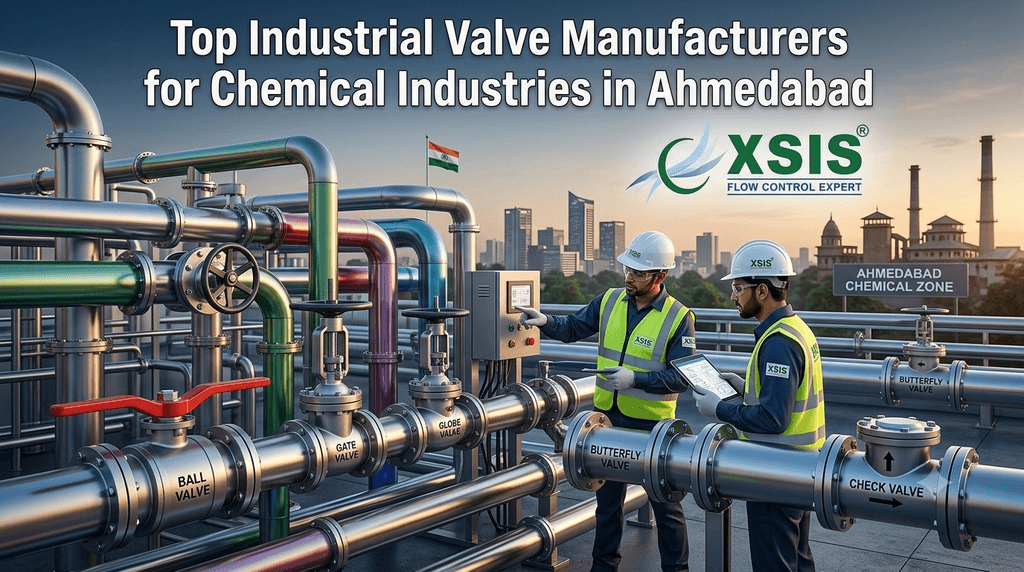
Ahmedabad has a strong industrial base covering chemical processing, pharmaceuticals, dyes and intermediates, fertilizers, petrochemicals, engineering, and related process industries. These facilities depend on reliable valves for isolation, flow regulation, pressure control, and safe handling of aggressive or hazardous media. Therefore, selecting from the Top Industrial Valve Manufacturers for Chemical Industries in Ahmedabad requires more than comparing price or product availability.
Chemical plants may handle corrosive chemicals, high temperatures, high pressures, abrasive slurries, solvents, acids, alkalis, and other demanding fluids. The selected valve must therefore match the process media, pressure class, temperature range, material of construction, sealing requirements, and operating conditions. This guide discusses the Top Industrial Valve Manufacturers for Chemical Industries in Ahmedabad, the valve types they offer, and the factors chemical industries should consider before purchasing.
What Should Chemical Industries Look for in the Top Industrial Valve Manufacturers for Chemical Industries in Ahmedabad?
Chemical industries should look for manufacturers with relevant experience in chemical processing and other demanding industrial applications. The manufacturer should understand requirements related to corrosive media, high temperatures, pressure conditions, hazardous fluids, and process pipelines. Buyers should evaluate valve design, material selection, pressure ratings, sealing arrangements, testing procedures, and available documentation. A manufacturer with strong technical knowledge can help reduce leakage, premature wear, and maintenance problems.
Companies should also assess the manufacturer’s ability to provide suitable materials, configurations, and technical support for specific applications. Stainless steel, carbon steel, specialised alloys, PTFE-lined components, and other materials may be considered depending on the process conditions. The Top Industrial Valve Manufacturers for Chemical Industries in Ahmedabad should also demonstrate consistent quality control and suitable inspection procedures. Buyers should compare technical capabilities and long-term support instead of selecting a supplier based only on the lowest price.
Key Factors to Evaluate
- Chemical Industry Experience: Choose manufacturers with experience in chemical and process applications. This can help ensure better understanding of demanding operating conditions.
- Material Selection: Check the availability of suitable body, trim, seat, and sealing materials. Proper material selection helps improve corrosion resistance and valve service life.
- Pressure and Temperature Ratings: Verify that valves can safely handle the required operating conditions. Suitable ratings help maintain reliable performance under process pressure and temperature.
- Quality and Testing: Review manufacturing controls, inspection procedures, and pressure-testing practices. Proper testing helps confirm that valves meet the required specifications.
- Technical Support: Consider whether the manufacturer provides application guidance, drawings, datasheets, and technical assistance. Good support can make valve selection and installation easier.
- Documentation and Certification: Check the availability of required test reports, material certificates, and quality documents. Proper documentation helps buyers verify compliance with project requirements.
Which Companies Are Among the Top Industrial Valve Manufacturers for Chemical Industries in Ahmedabad?
Ahmedabad has several manufacturers and suppliers whose published product information indicates experience with chemical, process, pharmaceutical, oil and gas, water, and other industrial applications. The following companies can be considered when evaluating the Top Industrial Valve Manufacturers for Chemical Industries in Ahmedabad. Buyers should independently confirm the latest product specifications, certifications, approvals, availability, and application suitability before placing an order.
XSIS Valves Pvt. Ltd.
XSIS Valves is an Ahmedabad-based industrial valve manufacturer and exporter established in 2008. Its published portfolio includes gate, globe, ball, butterfly, check, non-return, dual-plate check, strainer, and automatic valves, and it specifically lists chemicals and fertilisers among the industries served.
XSIS Valves
Nilon Valves Pvt. Ltd.
Nilon Valves is an Ahmedabad manufacturer with a long-standing industrial valve manufacturing background and publicly identifies chemical processing among its major sectors. Its chemical-processing information includes globe and plug valves and materials such as stainless steels, Hastelloy, Monel, and Inconel for demanding applications.
Nilon Valves
Flowchek Valves
Flowchek Valves, a brand of Paras Enterprise, states that it has manufactured industrial valves since 1994 and supplies products for chemical, pharmaceutical, water treatment, oil and gas, and other industries. Its published range includes ball valves, strainers, sight glasses, check valves, and other process components.
Flowchek Valves
WIN Enterprise
WIN Enterprise identifies itself as an Ahmedabad-based ISO 9001:2015-certified industrial valve manufacturer and exporter. Its published portfolio includes butterfly valves, wafer and dual-plate check valves, disc check valves, and pneumatic actuated valves, with chemical applications among the industries served.
WIN Enterprise
Karan Valves Pvt. Ltd.
Karan Valves states that it manufactures and exports industrial valves for chemical, petrochemical, pharmaceutical, oil and gas, power, marine, textile, and engineering industries. Its website also describes quality assurance and testing capabilities.
Karan Valves
Jogani Valves and Controls
Jogani Valves and Controls is an Ahmedabad-based engineering company that manufactures and supplies industrial valves, strainers, and flow-control products for chemical, water, steam, and process applications. Its listed products include ball, gate, globe, plug, diaphragm, butterfly, automatic, PTFE, safety relief valves, and strainers.
Jogani Valves and Controls
AB Hydromatics
AB Hydromatics publishes a range of industrial valves designed for chemical processing, thermal power, oil and gas, water infrastructure, and heavy plant service. Its website describes cast and forged alloy options and testing procedures for its valve range.
AB Hydromatics
Which Industrial Valve Types Are Suitable for Chemical Processing Plants?
Chemical processing plants require different valve types for isolation, flow control, pressure management, and preventing reverse flow. Ball valves are commonly used for quick on-off isolation, while globe valves are suitable for applications requiring flow regulation. Gate valves can be used for pipeline isolation, and butterfly valves offer a compact solution for larger pipe sizes. Check valves are also used to help prevent unwanted backflow in process systems.
The right valve depends on the chemical medium, operating pressure, temperature, flow conditions, and required level of control. Specialised applications may require diaphragm, plug, lined, or control valves for corrosive and demanding services. The Top Industrial Valve Manufacturers for Chemical Industries in Ahmedabad can help buyers select suitable valve designs according to specific process requirements. Proper selection can improve operational reliability, reduce leakage risks, and support safer plant performance.
Common Industrial Valves Used in Chemical Processing
- Ball Valves: Suitable for quick and reliable on-off control in chemical process pipelines. They can provide tight shut-off when correctly selected for the application.
- Gate Valves: Commonly used for isolating pipelines where frequent flow regulation is not required. They can be suitable for various chemical process and utility services.
- Globe Valves: Designed for controlling and regulating fluid flow with greater precision. They are useful for applications requiring regular flow adjustment.
- Butterfly Valves: Offer a compact and lightweight solution, especially for larger pipeline sizes. They can be selected where space, weight, and installation efficiency matter.
- Check Valves: Help prevent reverse flow through process pipelines and equipment. They can support the protection of pumps and other downstream components.
- Diaphragm and Lined Valves: Can be considered for corrosive or chemically aggressive process media. Their specialised construction can provide additional protection against chemical exposure.
How Do Material Selection and Corrosion Resistance Affect Chemical Valve Performance?
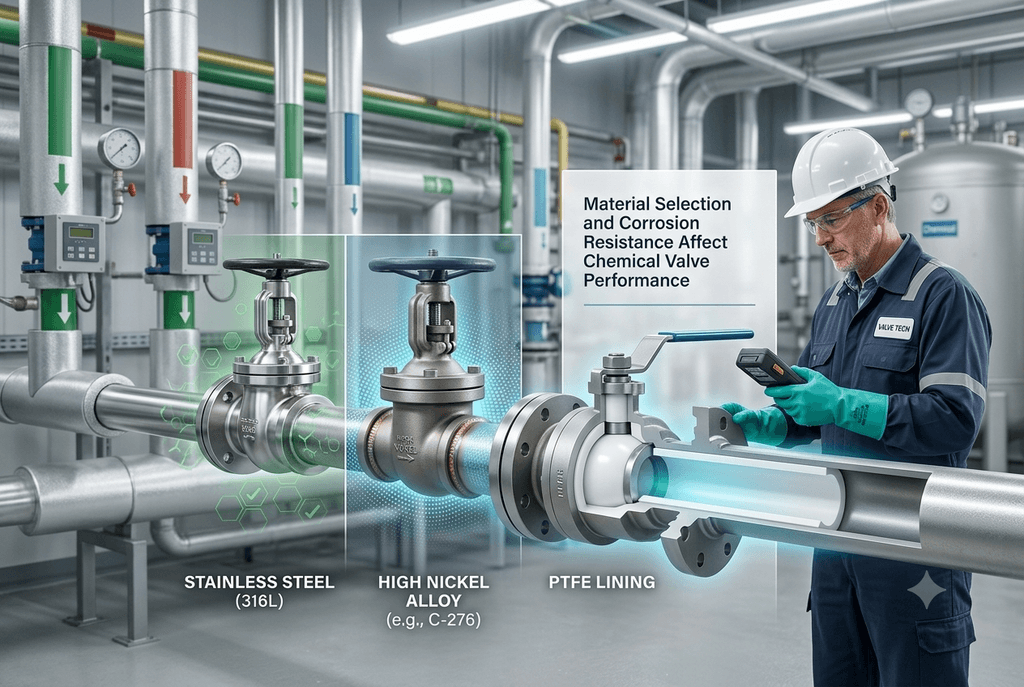
Material selection directly affects the durability, safety, and performance of valves used in chemical processing plants. Valves must be made from materials that can withstand the chemical composition, concentration, temperature, and pressure of the process medium. Stainless steel, specialised alloys, PTFE-lined materials, and other corrosion-resistant options may be suitable for different applications. Choosing the wrong material can lead to corrosion, leakage, component failure, and costly maintenance.
Corrosion resistance is equally important because chemical exposure can gradually damage valve bodies, stems, seats, and internal components. The Top Industrial Valve Manufacturers for Chemical Industries in Ahmedabad can help buyers identify suitable materials according to specific operating conditions. Chemical companies should provide complete process information before selecting a valve. This helps ensure better service life, sealing performance, and operational reliability.
Key Factors for Selecting Corrosion-Resistant Valve Materials
- Chemical Compatibility: Select materials that can safely withstand the specific chemical medium and its concentration. This helps reduce corrosion and premature component deterioration.
- Temperature Resistance: Consider both normal and maximum operating temperatures when selecting valve materials. High temperatures can affect material strength, seals, and corrosion performance.
- Pressure Rating: The selected valve material and construction should handle the system’s operating and design pressure. Proper pressure selection helps prevent mechanical damage and unexpected failures.
- Material of Construction: Stainless steel, alloy materials, PTFE linings, and specialised polymers may suit different chemical services. The choice should be based on actual process conditions rather than general assumptions.
- Sealing Materials: Seats, gaskets, and packing should also be chemically compatible with the process medium. Suitable sealing materials help minimise leakage and maintain reliable valve operation.
- Application Conditions: Consider concentration, flow characteristics, solids content, pressure, and temperature together. A complete application assessment helps manufacturers recommend the most suitable valve construction.
How Can Chemical Companies Compare the Top Industrial Valve Manufacturers for Chemical Industries in Ahmedabad?
Chemical companies should compare manufacturers based on technical capability, product quality, testing procedures, delivery performance, and after-sales support. Price should not be the only deciding factor because an unsuitable valve can increase maintenance costs and create operational risks. Buyers should review valve construction, pressure class, material grades, end connections, actuation options, and available documentation. Comparing these factors helps companies identify manufacturers that can meet their specific process requirements.
It is also important to evaluate the manufacturer’s experience with chemical and other demanding process applications. Companies should request technical datasheets, drawings, material certificates, inspection reports, and relevant quality documents where required. The Top Industrial Valve Manufacturers for Chemical Industries in Ahmedabad may offer different product ranges and specialisations, so quotations should be compared against the same technical specifications. A detailed evaluation can help buyers select a reliable supplier and achieve better long-term value.
Key Factors to Compare Before Selecting a Valve Manufacturer
- Product Range: Check whether the manufacturer offers the required valve types, sizes, pressure classes, and configurations. A broad product range can simplify procurement for different plant applications.
- Material Options: Review available body, trim, seat, and sealing materials for chemical compatibility. Suitable material choices can improve corrosion resistance and service life.
- Quality and Testing: Examine manufacturing controls, pressure testing, inspection procedures, and quality certifications. Proper testing helps verify that valves meet the required technical specifications.
- Industry Experience: Consider the manufacturer’s experience in chemical, pharmaceutical, petrochemical, and other process industries. Relevant experience can support better application-specific recommendations.
- Documentation and Support: Check whether the supplier can provide drawings, datasheets, test certificates, and other required documents. Responsive technical support can also simplify installation and maintenance.
- Delivery and After-Sales Service: Compare lead times, spare availability, warranty terms, and service support. Reliable delivery and ongoing assistance can reduce procurement delays and operational downtime.
What Quality Standards Should Chemical Industries Expect From Industrial Valve Manufacturers?
Chemical industries should expect industrial valve manufacturers to follow appropriate quality control, inspection, and testing procedures throughout the manufacturing process. Valves may need to meet relevant standards such as API, ASME, ASTM, DIN, BS, MSS, or ISO, depending on the valve type and project requirements. Buyers should verify the applicable standards specified for their particular application rather than assuming that every valve requires the same certification. Proper quality procedures help improve valve reliability, safety, and consistency.
Manufacturers should also provide suitable testing and inspection documentation when required by the project. Hydrostatic testing, pneumatic testing, seat testing, dimensional inspection, and material verification may be applicable depending on the valve design and service conditions. The Top Industrial Valve Manufacturers for Chemical Industries in Ahmedabad should clearly explain their testing procedures and available documentation. This allows chemical companies to verify that the supplied valves meet the required engineering and quality specifications.
Important Quality and Testing Requirements
- Quality Management: Manufacturers should follow documented quality-control procedures throughout production. This helps ensure consistent valve quality and reliable performance.
- Pressure Testing: Valves should undergo suitable pressure and leakage tests according to specifications. This helps identify defects before installation in chemical plants.
- Material Verification: Material grades should match the approved technical specifications. Proper verification helps ensure corrosion resistance and mechanical strength.
- Dimensional Inspection: Critical dimensions, connections, and components should be checked before delivery. This helps ensure proper installation and pipeline compatibility.
- Applicable Standards: Manufacturers should follow relevant API, ASME, ASTM, ISO, or other standards. The required standards should be confirmed according to the project specifications.
- Inspection Documentation: Buyers may require test reports, material certificates, and inspection records. Proper documentation supports traceability and confirms compliance with project requirements.
How Do the Top Industrial Valve Manufacturers for Chemical Industries in Ahmedabad Support Plant Safety and Reliability?
Industrial valves play an important role in maintaining safe and reliable chemical plant operations. Correctly selected valves help isolate equipment, control fluid flow, prevent reverse flow, and reduce the risk of unwanted leakage. The Top Industrial Valve Manufacturers for Chemical Industries in Ahmedabad can support these requirements by providing application-specific valve designs, suitable materials, and appropriate pressure ratings. Their technical guidance can also help buyers select valves according to actual process conditions.
Plant reliability also depends on proper installation, inspection, maintenance, and operation after the valves are supplied. Manufacturers can support plant teams through technical documentation, testing reports, maintenance guidance, and suitable spare parts where available. Selecting the right valve construction and sealing arrangement can help reduce premature wear and unplanned downtime. Chemical companies should therefore consider both product quality and long-term technical support when choosing a valve manufacturer.
Ways Valve Manufacturers Support Plant Safety and Reliability
- Application-Based Selection: Manufacturers can recommend valve types based on the process medium, pressure, temperature, and flow requirements. This helps reduce the risk of unsuitable valve selection.
- Corrosion Resistance: Suitable body, trim, seat, and sealing materials can be recommended for chemical service. Proper material selection helps reduce corrosion and leakage-related problems.
- Pressure and Leakage Testing: Appropriate testing helps identify potential defects before valves are installed. This supports safer operation and reduces the possibility of unexpected leakage.
- Technical Documentation: Datasheets, drawings, test certificates, and installation information can support proper valve selection and use. Clear documentation also helps maintenance teams during future inspections.
- Maintenance Support: Manufacturers may provide guidance on inspection, servicing, and replacement of valve components. Proper maintenance can extend service life and reduce unexpected equipment downtime.
- Reliable Spare Availability: Access to suitable replacement parts can simplify future maintenance activities. Timely spare support can help minimise operational interruptions in chemical plants.
How Can Businesses Choose the Right Manufacturer for Their Chemical Plant?
Businesses should begin by clearly identifying the valve requirements of their chemical plant before comparing manufacturers. Important details include the process medium, chemical concentration, operating temperature, pressure, line size, valve function, material requirements, and actuation needs. This information helps manufacturers recommend valves that match the actual application. It also allows buyers to compare technical quotations on the same specifications.
Companies should also evaluate manufacturing experience, quality procedures, testing capabilities, documentation, delivery timelines, and after-sales support. The Top Industrial Valve Manufacturers for Chemical Industries in Ahmedabad may have different product ranges and areas of expertise, so businesses should select a supplier based on application suitability rather than price alone. Checking technical documents and relevant certifications can further support an informed purchasing decision.
Key Factors to Consider Before Selecting a Manufacturer
- Process Requirements: Share details about the chemical medium, pressure, temperature, and flow conditions. This helps the manufacturer recommend a suitable valve configuration.
- Product Range: Check whether the manufacturer offers the required valve types, sizes, materials, and pressure classes. A suitable range can simplify procurement for different applications.
- Quality Procedures: Review the manufacturer’s inspection, testing, and quality-control processes. Consistent quality procedures can support reliable valve performance.
- Technical Documentation: Ask for relevant datasheets, drawings, test reports, and material certificates. Proper documentation helps verify compliance with project specifications.
- Delivery Capability: Compare manufacturing capacity, lead times, and availability of required products. Reliable delivery can help prevent delays in plant installation or maintenance.
- After-Sales Support: Consider technical assistance, spare availability, maintenance guidance, and service support. Strong after-sales support can provide value throughout the valve’s service life.
Why Are Ahmedabad Manufacturers Important for Chemical Industry Valve Procurement?
Ahmedabad has a strong industrial ecosystem with manufacturers and suppliers serving chemical, pharmaceutical, petrochemical, engineering, and other process industries. Local valve manufacturers can provide easier communication, technical discussions, product inspections, and procurement support for chemical companies. Working with nearby suppliers can also make it easier to coordinate replacement valves, spare parts, and repeat orders. This can be particularly useful when plants require timely support during maintenance or expansion projects.
However, location should not be the only factor when selecting a valve manufacturer. Chemical companies should also evaluate product quality, material options, testing procedures, technical expertise, certifications, and application experience. The Top Industrial Valve Manufacturers for Chemical Industries in Ahmedabad can offer different products and capabilities, so buyers should compare suppliers according to their specific process requirements. A combination of local accessibility and verified technical capability can support more efficient valve procurement.
Benefits of Working With Ahmedabad-Based Valve Manufacturers
- Local Technical Support: Nearby manufacturers can make technical discussions and application consultations more convenient. This can help resolve specification requirements more efficiently.
- Faster Procurement: Local sourcing may simplify communication, order coordination, and product availability. It can also help reduce delays for urgent replacement requirements.
- Inspection Convenience: Buyers may find it easier to coordinate inspections and quality discussions with local manufacturers. This can improve transparency during the procurement process.
- Spare Availability: Local suppliers can provide easier access to replacement valves and spare components when required. This can support maintenance and reduce potential downtime.
- Industry Experience: Ahmedabad manufacturers may have experience serving chemical and other process industries. This can help businesses identify suitable valve designs for demanding applications.
- Long-Term Support: Building a relationship with a local manufacturer can simplify repeat orders and technical assistance. Consistent supplier support can benefit ongoing plant maintenance and expansion.
Conclusion
Selecting from the Top Industrial Valve Manufacturers for Chemical Industries in Ahmedabad requires a technical and application-focused approach. Chemical plants should consider valve type, material compatibility, pressure and temperature ratings, sealing performance, testing, quality documentation, delivery, and long-term support before finalising a supplier. Ahmedabad offers several industrial valve manufacturers with experience across chemical, pharmaceutical, petrochemical, oil and gas, water treatment, and other process industries.
Companies such as XSIS Valves, Nilon Valves, Flowchek Valves, WIN Enterprise, Karan Valves, and other local manufacturers can be evaluated according to individual project requirements. Ultimately, the Top Industrial Valve Manufacturers for Chemical Industries in Ahmedabad should be selected based on verified technical capability and suitability for the plant’s specific operating conditions rather than on price alone.
Explore Our Recent Blog
- Top Wafer Check Valve Manufacturers in Ahmedabad
- Top Swing Check Valve Manufacturers in Ahmedabad
- Top Dual Plate Check Valve Suppliers in Ahmedabad
- Top Industrial Strainer Manufacturers in Ahmedabad
- Top Y Strainer Manufacturers in Ahmedabad
Frequently Asked Questions
1. Who are the Top Industrial Valve Manufacturers for Chemical Industries in Ahmedabad?
Several Ahmedabad-based companies serve chemical and process industries, including XSIS Valves, Nilon Valves, Flowchek Valves, WIN Enterprise, Karan Valves, and Jogani Valves and Controls. Their product ranges and application capabilities differ. Buyers should compare each manufacturer’s technical suitability with the requirements of their specific chemical process.
2. Which valve is commonly used in chemical industries?
Ball, gate, globe, butterfly, check, plug, diaphragm, and specialty valves can all be used in chemical plants depending on the application. The correct valve depends on whether the process requires isolation, throttling, pressure control, or prevention of reverse flow. Material compatibility and operating conditions should always be checked before selection.
3. Why is material selection important for chemical process valves?
Chemical fluids can cause corrosion or degradation when the valve material is incompatible with the process medium. Temperature, concentration, pressure, and chemical composition can all influence material performance. Selecting an appropriate material helps improve valve durability, sealing performance, and operational reliability.
4. How should I select an industrial valve manufacturer in Ahmedabad?
Start by checking the manufacturer’s relevant product range, chemical-industry experience, quality procedures, testing capabilities, material options, and technical support. Compare complete technical quotations rather than focusing only on price. It is also useful to verify documentation, delivery commitments, and after-sales support.
5. Are stainless steel valves suitable for chemical applications?
Stainless steel can be suitable for many chemical applications, but it is not universally compatible with every chemical or operating condition. The exact grade, process fluid, concentration, temperature, and pressure should be considered before selection. For highly aggressive services, specialised alloys or lined constructions may be more appropriate.
6. Why should chemical plants work with experienced valve manufacturers?
Experienced manufacturers can provide better application guidance and help match valve design, materials, pressure ratings, and sealing arrangements to the process. They may also provide testing documentation and technical support. This can help chemical plants reduce specification errors, leakage risks, maintenance issues, and premature valve replacement.