
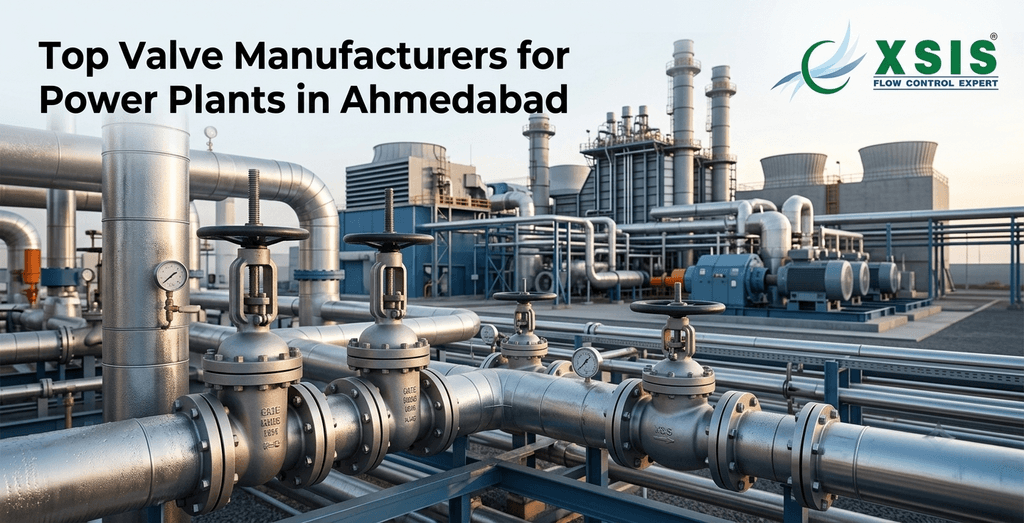
Power plants depend on reliable industrial valves to control steam, water, fuel, and cooling systems. These valves play an important role in maintaining operational efficiency, managing pressure, preventing leakage, and ensuring equipment safety. Choosing the right products is essential for uninterrupted power generation and long-term system performance. Businesses searching for the Top Valve Manufacturers for Power Plants in Ahmedabad can explore local companies offering industrial flow-control solutions for different power generation applications.
Ahmedabad is a major industrial hub in Gujarat, with several manufacturers and suppliers serving the engineering and energy sectors. However, selecting a suitable manufacturer requires careful evaluation of product quality, pressure ratings, material specifications, manufacturing capabilities, and testing procedures. This guide explores commonly used power plant valves, leading Ahmedabad-based manufacturers, important industry standards, and practical factors to consider when choosing a reliable valve supplier.
Why Are Industrial Valves Important for Power Plants?
Industrial valves play an essential role in controlling the movement of liquids, gases, steam, and other process fluids throughout a power generation facility. They regulate flow, isolate pipeline sections, prevent reverse flow, and support pressure management across different plant operations. Without properly selected valves, power plants may experience leakage, equipment damage, inefficient circulation, and unexpected operational interruptions.
Power generation facilities operate under different pressure and temperature conditions depending on their design and technology. Thermal power plants, gas-based facilities, hydroelectric stations, and other generation units require valves designed for their individual operating environments. The Top Valve Manufacturers for Power Plants in Ahmedabad should therefore understand industrial requirements and offer suitable valve configurations for specific applications.
Major Functions of Power Plant Valves
- Flow Regulation: Valves control the movement of steam, water, fuel, and other fluids through interconnected pipelines. Proper flow regulation helps maintain process stability and supports efficient equipment operation.
- Pressure Management: Certain valve arrangements help control pressure within pipelines and equipment systems. Pressure relief and pressure control devices protect installations against potentially damaging operating conditions.
- Pipeline Isolation: Gate valves and ball valves can isolate specific sections during maintenance, inspection, or emergency operations. This helps technicians work on selected equipment without unnecessarily shutting down the entire system.
- Backflow Prevention: Check valves prevent fluid from flowing in the opposite direction. They help protect pumps, compressors, and other equipment against reverse-flow conditions.
- Equipment Protection: Correctly specified industrial valves support the safe operation of boilers, turbines, pumps, and cooling systems. Their performance contributes to equipment reliability and operational continuity.
- Operational Efficiency: Suitable valve selection reduces unnecessary pressure losses and helps maintain controlled fluid movement. This supports efficient operation when valves are correctly sized and installed.
What Types of Valves Are Commonly Used in Power Plants?
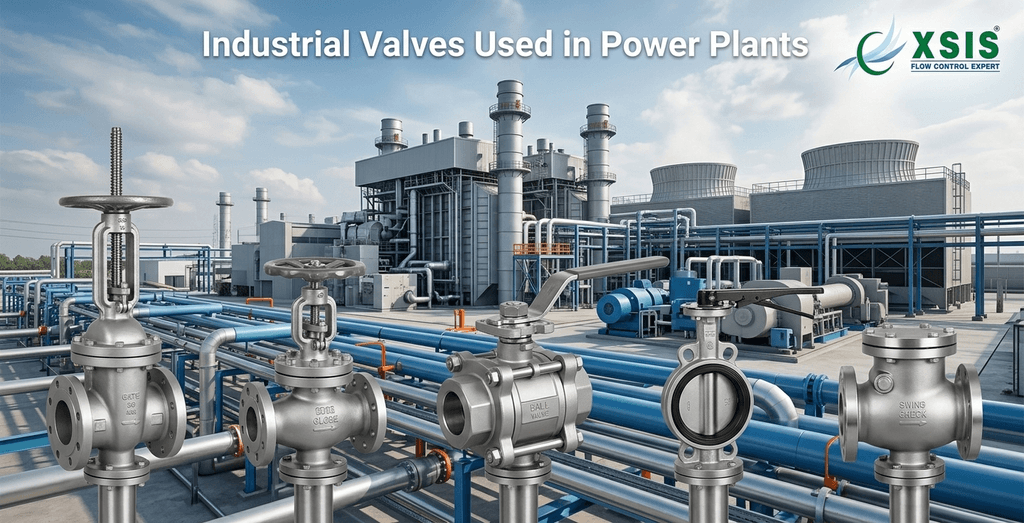
Power plants use different types of industrial valves depending on their operating processes, pipeline arrangements, and fluid-handling requirements. Each valve performs a specific function, such as controlling steam flow, isolating water pipelines, regulating fuel supply, or preventing reverse circulation. Choosing the correct valve type is essential for maintaining process stability and protecting connected equipment.
When comparing the Top Valve Manufacturers for Power Plants in Ahmedabad, buyers should check whether suppliers offer valves suitable for their required pressure ratings, temperatures, flow conditions, and installation environments. The following valve types are commonly considered for power generation applications.
1. Gate Valves
Gate valves are widely used for on-off flow control in industrial pipelines. Their internal gate moves vertically to open or close the fluid passage, providing relatively low flow resistance when fully open. They are commonly considered for steam, water, and utility isolation services where frequent throttling is not required.
2. Globe Valves
Globe valves are suitable for applications that require controlled flow regulation. Their disc moves towards or away from the valve seat to adjust the amount of fluid passing through the pipeline. They are particularly useful in steam systems, feedwater arrangements, and other applications requiring controlled fluid movement.
3. Ball Valves
Ball valves use a rotating spherical element to control fluid movement. A quarter-turn operation allows the valve to open or close quickly, making it suitable for isolation applications. Power plants may use appropriately rated ball valves in auxiliary water, fuel, compressed air, and other industrial service lines.
4. Butterfly Valves
Butterfly valves use a rotating disc to regulate or isolate flow within a pipeline. Their compact construction makes them useful in large-diameter piping arrangements where installation space and weight are important considerations. They are commonly considered for cooling water, circulating water, and utility systems.
5. Check Valves
Check valves automatically prevent reverse fluid movement through pipelines. They operate according to flow direction and do not normally require manual intervention. These valves are important for protecting pumps, feedwater systems, and other equipment against potentially damaging backflow conditions.
6. Pressure Relief and Safety Valves
Safety valves and pressure relief valves help protect pressurised equipment against excessive pressure. They are especially important in boiler systems, steam installations, and pressure vessels. Buyers should verify the required relieving capacity, set pressure, temperature range, and applicable certification before selecting these products.
Who Are the Top Valve Manufacturers for Power Plants in Ahmedabad?
Ahmedabad has several industrial valve manufacturers and suppliers serving power generation, engineering, chemical processing, and infrastructure applications. Buyers can explore companies with different product portfolios, manufacturing capabilities, and technical specialisations. However, a supplier’s suitability for a particular power plant project should always be established through product documentation and technical evaluation.
The following companies are worth considering when researching the Top Valve Manufacturers for Power Plants in Ahmedabad. This is a supplier shortlist rather than an independently verified ranking of manufacturing quality or power-sector approvals.
1. XSIS Valves Pvt. Ltd.
XSIS Valves Pvt. Ltd. is an Ahmedabad-based industrial valve manufacturer and exporter serving several industrial sectors, including power generation, oil and gas, chemicals, and water treatment. Its published product range includes gate valves, globe valves, ball valves, butterfly valves, check valves, non-return valves, strainers, and automatic valves. The company also states that it holds ISO 9001:2015 certification and offers customised industrial valve solutions.
2. Prime Industrial Valves Manufacturing Co.
Prime Industrial Valves Manufacturing Co. is an Ahmedabad-based manufacturer associated with industrial flow-control products. Its business information highlights manufacturing experience, an in-house casting facility, and research and development capabilities. These areas are relevant to industrial buyers who want to understand how a manufacturer manages product development and production requirements.
3. Amtech Valves
Amtech Valves is another Ahmedabad-based business that buyers can consider while exploring industrial valve solutions. Its published business information indicates a focus on engineered flow-control products for industrial and utility applications. The company also references international valve standards, including API, ANSI, AWWA, DIN, and BS, across its product information.
4. Flowjet Valves Private Limited
Flowjet Valves Private Limited operates in Ahmedabad’s Kathwada GIDC industrial area and is listed as an industrial valve manufacturer. Its available product information highlights butterfly valves and describes hydrostatic and seat-leak testing before dispatch. It also mentions the provision of material test certificates with orders.
5. MNC Valves Limited
MNC Valves Limited is an industrial valve manufacturer and supplier with a manufacturing presence in Ahmedabad. Its business profile identifies it with industrial valve production and automation-related capabilities. Such capabilities may be relevant to power plants looking for conventional flow isolation products and solutions involving automated operation.
6. 4Matic Valves Pvt. Ltd.
4Matic Valves Pvt. Ltd. is an Ahmedabad-based industrial valve manufacturer and exporter associated with flow-control and steam-related products. Its business profile identifies products such as steam safety valves, pressure-reducing valves, and other industrial valve solutions. These product categories are relevant to procurement research involving steam and pressure-management applications.
7. H.P. Valve Pvt. Ltd.
H.P. Valve Pvt. Ltd. is an Ahmedabad-based industrial valve manufacturer and exporter. Its business profile associates the company with process and utility valve requirements. It is another option for procurement teams researching local manufacturers for industrial fluid-control equipment.
8. Shahine Engineering Works
Shahine Engineering Works is an Ahmedabad-based manufacturer associated with industrial valves, steam traps, and pipeline-related equipment. Its presence in the Rakhial industrial area makes it another local business that power plant maintenance and procurement teams can investigate.
Which Valve Products Should Power Plants Source from Ahmedabad Manufacturers?
Power plants require several valve categories to support different stages of electricity generation. The product selection depends on the plant’s design, equipment specifications, fluid characteristics, and operating conditions. Buyers should work with engineering teams to prepare a detailed valve schedule before approaching the Top Valve Manufacturers for Power Plants in Ahmedabad. A well-prepared product requirement helps manufacturers recommend suitable designs and prevents purchasing unsuitable valves. The following product categories are important for power generation facilities.
Essential Valve Products for Power Generation
- High-Pressure Gate Valves: These valves are considered for isolation duties in demanding pipeline systems. Buyers should verify pressure class, body material, sealing arrangement, and temperature suitability before installation in high-pressure services.
- Steam Globe Valves: Globe valves provide controlled flow regulation in steam distribution and auxiliary systems. Their selection should consider flow characteristics, pressure drop, seat design, and the temperature of the operating medium.
- Industrial Ball Valves: Ball valves provide quick shut-off and are useful in suitable auxiliary and utility pipelines. Their seat materials, body construction, and pressure ratings must match the actual service conditions.
- Butterfly Valves: These valves are frequently considered for cooling water and large-diameter utility pipelines. Buyers should examine disc material, liner compatibility, operating torque, and leakage performance.
- Non-Return Valves: Check valves help prevent reverse flow in pump discharge and other process lines. Correct selection requires evaluating flow velocity, cracking pressure, installation direction, and potential water hammer.
- Safety and Pressure Relief Valves: These products protect pressure systems by releasing excess pressure under specified conditions. Their capacity calculations and certification must be reviewed by qualified engineers.
Which Standards and Certifications Should Power Plant Valves Meet?
Industrial valve standards establish technical requirements for product design, dimensions, pressure ratings, testing, and performance. Power plants operate critical equipment, so buyers must identify the standards specified in their engineering documents and procurement requirements. Choosing a manufacturer simply because it mentions international standards is not sufficient; the specific valve model and configuration must meet the applicable requirements.
When evaluating the Top Valve Manufacturers for Power Plants in Ahmedabad, procurement professionals should examine the manufacturer’s quality management system and product-level compliance documents. They should also confirm whether the required inspection and testing activities are available for the particular order.
Important Standards and Quality Requirements
- API Standards: American Petroleum Institute standards cover various industrial valve designs and testing requirements. Relevant API specifications may apply to certain valve categories used in industrial and energy-related applications.
- ASME Standards: American Society of Mechanical Engineers standards are important in pressure equipment and piping applications. Buyers should identify the exact ASME code and edition referenced in their project documents.
- ANSI Class Ratings: ANSI class designations are commonly used in valve and piping specifications to identify pressure-temperature rating categories. The actual allowable pressure depends on the material and applicable standard.
- ISO 9001 Certification: ISO 9001 relates to an organisation’s quality management system. It does not independently certify every valve for a particular power plant application.
- Material Test Certificates: MTCs provide information about the material supplied and its relevant test results. Buyers should verify heat numbers, material grades, and traceability requirements.
- Inspection and Testing Reports: Hydrostatic testing, seat leakage testing, and other specified inspections help demonstrate whether a valve meets the purchase specification.
How Can Buyers Select the Right Valve Manufacturer in Ahmedabad?
Selecting a manufacturer requires more than comparing quotations and delivery timelines. Industrial valves must match the process conditions and engineering specifications of the power plant. A low-cost product may create additional maintenance expenses if its materials, sealing arrangements, or pressure ratings are unsuitable.
Buyers researching the Top Valve Manufacturers for Power Plants in Ahmedabad should follow a structured vendor evaluation process. This helps procurement teams compare suppliers using technical, commercial, and operational factors.
Important Factors for Manufacturer Selection
- Manufacturing Experience: Examine the manufacturer’s experience with relevant industrial valve categories and applications. Ask for details of similar projects, available references, and its current production capabilities.
- Product Range: Choose a supplier whose product portfolio matches the required valve schedule. Availability of gate, globe, ball, butterfly, check, and safety valves can simplify procurement when several categories are needed.
- Material Quality: Check whether the manufacturer can supply the required carbon steel, stainless steel, alloy steel, or other specified materials. Material selection should depend on operating pressure, temperature, corrosion exposure, and fluid compatibility.
- Quality Control: Review the manufacturer’s inspection procedures and testing arrangements. Ask about dimensional checks, material verification, hydrostatic testing, seat leakage testing, and traceability.
- Customisation Capabilities: Some installations require special dimensions, end connections, actuators, or design configurations. Confirm whether the supplier can manufacture products according to approved drawings and project specifications.
- Technical Support: Consider the availability of product guidance, installation assistance, spare parts, and maintenance support. Responsive technical communication can help resolve issues during procurement and operation.
How Can Power Plants Maintain Industrial Valves for Long-Term Performance?
Industrial valve maintenance is important for keeping power generation systems reliable and reducing avoidable operational interruptions. Valves operate in environments where pressure changes, temperature variations, vibration, corrosion, and continuous use can affect their components. Regular inspections help identify developing problems before they become major equipment failures.
Even when purchasing from the Top Valve Manufacturers for Power Plants in Ahmedabad, plant operators should follow an application-specific preventive maintenance programme. Maintenance intervals should be determined by operating conditions, manufacturer recommendations, plant procedures, and applicable safety requirements.
Practical Valve Maintenance Practices
- Routine Leakage Inspection: Examine valve bodies, stems, packing, flanges, and connections for signs of leakage. Early detection helps prevent fluid loss and reduces potential safety concerns.
- Seat and Seal Inspection: Inspect sealing components for wear, deformation, or damage during scheduled maintenance. Replace unsuitable or damaged components with compatible parts recommended for the valve design.
- Corrosion Monitoring: Check exposed surfaces and internal components for corrosion, erosion, and material degradation. This is especially important when valves handle aggressive fluids or operate under demanding conditions.
- Actuator and Stem Maintenance: Inspect actuators, stems, gearboxes, and other moving components for abnormal operation. Follow suitable lubrication and adjustment procedures recommended by the manufacturer.
- Performance Testing: Conduct relevant operational, pressure, and leakage tests according to approved maintenance procedures. Critical safety devices require inspection and testing by qualified personnel.
- Maintenance Record Management: Maintain records of inspections, repairs, replacement parts, and testing activities. These records help identify recurring faults and support future maintenance planning.
What Challenges Do Power Plants Face When Sourcing Industrial Valves?
Power plant procurement teams often face challenges when sourcing valves because different systems require different technical specifications. A valve suitable for a low-pressure cooling water line may not be appropriate for a high-pressure steam application. Understanding these differences is essential when working with industrial valve manufacturers and planning long-term equipment requirements. Ahmedabad buyers comparing the Top Valve Manufacturers for Power Plants in Ahmedabad should consider the following common sourcing challenges before finalising their vendors.
Common Procurement Challenges and Their Solutions
- Incorrect Valve Specifications: Selecting valves without checking pressure, temperature, and flow requirements can affect system performance. Buyers should prepare approved datasheets and confirm every technical parameter before ordering.
- Material Compatibility Issues: Incompatible materials can increase corrosion, erosion, and premature component failure. Procurement teams should consult qualified engineers to select suitable body, trim, seat, and sealing materials.
- Inconsistent Product Quality: Differences in manufacturing processes and inspection procedures can affect product reliability. Buyers should review quality documentation and establish inspection requirements before production and dispatch.
- Long Delivery Periods: Specialised valves and customised configurations may require additional manufacturing time. Discuss production schedules, delivery commitments, and spare-parts availability during the quotation stage.
- Limited Technical Documentation: Missing material certificates, drawings, and inspection reports can complicate project approvals. Buyers should include all documentation requirements in their purchase orders.
- After-Sales Support: Delayed technical assistance can create difficulties during installation and maintenance. Evaluate the manufacturer’s communication, service arrangements, and spare-parts support before establishing a long-term relationship.
Conclusion
Selecting suitable industrial valves is an important part of maintaining the safety, efficiency, and reliability of power generation facilities. From steam distribution and feedwater systems to cooling water pipelines and pressure protection, every application requires appropriately designed and specified flow-control equipment.
Ahmedabad offers several industrial valve manufacturing and supply options for power generation projects. Companies such as XSIS Valves, Prime Industrial Valves, Amtech Valves, Flowjet Valves, and other local manufacturers provide options worth evaluating. Buyers researching the Top Valve Manufacturers for Power Plants in Ahmedabad should focus on manufacturing capabilities, product specifications, material quality, testing procedures, and technical support.
Explore Our Recent Blog
- Top Y Strainer Manufacturers in Ahmedabad
- Top Industrial Valve Manufacturers for Chemical Industries in Ahmedabad
- Top Valve Manufacturers for Pharmaceutical Industries in Ahmedabad
- Top Valve Manufacturers for Oil and Gas Industries in Ahmedabad
Frequently Asked Questions
1. Who Are the Top Valve Manufacturers for Power Plants in Ahmedabad?
Some companies buyers can consider include XSIS Valves Pvt. Ltd., Prime Industrial Valves Manufacturing Co., Amtech Valves, Flowjet Valves, and MNC Valves Limited. Other local options include 4Matic Valves, H.P. Valve, and Shahine Engineering Works. Buyers should compare their current product ranges, technical capabilities, certifications, and project suitability before selecting a manufacturer.
2. Which Types of Valves Are Used in Power Plants?
Power plants commonly use gate valves, globe valves, ball valves, butterfly valves, and check valves. Safety valves and pressure relief valves are also important for protecting pressurised systems. The exact selection depends on the application, operating pressure, temperature, and fluid characteristics.
3. What Materials Are Suitable for Power Plant Valves?
Common industrial valve materials include carbon steel, stainless steel, alloy steel, and other specialised materials. The appropriate material depends on the operating environment, pressure, temperature, and corrosion resistance requirements. Buyers should follow engineering specifications and confirm material grades through relevant documentation.
4. Why Are High-Pressure Valves Important in Thermal Power Plants?
High-pressure valves are important for controlling and isolating fluids in demanding steam and feedwater systems. They must withstand the specified operating pressure and temperature without compromising sealing performance. Correct sizing, material selection, and testing are essential for safe operation.
5. How Can Buyers Check the Quality of Industrial Valves?
Buyers should examine product datasheets, material test certificates, manufacturing details, and inspection reports. They can also request hydrostatic testing, seat leakage testing, and third-party inspection where required. Checking the manufacturer’s quality management system and product-specific compliance documents helps establish confidence in the supplied equipment.
6. How Can I Choose a Reliable Valve Supplier in Ahmedabad?
Start by identifying your required valve types, sizes, materials, pressure classes, and operating temperatures. Compare manufacturers based on relevant experience, product availability, testing facilities, documentation, delivery schedules, and technical support. Always verify that the selected supplier can meet the specifications of your particular power plant project.