
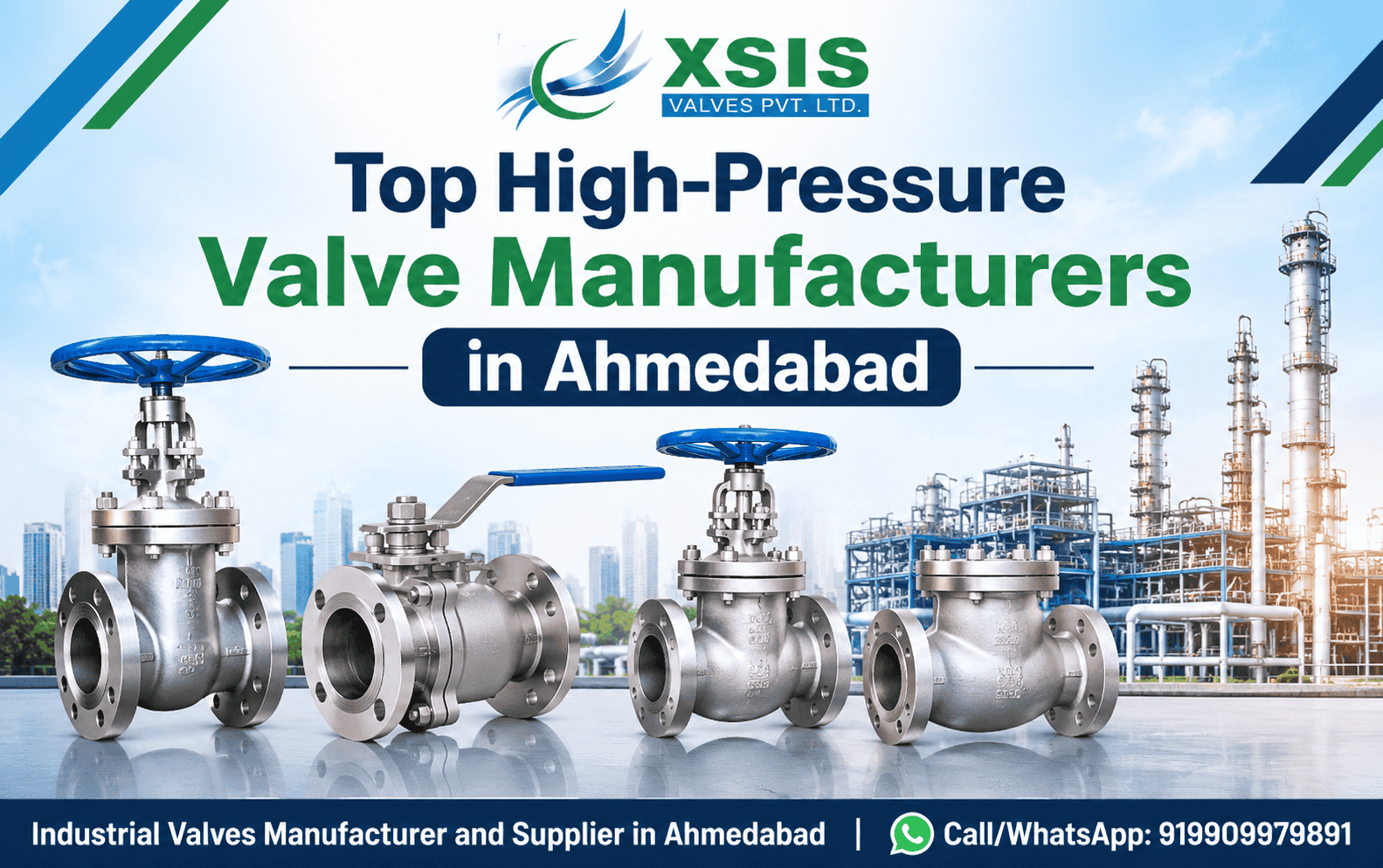
Industrial operations rely on reliable valves to control the movement of liquids, gases, steam, and other process fluids. Choosing the Top High-Pressure Valve Manufacturers in Ahmedabad is essential for industries that require safe, efficient, and consistent flow control under demanding operating conditions. Sectors such as oil and gas, petrochemicals, pharmaceuticals, power generation, and chemical processing depend on durable industrial valves to maintain smooth operations.
Ahmedabad is an important industrial centre in Gujarat, offering access to manufacturers specialising in ball valves, gate valves, globe valves, check valves, and pressure-control solutions. However, selecting the right supplier requires evaluating manufacturing experience, pressure ratings, material quality, certifications, testing facilities, and after-sales support. This guide explores leading manufacturers and important factors to consider when sourcing high-pressure industrial valves.
Why Are High-Pressure Industrial Valves Important for Manufacturing Industries?
High-pressure industrial valves are designed to control, regulate, and isolate fluids in systems operating under elevated pressure. These valves help maintain stable operations by controlling fluid movement and preventing unwanted leakage. Their construction, sealing arrangements, and material selection must match the pressure and temperature conditions of the application.
Industries handling steam, compressed gases, petroleum products, chemicals, and other process fluids depend on properly selected pressure-rated valves. An unsuitable valve can lead to leakage, equipment damage, production interruptions, and safety risks. Therefore, selecting products from experienced high-pressure valve manufacturers is an important part of industrial planning.
What Are the Main Applications of High-Pressure Valves?
- Oil and Gas Industry: High-pressure valves control the movement of petroleum products, natural gas, and other fluids across processing systems and pipelines.
- Chemical Processing: Specialised valves manage corrosive and high-pressure chemicals while maintaining reliable sealing performance.
- Power Generation: Valves regulate steam, boiler feedwater, and other fluids used in power generation equipment.
- Pharmaceutical Manufacturing: Industrial valves support controlled fluid transfer and process operations where cleanliness and material compatibility are important.
- Petrochemical Plants: Pressure-rated valves help manage hydrocarbons and other process fluids under demanding operating conditions.
- Heavy Engineering: Manufacturing facilities use industrial valves in hydraulic systems, processing equipment, and high-pressure utility networks.
Top High-Pressure Valve Manufacturers in Ahmedabad
Ahmedabad offers access to manufacturers specialising in different industrial valve categories. Some companies focus on general-purpose industrial valves, while others manufacture forged steel valves, pressure-control equipment, or specialised pipeline solutions.
The following companies provide a starting point for industrial buyers researching the Top High-Pressure Valve Manufacturers in Ahmedabad. Their product ranges and publicly available technical information differ, so buyers should verify the exact pressure class and configuration required for their projects.
1. XSIS Valves Pvt. Ltd.
XSIS Valves Pvt. Ltd. is an established industrial valve manufacturer and exporter based in Narolgam, Ahmedabad. Founded in 2008, the company manufactures different types of industrial valves for applications across oil and gas, power generation, chemicals, pharmaceuticals, water treatment, and other industries.
Website: XSIS Valves
919909979891
2. Nilon Valves Pvt. Ltd.
Nilon Valves Pvt. Ltd. is an Ahmedabad-based manufacturer and exporter serving oil and gas, chemical processing, power generation, marine, mining, and general engineering industries. Established in 1981, the company offers a range of industrial valves for standard and demanding process applications.
Website: Nilon Valves
3. Ashwathi Controls Pvt. Ltd
Ashwathi Controls Pvt. Ltd. manufactures industrial valves under its FLOEC brand. Its published portfolio covers several valve categories for thermal power, chemical processing, oil and gas, water infrastructure, and heavy industrial applications.
Website: FLOEC Industrial Valves
4. MESCO Industrial Ball Valves
MESCO is associated with industrial ball valve manufacturing in Ahmedabad, with published manufacturing capabilities at Kathwada GIDC. Its product range includes floating ball valves, trunnion-mounted ball valves, three-way ball valves, and specialised configurations for industrial applications.
Website: MESCO Ball Valve
5. Venus Engineering Works
Venus Engineering Works manufactures industrial valves for applications requiring different sizes and pressure classes. Its published product information covers cast steel and forged steel gate valves, making it relevant for businesses operating steam, process, and pipeline systems.
Website: Venus Engineering Works
6. Controtek Global
Controtek Global specialises in industrial globe valves designed for flow regulation, throttling, and shut-off applications. Its products serve industrial systems that require controlled fluid movement under different operating conditions.
Website: Controtek Global
7. Focet Valves Pvt. Ltd.
Focet Valves Pvt. Ltd. offers forged steel valves for industrial applications involving elevated pressure and temperature conditions. Its published forged steel gate valve specifications identify API 602 as the design and manufacturing standard and API 598 as the testing and inspection standard.
Website: Focet Valves
8. Hyperr Valves Pvt. Ltd.
Hyperr Valves Pvt. Ltd. manufactures specialised valves used for pressure regulation and system protection. Established in 2003, the company operates from Ahmedabad and offers products for industrial pressure-management applications.
Website: Hyperr Valves
What Types of High-Pressure Valves Should Industrial Buyers Consider?
Selecting the correct valve type is essential for maintaining efficient flow control and dependable industrial performance. Different valve designs perform different functions, including isolation, throttling, pressure regulation, and preventing reverse flow. The operating pressure, fluid characteristics, temperature, and pipeline configuration determine which valve design is suitable. Buyers comparing high-pressure valve manufacturers should understand these differences before requesting quotations.
1. High-Pressure Ball Valves
Ball valves use a rotating ball with a central opening to control fluid movement. Their quarter-turn operation allows quick opening and closing, making them suitable for isolation applications. Depending on the design, they can be manufactured in forged steel, stainless steel, and other specialised materials.
2. High-Pressure Gate Valves
Gate valves in Ahmedabad provide isolation by moving a gate or wedge across the flow path. They are commonly used in pipelines where full opening or complete shut-off is required. Forged steel gate valves are particularly relevant for smaller-bore, high-pressure steam and process lines.
3. High-Pressure Globe Valves
Globe valves in Ahmedabad regulate fluid flow through the movement of a disc against a seat. Their design makes them suitable for throttling and flow-control applications. They are commonly used in steam systems, power plants, and industrial processing facilities.
4. High-Pressure Check Valves
Check valves automatically prevent fluid from flowing backwards through a pipeline. They operate according to the pressure difference across the valve, without requiring manual operation. Their selection depends on flow characteristics, installation orientation, pressure conditions, and the risk of water hammer.
5. Pressure-Reducing Valves
Pressure-reducing valves help maintain a controlled downstream pressure when the upstream pressure is higher. They are used in steam distribution, water networks, and industrial process systems. Correct sizing and pressure settings are essential for reliable operation.
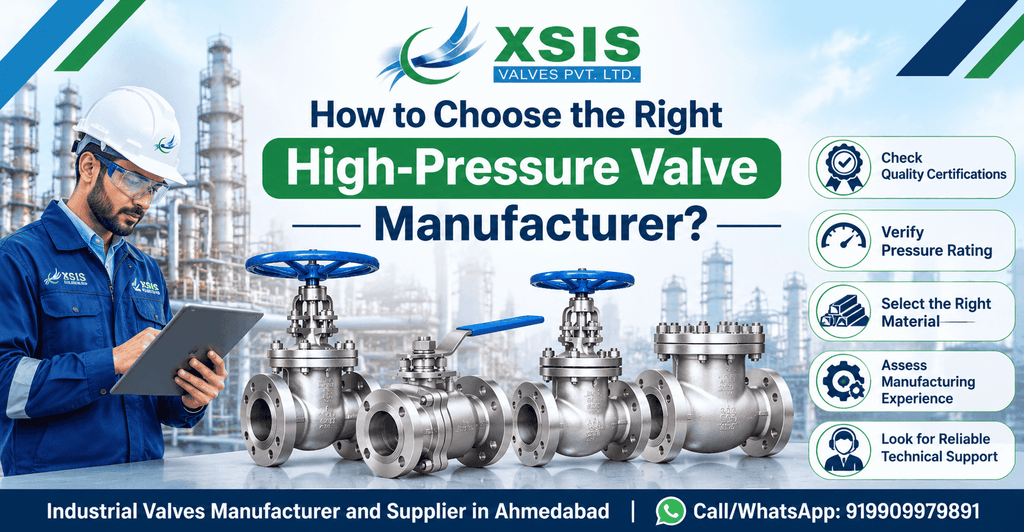
How Do You Choose the Right High-Pressure Valve Manufacturer in Ahmedabad?
Finding suitable manufacturers involves evaluating their engineering capabilities, product specifications, and quality management processes. A manufacturer may offer several industrial valve categories, but not every product will be suitable for every high-pressure application.
Businesses should compare suppliers according to their technical requirements instead of selecting a manufacturer based only on price or general market reputation. The following factors can help simplify the evaluation process.
- Manufacturing Experience: Check the company’s experience in producing industrial valves and supplying products for similar applications.
- Pressure Rating: Confirm whether the selected valve supports the required operating and design pressures. Check its pressure-temperature rating rather than relying only on the nominal class.
- Material Selection: Evaluate carbon steel, stainless steel, forged steel, duplex, and other material options according to fluid compatibility and operating conditions.
- Quality Certifications: Review applicable ISO certifications, API licences, IBR approvals, and other project-specific credentials. Confirm their validity and scope directly.
- Testing Facilities: Ask about hydrostatic shell testing, seat leakage testing, pneumatic testing, and material inspection. Request relevant test reports and certificates.
- Technical Support: Consider the manufacturer’s ability to provide product datasheets, drawings, installation guidance, spare parts, and after-sales assistance.
Which Materials Are Best for High-Pressure Industrial Valves?
Material selection directly influences valve strength, corrosion resistance, sealing performance, and operating life. Industrial valves must be manufactured using materials that can withstand the pressure, temperature, and chemical characteristics of the process fluid.
Carbon steel and forged steel are commonly considered for demanding pressure applications, while stainless steel and specialised alloys may be required for corrosive environments. Buyers should consult engineering specifications before selecting the material for a particular installation.
Common Valve Materials and Their Applications
- Carbon Steel: Commonly used in oil, gas, steam, and general industrial process systems. It offers good strength and durability for demanding operations.
- Forged Steel: Suitable for high-pressure applications, particularly in smaller-bore pipelines. It provides excellent mechanical strength and structural reliability.
- Stainless Steel: Used for handling corrosive fluids and hygienic applications. It offers good corrosion resistance and long-term performance.
- Duplex Steel: Suitable for applications requiring high strength and corrosion resistance. It performs well in demanding industrial environments.
- Alloy Steel: Used in high-temperature applications and demanding process conditions. It provides the strength needed for specialised industrial operations.
- Hastelloy: Ideal for selected highly corrosive chemical environments. It offers excellent resistance to many aggressive chemicals.
What Quality Standards Should High-Pressure Valve Manufacturers Follow?
Industrial valve standards establish important requirements for product design, dimensions, manufacturing, inspection, and testing. They help buyers evaluate whether a valve has been designed and tested according to recognised engineering practices.
Common standards include API, ASME, ANSI, ISO, and relevant Indian standards. However, the correct standard depends on the valve type, application, project specification, and industry requirements.Buyers should request inspection documents, material test certificates, pressure-test reports, and applicable compliance records. A manufacturer’s certification should never be assumed to cover every valve model or pressure class.
- API 598: Specifies inspection and pressure testing requirements for applicable industrial valves. It helps verify valve sealing performance and pressure integrity.
- API 6D: Covers pipeline and pipeline-related valves. It establishes requirements for valve design, manufacturing, and inspection.
- API 602: Applies to compact steel gate, globe, and check valves in Ahmedabad. It covers valves commonly used in industrial piping systems.
- ASME B16.34: Covers valve design, materials, dimensions, and pressure-temperature ratings. It supports reliable valve selection for different operating conditions.
- ISO 5208: Specifies pressure testing requirements for industrial valves. It helps evaluate valve shell strength and leakage performance.
ISO 9001:2015: Establishes quality management system requirements for organisations. It supports consistent manufacturing processes and quality control.
What Are the Benefits of Buying High-Pressure Valves from Ahmedabad Manufacturers?
Ahmedabad provides access to an established industrial manufacturing ecosystem, including valve producers, engineering companies, foundries, machining facilities, and industrial suppliers. This can help businesses explore different product categories and communicate directly with manufacturers about technical requirements.
Working with a suitable local manufacturer can also simplify product discussions, inspection coordination, customisation, and delivery planning. However, the actual benefits depend on the manufacturer’s production capacity, quality systems, and service capabilities.
- Technical Communication: Direct communication helps buyers discuss pressure ratings, material specifications, and application requirements.
- Product Customisation: Some manufacturers offer customised designs, end connections, materials, and actuation options.
- Inspection Coordination: Local access can make factory visits, product inspections, and testing discussions easier.
- Supply Planning: Businesses can coordinate production schedules, dispatch arrangements, and repeat orders more effectively.
- Industry Experience: Ahmedabad manufacturers serve multiple industrial sectors, providing access to different valve technologies.
- After-Sales Assistance: Local manufacturers may provide easier coordination for spare parts, maintenance, and technical support.
How Can Industries Maintain High-Pressure Industrial Valves?
Regular maintenance helps industrial valves operate safely and consistently throughout their service life. Even well-manufactured valves can develop problems because of corrosion, worn seals, excessive pressure, improper installation, or unsuitable operating conditions.
A planned maintenance programme helps identify problems before they affect production. Maintenance activities should follow the manufacturer’s instructions, applicable safety procedures, and the operating requirements of the system.
- Routine Inspection: Check valve bodies, joints, stems, and connections for visible leakage, corrosion, or damage.
- Pressure Monitoring: Monitor operating pressure to identify unusual variations and prevent operation beyond design limits.
- Seal Inspection: Examine seats, gaskets, and packing for wear or deterioration that could affect sealing performance.
- Correct Lubrication: Apply compatible lubrication where required by the valve design and manufacturer’s instructions.
- Functional Testing: Check the opening, closing, and actuation mechanisms to ensure proper operation.
- Scheduled Servicing: Follow preventive maintenance schedules and replace damaged components using approved replacement parts.
Conclusion
Selecting the right supplier is essential for maintaining safe and efficient industrial operations. Ahmedabad offers several manufacturers specialising in industrial valves, forged steel products, pipeline solutions, and pressure-control equipment. Each company has different manufacturing capabilities, product categories, and technical specifications.
Businesses researching the Top High-Pressure Valve Manufacturers in Ahmedabad should carefully compare pressure ratings, material options, testing facilities, certifications, and application suitability. Rather than selecting a supplier based only on price, buyers should prioritise engineering quality, product reliability, and technical support.
Explore Our Recent Blog
- Top Valve Manufacturers for Power Plants in Ahmedabad
- Top Valve Manufacturers for Water Treatment Plants in Ahmedabad
- Top Valve Manufacturers for Petrochemical Industries in Ahmedabad
- Top Industrial Valve Suppliers for Manufacturing Plants in Ahmedabad
- Top Valve Companies for Process Industries in Ahmedabad
Frequently Asked Questions
1. Who are the top high-pressure valve manufacturers in Ahmedabad?
Some manufacturers worth evaluating include XSIS Valves, Nilon Valves, Ashwathi Controls (FLOEC), MESCO, Venus Engineering Works, Controtek Global, Focet Valves, and Hyperr Valves. These companies offer different industrial valve categories and pressure-control solutions. Buyers should compare their individual product specifications before selecting a supplier.
2. Which type of valve is best for high-pressure applications?
The best valve depends on the application and operating conditions. Forged steel gate valves and globe valves are commonly considered for smaller-bore high-pressure systems, while suitable ball valves are used for pipeline isolation. Buyers should evaluate pressure ratings, temperature limits, fluid compatibility, and design standards before making a decision.
3. What pressure ratings are available for industrial valves?
Industrial valves are available in different pressure classes, including Class 150, 300, 600, 800, 900, 1500, and 2500. Some specialised forged steel valves are also manufactured for higher pressure applications. The actual pressure capacity depends on the valve design, material, temperature, and applicable pressure-temperature standards.
4. Which materials are suitable for high-pressure industrial valves?
Carbon steel and forged steel are commonly used in demanding industrial applications because of their mechanical strength. Stainless steel, duplex steel, and specialised alloys may be more suitable for corrosive or chemically aggressive environments. Material selection should always consider the fluid composition, operating pressure, temperature, and required service life.
5. How can buyers verify the quality of high-pressure valves?
Buyers should review the manufacturer’s quality certifications, product datasheets, material test certificates, and inspection reports. They should also request hydrostatic shell testing and seat leakage testing documentation according to the applicable standards. Factory inspections and third-party inspections can provide additional assurance for critical industrial projects.
6. How do I select a reliable high-pressure valve manufacturer in Ahmedabad?
Start by identifying the valve type, required pressure class, operating temperature, fluid media, and connection specifications. Shortlist manufacturers with relevant product experience, suitable manufacturing capabilities, and verifiable quality documentation. Compare technical quotations, delivery schedules, warranty conditions, and after-sales support before finalising your supplier.