
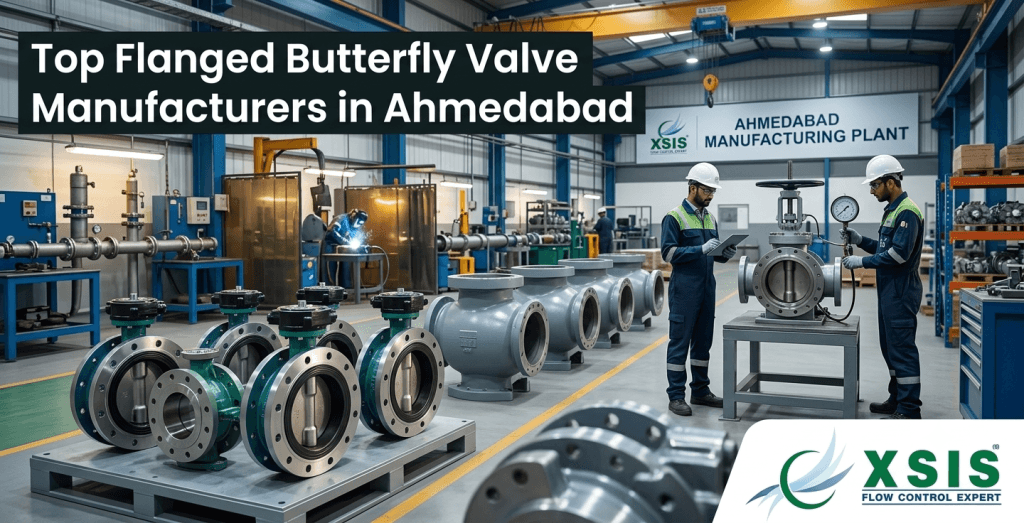
Ahmedabad has a strong industrial manufacturing base serving sectors such as chemicals, pharmaceuticals, water treatment, power, oil and gas, food processing, engineering, and general manufacturing. For businesses looking for reliable flow-control solutions, identifying the Top Flanged Butterfly Valve Manufacturers in Ahmedabad can help them explore suitable options for different pipeline and industrial applications. Flanged butterfly valves are valued for their compact construction, quarter-turn operation, and suitability for industrial pipeline systems.
For procurement teams, choosing a suitable manufacturer requires more than comparing prices. Buyers need to consider valve design, body and disc materials, pressure and temperature ratings, sealing arrangements, flange standards, actuation options, testing procedures, documentation, and after-sales support. Ahmedabad has several manufacturers and suppliers offering different butterfly valve configurations, so the final selection should be based on the actual operating requirements of the plant.
What Is a Flanged Butterfly Valve and How Does It Work?
A flanged butterfly valve is a quarter-turn valve used to control or isolate fluid flow in a pipeline. It uses a circular disc mounted on a shaft, and the disc rotates through approximately 90 degrees to move between open and closed positions. When the disc is aligned with the flow path, fluid can pass through the valve, while rotating the disc across the passage restricts or stops the flow.
The flanged design provides a structured connection between the valve and mating pipeline flanges. This configuration can be useful for industrial systems where a robust and accessible connection is required. Depending on the design, these valves may be operated manually, through a gearbox, or with pneumatic or electric actuators. Manufacturers such as Shiv Valves Industries publicly list double-flanged and flanged-end butterfly valve configurations for industrial applications.
Key Features Buyers Should Understand
- Quarter-Turn Operation: The disc rotates through a short operating movement, allowing relatively quick opening and closing compared with many linear valve designs.
- Flanged Connection: The valve connects with corresponding pipeline flanges, providing a structured installation arrangement. Buyers should verify flange dimensions and applicable standards before ordering.
- Compact Construction: Butterfly valves generally require less installation space than some larger linear valve arrangements. This can be useful in plants where pipeline space and equipment accessibility must be considered.
- Multiple Materials: Depending on the manufacturer and application, body, disc, shaft, and sealing materials can vary. Material selection should be based on the handled fluid, pressure, temperature, and corrosion conditions.
- Different Operating Methods: Manual, gear-operated, pneumatic, electric, and motorised arrangements may be available. Automated options can be considered when valves need to be integrated into process-control systems.
- Industrial Versatility: Flanged butterfly valves can be used in water, HVAC, chemical, utility, process, and other industrial pipeline applications when the valve specifications match the service conditions.
Which Are the Top Flanged Butterfly Valve Manufacturers in Ahmedabad?
The Top Flanged Butterfly Valve Manufacturers in Ahmedabad can vary depending on the valve design, application, certification requirements, project size, and procurement criteria. Publicly available manufacturer information shows that Ahmedabad has companies offering double-flanged, flange-end, eccentric, resilient-seated, and other butterfly valve configurations.
XSIS Valves
XSIS Valves Pvt. Ltd. is an Ahmedabad-based industrial valve manufacturer and exporter that offers butterfly valves along with gate, globe, check, strainer, non-return, and automatic valves. Its website states that the company has operated since 2008 and serves industries including oil and gas, power, food processing, chemicals, pharmaceuticals, water treatment, steel and mining, LNG, and marine applications. It also states that the company follows ISO 9001:2015 quality management certification.
+91-8401181714 | +91-9909979891
Sun Valves
Sun Valves Industries Pvt. Ltd. is another Ahmedabad-based manufacturer identified in current supplier information. Its published product range includes double-flange double-eccentric and double-flange triple-eccentric butterfly valves, alongside other butterfly valve designs. Its published information also references standards and certifications including ISO, API, JIS, BS, AWWA, and CE.
Shiv Valves
Shiv Valves Industries manufactures industrial valves in Ahmedabad and publicly lists flanged butterfly valves, including pneumatic rubber-lined wafer-type double-flange and flange-end configurations. Its product information also covers stainless-steel, wafer, lug, concentric, double-offset, and metal-seated butterfly valves.
WIN ENTERPRISE
WIN ENTERPRISE is an Ahmedabad-based ISO 9001:2015-certified industrial valve manufacturer that lists double-flanged butterfly valves among its products. Its published information identifies applications across water treatment, oil and gas, chemical, and infrastructure sectors.
Other Ahmedabad suppliers and manufacturers also publish flanged butterfly valve offerings, including Beena Engineering, AIRA Euro, YES Valve, Unimac Control Systems, and Flolink Engitech. Their published product information indicates different designs, materials, sizes, pressure ranges, or industrial applications.
How Should You Compare Flanged Butterfly Valve Manufacturers in Ahmedabad?
When comparing the Top Flanged Butterfly Valve Manufacturers in Ahmedabad, buyers should first create a technical requirement sheet. This should include nominal valve size, pressure class, operating temperature, fluid type, connection standard, body material, disc material, seat material, and operating method. Providing these details to manufacturers makes quotations easier to compare because suppliers can respond against the same technical requirements.
Quality documentation should also be examined before procurement. Buyers can request technical datasheets, material specifications, pressure-test information, dimensional details, relevant certificates, inspection records, and product warranties where applicable. A manufacturer with experience in industrial valve production may also be able to recommend a suitable configuration based on process conditions, but the final specification should be approved by the responsible engineering team.
Important Supplier Evaluation Criteria
- Product Range: Check whether the manufacturer offers the exact valve configuration required for the project, such as double-flanged, eccentric, resilient-seated, or metal-seated designs.
- Material Selection: Verify body, disc, shaft, seat, and sealing materials against the handled medium. Material compatibility is particularly important in chemical, pharmaceutical, water, and corrosive applications.
- Pressure and Temperature: Confirm the valve’s rated pressure and permissible temperature range. These values should be suitable for the actual operating and design conditions of the pipeline.
- Testing and Documentation: Ask about pressure testing, dimensional inspection, material certificates, and other documentation required by the project’s quality plan.
- Actuation Options: Determine whether manual, gearbox, pneumatic, electric, or other actuation is required. Automated valves should also be checked for actuator compatibility and control requirements.
- Technical Support: Consider whether the manufacturer can support valve selection, installation guidance, troubleshooting, spare parts, and maintenance requirements after delivery.
What Types of Flanged Butterfly Valves Are Available for Industrial Applications?
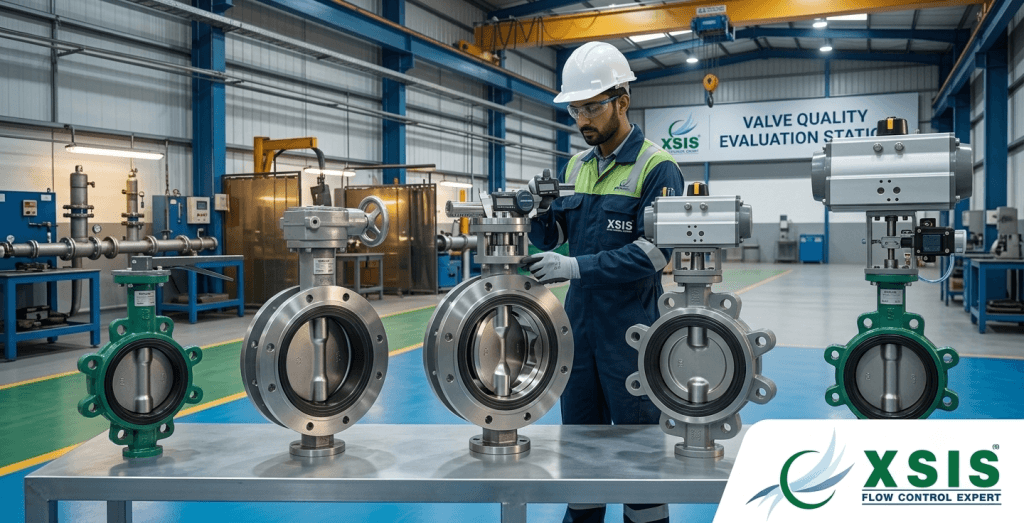
The Top Flanged Butterfly Valve Manufacturers in Ahmedabad may offer several designs depending on the intended application. A standard concentric butterfly valve can be suitable for many general-purpose services, while eccentric designs may be selected when operating conditions require different disc and sealing characteristics. The appropriate design depends on pressure, temperature, fluid properties, frequency of operation, and required shut-off performance.
Double-flanged butterfly valves provide a flange connection at both ends and can be supplied in different body, disc, seat, and shaft combinations. Some manufacturers also offer double-offset and triple-offset designs for applications requiring different sealing and operating characteristics. For example, current Ahmedabad manufacturer listings show double-flanged, double-eccentric, and triple-eccentric options.
Common Configurations to Consider
- Concentric Butterfly Valves: These valves use a central shaft and disc arrangement and are commonly considered for general flow isolation applications.
- Double-Offset Butterfly Valves: The offset arrangement changes the disc’s movement relative to the seat. This design can be considered for applications requiring particular sealing and operating characteristics.
- Triple-Offset Butterfly Valves: Triple-offset designs are generally selected for more demanding industrial services where the sealing arrangement and reduced rubbing action are important considerations.
- Double-Flanged Butterfly Valves: These valves have flanged connections on both sides and are suited to pipelines designed around flanged joints.
- Rubber-Lined Butterfly Valves: A resilient lining can provide a sealing surface suited to selected water and utility applications. The lining material must be checked for compatibility with the process medium.
- Pneumatic Flanged Butterfly Valves: Pneumatic actuation can support automated opening and closing. These valves are useful when remote or process-controlled operation is required.
Which Industries Use Flanged Butterfly Valves in Ahmedabad?
The Top Flanged Butterfly Valve Manufacturers in Ahmedabad serve a broad industrial ecosystem. Ahmedabad and the surrounding industrial regions have demand from chemical processing, pharmaceuticals, water treatment, engineering, power, food processing, oil and gas, and other manufacturing activities. Butterfly valves are often considered where pipelines require compact flow isolation or control.
The suitability of a flanged butterfly valve depends on the application rather than simply the industry name. A chemical plant may require corrosion-resistant materials and compatible seats, while a water-treatment system may prioritise reliable isolation, suitable lining, and large-diameter pipeline compatibility. XSIS Valves, for example, lists applications across water treatment, chemicals, pharmaceuticals, power, oil and gas, steel and mining, LNG, and marine sectors.
Major Application Areas
- Water Treatment: Butterfly valves can be used in water distribution, treatment, utility, and wastewater systems where pipeline isolation is required.
- Chemical Processing: Chemical services require careful consideration of body, disc, shaft, and seat materials. The valve should be selected according to chemical compatibility and operating temperature.
- Pharmaceutical Plants: Pharmaceutical applications can have specific cleanliness and material requirements. Procurement teams should check the applicable hygiene, surface-finish, and documentation requirements for the installation.
- Power Generation: Power plants use numerous valves across utility and process systems. Valve selection should consider temperature, pressure, fluid properties, and the required operating method.
- Oil and Gas: Pipeline and process applications can demand specialised valve designs and materials. Buyers should confirm the pressure class, sealing arrangement, applicable standards, and testing requirements.
- HVAC and Utilities: Butterfly valves are commonly considered for water and utility lines because their compact design can work well in larger pipeline sizes.
How Do You Select the Right Flanged Butterfly Valve Manufacturer for a Project?
Selecting among the Top Flanged Butterfly Valve Manufacturers in Ahmedabad should begin with the project specification rather than the manufacturer’s name. The procurement team should identify the pipeline size, fluid, pressure, temperature, flow direction, connection standard, required shut-off performance, and operating frequency. These details help manufacturers recommend an appropriate valve configuration.
The supplier’s production capabilities should then be compared with the project requirements. A buyer may need a standard manually operated valve for one utility line but a pneumatically actuated, eccentric, or corrosion-resistant valve for another process line. Manufacturer experience, quality systems, technical documentation, customisation capability, lead time, and service support should therefore form part of the evaluation.
Procurement Checklist
- Define the Service: Record the fluid or medium, concentration where relevant, operating temperature, design temperature, operating pressure, and design pressure before requesting quotations.
- Confirm Valve Size: Provide the exact pipeline nominal diameter or DN/NB requirement. Large-diameter applications can have different design and actuation considerations from smaller pipelines.
- Select the Connection: Confirm whether the project requires double-flanged, wafer, lug, or another connection arrangement. The flange dimensions and standard should also be checked.
- Specify Materials: Identify the required body, disc, shaft, seat, and lining materials. Material selection should be based on the medium and operating conditions.
- Choose Operation: Decide whether manual, gear, pneumatic, electric, or motorised operation is required. Automated valves should include compatible actuator and control specifications.
- Review Documentation: Before purchase, verify datasheets, drawings, test certificates, material certificates, inspection requirements, warranty terms, and delivery details relevant to the project.
What Quality Checks Should Buyers Expect From Flanged Butterfly Valve Manufacturers?
Quality control is an important part of evaluating the Top Flanged Butterfly Valve Manufacturers in Ahmedabad. A valve may look suitable externally while still requiring verification of dimensions, materials, sealing surfaces, pressure performance, and operating characteristics. Manufacturers with established quality systems may have documented inspection and production procedures, but buyers should still identify the exact inspection requirements for their project.
For critical installations, procurement teams can establish an inspection and testing plan before placing the order. Depending on the application, this may include dimensional inspection, material verification, pressure testing, seat leakage testing, visual examination, actuator checks, and documentation review. The exact tests should be determined according to the valve design, applicable standards, project specifications, and service conditions.
Quality Parameters to Review
- Dimensional Accuracy: Verify face-to-face dimensions, flange dimensions, bolt-hole patterns, valve size, and other installation dimensions against the approved drawing.
- Material Verification: Check material certificates or other required documentation for pressure-containing and critical components. This helps confirm that supplied materials match the approved specification.
- Pressure Testing: Confirm that required shell and seat tests are performed according to the applicable standard or project specification. Test records should be retained where documentation is required.
- Seat Performance: Proper sealing is essential for isolation. Buyers should verify the required leakage class or shut-off criteria for the application.
- Actuator Testing: Automated valves should be checked for correct opening, closing, torque or thrust requirements, and compatibility with the control system.
- Final Inspection: Before dispatch, confirm product identification, dimensions, surface condition, accessories, documentation, packaging, and quantity against the purchase order.
How Can Businesses Reduce Flanged Butterfly Valve Maintenance Problems?
The Top Flanged Butterfly Valve Manufacturers in Ahmedabad can provide suitable products, but long-term valve performance also depends on correct installation and maintenance. Before commissioning, the valve should be installed according to the manufacturer’s instructions and the pipeline should be checked for debris that could damage the disc or sealing components. Incorrect alignment or excessive mechanical stress can also affect valve performance.
Routine inspection can help identify developing problems before they result in unplanned downtime. Maintenance teams can check for external leakage, unusual operating resistance, damaged components, actuator problems, corrosion, and seat wear. Manufacturers commonly recommend preventive maintenance rather than waiting until a valve fails completely. XSIS Valves, for example, recommends regular inspection, cleaning or replacement of sealing components where required, lubrication of relevant moving parts, filtration against debris, and scheduled servicing.
Practical Maintenance Practices
- Inspect Regularly: Check valves at planned intervals for leakage, corrosion, unusual movement, and visible damage. Inspection frequency should reflect the criticality and service conditions of the system.
- Check Sealing Components: Seats and gaskets can experience wear over time. Replace damaged or degraded sealing components according to the manufacturer’s maintenance guidance.
- Keep the Pipeline Clean: Foreign particles can interfere with disc movement or damage sealing surfaces. Appropriate filtration and pipeline cleanliness can reduce this risk.
- Monitor Actuators: Pneumatic and electric actuators should be checked for correct operation, connections, air supply, electrical condition, and control-system response.
- Avoid Improper Operation: Excessive force or operation outside the valve’s rated conditions can contribute to premature component damage. Operators should follow the approved operating procedure.
- Maintain Service Records: Record inspections, repairs, replacement parts, and operating issues. These records can help maintenance teams identify recurring problems and plan preventive work.
Conclusion
Choosing among the Top Flanged Butterfly Valve Manufacturers in Ahmedabad requires careful consideration of technical specifications, material compatibility, pressure ratings, valve design, testing procedures, and after-sales support. Businesses should compare manufacturers based on their ability to meet the specific requirements of their pipeline and industrial application rather than focusing only on price.
A well-selected flanged butterfly valve can support reliable flow isolation and efficient pipeline operation across industries such as water treatment, chemicals, pharmaceuticals, power, and manufacturing. By reviewing product quality, certifications, documentation, delivery capabilities, and maintenance support, procurement teams can make a more informed decision and select a manufacturer that aligns with their project requirements.
Explore Our Recent Blog
- Top Control Valve Manufacturers in Ahmedabad
- Top Automated Valve Manufacturers in Ahmedabad
- Top Industrial Butterfly Valve Suppliers in Ahmedabad
- Top Industrial Gate Valve Suppliers in Ahmedabad
- Top Industrial Globe Valve Suppliers in Ahmedabad
Frequently Asked Questions
1. Which are the Top Flanged Butterfly Valve Manufacturers in Ahmedabad?
Ahmedabad has several manufacturers and suppliers offering flanged butterfly valve configurations. Publicly available information identifies companies such as XSIS Valves, Sun Valves Industries, Shiv Valves Industries, WIN ENTERPRISE, Beena Engineering, AIRA Euro, and other local manufacturers with relevant product offerings. The appropriate supplier should be selected according to the project’s technical specifications, quality requirements, documentation, and service needs.
2. What is the difference between a wafer and flanged butterfly valve?
A wafer butterfly valve is generally installed between mating pipeline flanges, while a flanged butterfly valve has its own flanged ends for connection to the pipeline. The choice depends on the piping arrangement, installation requirements, pressure rating, maintenance needs, and available space. Buyers should confirm the required connection type with the piping and engineering team before ordering.
3. What materials are commonly used for flanged butterfly valves?
Common material choices can include cast iron, ductile iron, carbon steel, stainless steel, and other materials depending on the valve design and service. Seat and lining materials can also vary, including resilient and chemically resistant options. The correct material should be selected based on fluid compatibility, pressure, temperature, corrosion conditions, and applicable project standards.
4. Are flanged butterfly valves suitable for water treatment plants?
Yes, appropriately specified butterfly valves can be used in water treatment and water distribution systems. Manufacturers in Ahmedabad publicly list butterfly valves for water-related applications, including flanged configurations and different material options. The valve must still be selected according to pipeline size, pressure, water characteristics, connection requirements, and required shut-off performance.
5. Can flanged butterfly valves be automated?
Yes, flanged butterfly valves can be supplied with pneumatic or electric actuation depending on the manufacturer and product configuration. Automated operation can be useful where valves need remote control, frequent cycling, or integration with a plant control system. Buyers should specify the required operating torque, fail position, control signal, power or air supply, and environmental conditions.
6. How should I choose a flanged butterfly valve manufacturer in Ahmedabad?
Start by comparing the manufacturer’s product range, manufacturing capability, quality system, materials, pressure ratings, testing procedures, technical documentation, delivery capability, and after-sales support. Request a technical datasheet and quotation based on the same specification from each supplier so that the offers can be compared consistently. For critical applications, involve the plant’s engineering and quality teams before finalising the purchase.