
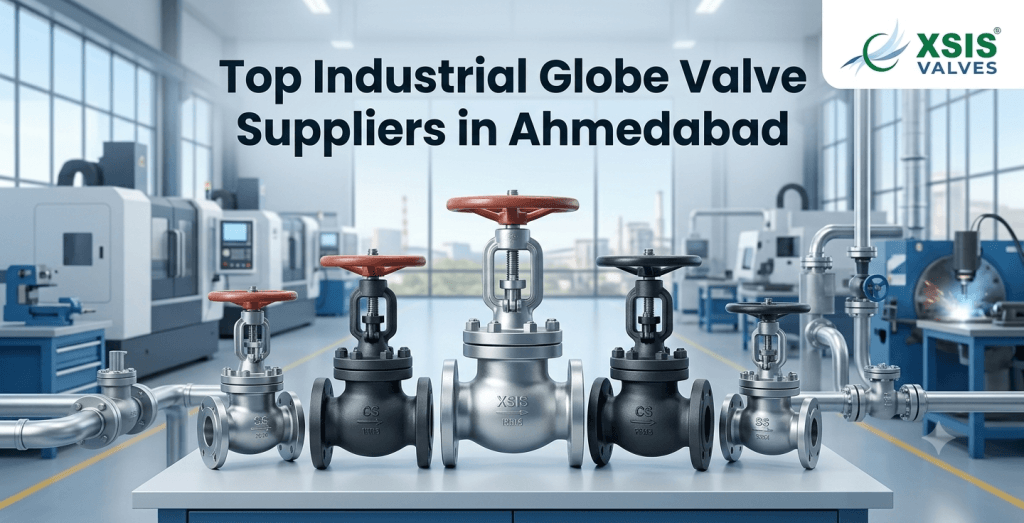
Ahmedabad is one of Gujarat’s major industrial centres, with strong activity across chemicals, pharmaceuticals, petrochemicals, engineering, power, water treatment, oil and gas, and manufacturing. These industries depend on reliable valves to control, isolate, and regulate fluids in demanding process systems. Among different industrial valve types, globe valves are particularly useful when accurate throttling and flow regulation are required.
Choosing the right supplier is important because valve performance can directly affect plant efficiency, safety, maintenance, and operating costs. Top Industrial Globe Valve Suppliers in Ahmedabad offer products in different materials, sizes, pressure classes, end connections, and operating configurations. Buyers should therefore compare technical specifications, manufacturing capabilities, quality controls, standards, delivery support, and application experience before placing an order.
Which are the top industrial globe valve suppliers in Ahmedabad?
Several Ahmedabad-based companies publicly identify themselves as manufacturers or suppliers of industrial globe valves. The following shortlist includes companies whose published information indicates relevant globe-valve capabilities:
1. XSIS Valves Pvt. Ltd.
XSIS Valves is an Ahmedabad-based industrial valve manufacturer and exporter that lists Globe Valves among its products. Its published product range also includes gate valves, check valves, butterfly valves, strainers, and automatic valves. The company states that it serves industries including oil and gas, power, chemicals and fertilisers, water and wastewater, steel and mining, pharmaceuticals, LNG, and marine applications.
For buyers searching for industrial globe valve suppliers in Ahmedabad, XSIS Valves can be considered when a project requires a broader industrial valve portfolio. Its website states that the company operates from Narolgam, Ahmedabad, and follows ISO 9001:2015 quality management practices.
Website: https://xsisvalves.com
+91-8401181714 | +91-9909979891
2. Jayant Valves
Jayant Valves describes itself as an industrial globe valve manufacturer in Ahmedabad and offers several globe-valve configurations. Its published range includes carbon steel, alloy steel, stainless steel, forged steel, pressure seal, high-pressure, cast steel, jacketed, and bellow-sealed globe valves.
The company states that its valves are used in sectors such as oil and gas, chemical processing, power generation, water treatment, refineries, petrochemicals, fertilisers, paper, and wastewater applications. This broad application range can make it relevant for industrial projects requiring flow regulation under different process conditions.
3. J.R. Industries
J.R. Industries, based in Narol, Ahmedabad, offers several types of globe valves, including flanged, stainless steel, industrial, and forged steel globe valves. Its published technical information includes pressure classes such as Class 150, Class 300, and Class 600, along with standards covering design, face-to-face dimensions, flange dimensions, and testing.
The company states that its industrial globe valves are manufactured using quality-tested raw materials and are inspected against defined parameters. Such information is useful for industrial buyers comparing globe valve manufacturers in Ahmedabad, particularly when project specifications require specific pressure ratings or material grades.
4. Shree Ambica Industries
Shree Ambica Industries identifies itself as a manufacturer, supplier, and exporter of industrial globe valves in Ahmedabad. Its published specifications include bolted bonnet, OS&Y construction, rising stem arrangements, and pressure ratings ranging from 150# to 800# depending on the configuration.
The company also states that its globe valves are used across oil and gas, power, chemical, and petrochemical industries. Buyers can therefore consider its product range when looking for industrial valve suppliers in Ahmedabad capable of supplying globe valves alongside other process valves and strainers.
5. KesharBhawani Engineering Pvt. Ltd. / KBS Valves
KBS Valves identifies KesharBhawani Engineering Private Limited as a globe valve manufacturer in Ahmedabad. Its website states that the company manufactures industrial globe valves and offers products such as bellow-sealed and angle-type globe valves, including customised designs.
The company also publishes information about screwed bonnet globe valves, including size ranges, pressure class, materials, and end connections. This can be useful for procurement teams that need to match globe valves with specific piping and process requirements.
6. Veltora Valves
Veltora Valves is based in Kathwada, Ahmedabad, and publishes a dedicated range of industrial globe valves. Its website describes these valves as designed for precise flow regulation, dependable shut-off, and throttling applications.
Its location within Ahmedabad’s industrial ecosystem can be convenient for local buyers who want to discuss specifications, customised requirements, documentation, or supply schedules directly with a manufacturer. Buyers should still verify the exact size, material, pressure class, standards, and availability required for their project.
7. HAYAT Valves
HAYAT Valves, located in Aabad Estate, Narol, Ahmedabad, offers industrial globe valves in different configurations. Its published range includes bolted bonnet globe valves from 15 NB to 400 NB, forged steel globe valves from 6 NB to 50 NB, and pressure seal globe valves from 50 NB to 600 NB.
The company also lists standards including BS 1873, API 602, ASME B16.34, ASME B16.10, ASME B16.5, ASME B16.25, ASME B16.11, and API 598 for relevant products and testing. These details can help engineering teams assess compatibility with project specifications.
8. Jogani Valves and Controls
Jogani Valves and Controls is an Ahmedabad-based industrial valve manufacturer and supplier offering globe valves along with ball, gate, check, butterfly, diaphragm, plug, automatic, and other valve products. The company states that it was established in 2013 and provides flow-control solutions for chemical, water, steam, and process applications.
Its broad product portfolio can be useful for projects where several types of valves are required from a single supplier. However, buyers should evaluate the specific globe valve model, construction material, pressure class, operating temperature, end connection, and certification before finalising procurement.
Why are globe valves important for industrial flow control?
Globe valves in Ahmedabad are linear-motion valves designed primarily for starting, stopping, and regulating fluid flow. Their internal construction allows the disc to move towards or away from the seat, making them particularly suitable for applications where controlled throttling is more important than achieving the lowest possible pressure drop.
Unlike valves designed mainly for full-open or full-closed service, a globe valve can be operated at intermediate positions to adjust flow. This makes it useful in steam, water, chemical, process, and other industrial systems where flow conditions need to be controlled during operation.
Where are industrial globe valves commonly used?
- Steam Systems: Globe valves are widely considered for regulating steam flow where controlled operation is required. Correct material and pressure selection remain important for high-temperature service.
- Chemical Plants: Chemical processing may involve corrosive or hazardous media. Valve materials, seals, trim, and compatibility should therefore be selected according to the process fluid.
- Power Plants: Globe valves can be used in steam, feedwater, and auxiliary systems where controlled flow regulation is required. Pressure and temperature ratings should match the operating conditions.
- Oil and Gas: Refining and process applications can require valves capable of handling demanding pressure, temperature, and media conditions. Suitable construction and testing requirements should be verified.
- Water Treatment: Globe valves can be used where controlled water flow is required. The valve should be selected according to pressure, water chemistry, size, and operating frequency.
- Pharmaceutical and Process Industries: These applications can require careful material selection and cleanable designs. Buyers should confirm the applicable hygienic, material, and documentation requirements.
How do you choose the right industrial globe valve supplier in Ahmedabad?
Selecting a supplier should begin with the application rather than the supplier’s product catalogue alone. The buyer should define the medium, pressure, temperature, pipe size, required flow rate, operating frequency, installation arrangement, and expected service life. These parameters help determine whether a particular globe valve design is suitable.
It is also important to evaluate the supplier’s manufacturing capability and technical support. A reliable supplier should be able to provide product specifications, material details, applicable standards, testing information, drawings, and commercial documentation. Comparing these factors can help procurement teams avoid selecting a valve solely because of a lower initial price.
What factors should buyers compare?
- Material Selection: Confirm whether carbon steel, stainless steel, alloy steel, cast steel, forged steel, or another material is suitable for the process fluid.
- Pressure Class: Check the required pressure rating against actual operating and design conditions. Do not select a valve only on nominal pipe size.
- Temperature Range: The valve and sealing materials must tolerate the minimum and maximum operating temperatures expected in service.
- Valve Size: Correct sizing helps ensure suitable flow characteristics and avoids unnecessary restriction or poor control.
- End Connection: Flanged, screwed, socket-weld, and butt-weld configurations may be available depending on the valve design and application.
- Testing and Certification: Ask for applicable inspection, pressure testing, material, and quality documentation before approving the valve for critical service.
What types of globe valves can Ahmedabad industries source?
Ahmedabad manufacturers and suppliers offer several globe valve configurations for different industrial requirements. The correct type depends on the process conditions, installation arrangement, pressure class, media characteristics, and required control performance. Buyers should avoid treating all globe valves as interchangeable because construction details can significantly affect performance.
Common options include bolted bonnet, forged steel, pressure seal, bellow-sealed, angle-type, flanged, screwed, and other specialised designs. Published product ranges from Ahmedabad suppliers show differences in available sizes, materials, pressure classes, and standards.
Which globe valve designs are commonly available?
- Bolted Bonnet Globe Valve: This design is commonly used for industrial services and can be available across multiple pressure classes. It can be considered for general process applications.
- Forged Steel Globe Valve: Forged construction can be suitable for demanding services where compact and robust valve construction is required. Product limits should always be checked with the supplier.
- Pressure Seal Globe Valve: Pressure-seal construction is commonly associated with higher-pressure applications. It should be selected according to the applicable pressure-temperature requirements.
- Bellow-Sealed Globe Valve: A bellows arrangement can help reduce stem leakage and may be considered where fugitive-emission control is important.
- Angle Globe Valve: Angle configurations can help when the piping layout or flow direction requires an angled arrangement. The supplier should confirm the specific flow characteristics.
- Stainless Steel Globe Valve: Stainless steel construction may be appropriate for selected corrosive, hygienic, or process applications. The exact grade should be matched with the medium.
How do globe valves compare with gate, ball, and butterfly valves?
Globe valves are primarily chosen when flow regulation and throttling are important. Gate valves are generally better suited to isolation service, while ball valves are often selected for quick shut-off and low-flow-resistance applications. Butterfly valves can offer a compact and economical option for many larger-diameter pipelines.
The correct choice depends on the operating objective rather than the popularity of a particular valve type. If the system requires frequent flow adjustment, a globe valve may be more appropriate than a valve designed mainly for isolation. However, if the application requires full-bore flow and infrequent operation, another valve design may provide better overall performance.
When should industries select a globe valve
- For Throttling: Choose a globe valve when regular flow adjustment is required rather than simple isolation. This supports controlled flow during operation.
- For Controlled Flow: Globe valves support gradual flow adjustment through controlled disc movement. This helps maintain the required process flow.
- For Steam Applications: Globe valves can suit steam services when the pressure, temperature, and materials are appropriate. Always match the valve to operating conditions.
- For Process Lines: Consider globe valves where accurate process-fluid regulation is required. Select the valve according to the medium, pressure, temperature, and flow requirements.
- For Frequent Adjustment: Their design makes them suitable for applications where the valve position changes as part of process control.
- For Tight Shut-Off Requirements: The specific valve design and seat construction should be reviewed where leakage limits are critical.
What specifications should you request from industrial globe valve suppliers?
A proper technical enquiry should contain more than just the valve name and nominal size. Suppliers need sufficient information to recommend a suitable valve and prepare an accurate quotation. Providing complete specifications also reduces the risk of receiving a product that does not match the piping system or operating conditions.
Important information can include valve type, nominal bore, pressure class, body and trim material, end connection, operating temperature, medium, flow direction, actuation method, testing requirements, applicable standards, and documentation requirements. Some Ahmedabad suppliers publish standards such as API, ASME, ANSI, BS, and DIN for relevant products.
Which technical details should be included in an RFQ?
- Nominal Size: State the required NB or NPS size and confirm the actual pipeline dimensions. This helps ensure the valve matches the existing piping system.
- Pressure Rating: Specify the required class or pressure rating based on design conditions rather than normal operating pressure alone. This helps ensure safe and reliable valve operation.
- Body and Trim: Mention preferred or specified materials according to the process medium and temperature. Correct material selection helps improve valve durability and compatibility.
- End Connection: Clearly state whether flanged, screwed, socket-weld, or butt-weld ends are required. This ensures the valve can be properly connected to the pipeline.
- Actuation: Indicate whether the valve will use a handwheel, gear, electric actuator, pneumatic actuator, or another operating arrangement.
- Standards and Documents: List required design, testing, inspection, material certificates, drawings, and other project documentation.
How can industries evaluate the quality of a globe valve supplier?
Supplier evaluation should combine product quality, engineering capability, documentation, delivery performance, and after-sales support. A supplier may offer an attractive price, but that does not necessarily mean the valve is suitable for a critical process application. Technical compliance should therefore be established before commercial comparison.
Buyers should also request relevant documentation and verify that the supplied valve corresponds to the approved specification. For critical applications, inspection and testing requirements should be agreed before manufacturing or dispatch. Some Ahmedabad suppliers publish information about quality systems, standards, pressure testing, or inspection procedures, which can provide an initial basis for technical evaluation.
What should a supplier evaluation checklist include?
- Manufacturing Capability: Check whether the supplier manufactures the required valve or primarily acts as a trader. This helps assess their production capability and manufacturing control.
- Quality System: Review available quality certifications and documented quality-control processes. This helps ensure consistent valve quality and reliable performance.
- Product Range: Confirm whether the supplier can provide the required valve size, material, pressure class, and configuration. This ensures the valve matches the project requirements.
- Testing Capability: Ask how shell, seat, leakage, and other required tests are performed and documented. Proper testing helps verify valve quality and performance.
- Technical Support: Evaluate whether engineers can help with sizing, material selection, drawings, and application questions. This helps ensure the valve is suitable for the intended service.
- After-Sales Service: Check the availability of spare parts, maintenance guidance, troubleshooting support, and warranty assistance. This can help reduce downtime and simplify future maintenance.
How much do industrial globe valves cost in Ahmedabad?
There is no single price for an industrial globe valve because the cost depends on several technical and commercial variables. Valve size, body material, pressure class, trim, design, end connection, actuation, testing, certification, and quantity can all influence the final quotation. A small standard valve can therefore have a substantially different price from a large, high-pressure, or specialised valve.
Buyers should avoid comparing quotations based only on the headline price. A technically complete quotation should identify the valve construction, material, standards, testing requirements, delivery terms, taxes, documentation, and other relevant costs. This makes it easier to compare offers from different Top Industrial Globe Valve Suppliers in Ahmedabad on a like-for-like basis.
What affects globe valve pricing?
- Valve Material: Stainless steel, alloy steel, forged steel, and other specialised materials may increase the overall cost compared with standard materials.
- Size: Larger valves generally require more material and manufacturing resources, affecting the purchase price.
- Pressure Class: Higher-pressure designs may require stronger construction, specialised components, and additional testing.
- Valve Design: Pressure-seal, bellow-sealed, angle, forged, and customised designs can have different manufacturing costs.
- Actuation: Manual valves generally have different costs from electrically, pneumatically, or hydraulically actuated configurations.
- Inspection Requirements: Additional testing, third-party inspection, certification, and documentation can influence the final commercial quotation.
How can Ahmedabad industries maintain globe valves for longer service life?
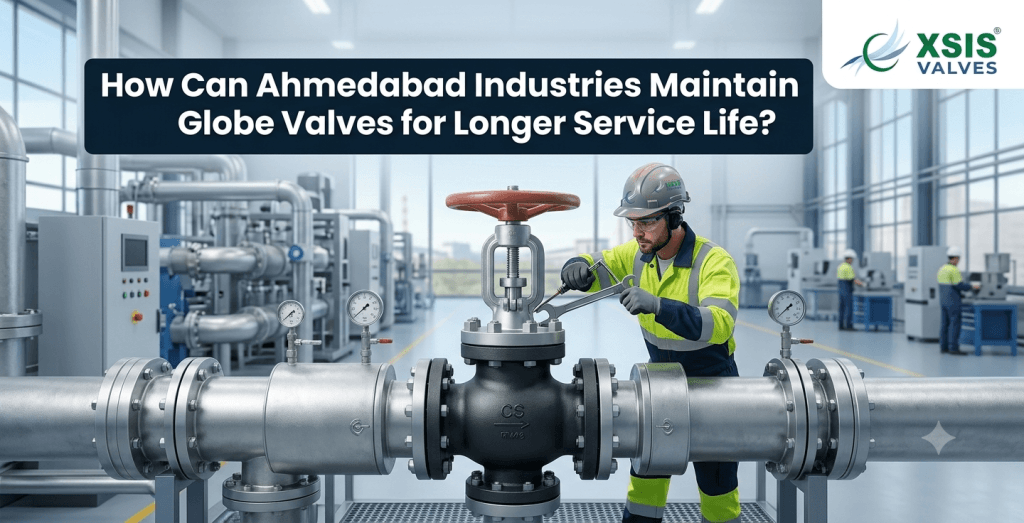
Correct maintenance helps reduce leakage, unexpected shutdowns, and premature component failure. The maintenance programme should be based on the valve design, operating conditions, fluid characteristics, cycling frequency, and manufacturer’s instructions. Critical valves may require more frequent inspection than valves operating under less demanding conditions.
Routine maintenance can include checking external leakage, inspecting packing and gaskets, examining the stem and handwheel, verifying valve operation, and checking for abnormal noise or vibration. If a valve shows signs of internal damage or poor shut-off, it should be inspected by qualified personnel rather than repeatedly forced into operation.
Which maintenance practices are useful?
- Inspect for Leakage: Check the body, bonnet, stem, packing, and connected joints for visible leakage or signs of deterioration.
- Check Valve Operation: Operate the valve according to its intended procedure and watch for excessive resistance or unusual movement.
- Inspect Sealing Components: Packing, gaskets, and seat components should be checked and replaced when they no longer provide suitable sealing.
- Keep the Valve Clean: Remove dirt, deposits, and contaminants from accessible external components to support reliable operation.
- Follow a Maintenance Schedule: Planned inspections are preferable to waiting for a breakdown or process interruption.
- Use Qualified Service: Major repairs, pressure testing, or component replacement should be carried out according to appropriate technical procedures.
How should you shortlist the best globe valve supplier for your project?
Selecting the right globe valve supplier requires careful consideration of product quality, manufacturing capabilities, and technical expertise. The supplier should offer suitable valve types, materials, pressure classes, and sizes according to the project requirements. It is also important to check quality standards, testing procedures, and relevant certifications before placing an order. A supplier with experience in similar industrial applications can provide better technical support.
Industries should compare multiple suppliers using the same technical specifications and commercial requirements. Buyers should review delivery timelines, documentation, warranty terms, spare parts availability, and after-sales service before making a final decision. Clear communication with the supplier can also help avoid incorrect valve selection and installation issues. A structured evaluation process can support reliable valve performance and long-term operational efficiency.
What factors should you consider when shortlisting a supplier?
- Manufacturing Capability: Check whether the supplier has suitable manufacturing facilities and technical expertise. This can help ensure consistent valve quality and dependable production capacity.
- Product Range: Review the available globe valve types, sizes, materials, and pressure classes. A suitable product range makes it easier to match valves with specific project requirements.
- Quality Standards: Check the supplier’s quality management practices and relevant industry certifications. Proper quality controls can support consistent performance and reliable valve operation.
- Technical Support: Choose a supplier that can provide guidance on valve selection, sizing, and specifications. Technical assistance can help industries avoid unsuitable valve designs or materials.
- Testing and Documentation: Ask for relevant test reports, material certificates, drawings, and inspection documents. Proper documentation helps verify that the supplied valves meet the required specifications.
- After-Sales Support: Consider warranty coverage, spare parts, maintenance assistance, and service support. Good after-sales support can help reduce downtime and simplify future maintenance requirements.
Conclusion
Selecting from the Top Industrial Globe Valve Suppliers in Ahmedabad requires more than comparing product prices. Industries should evaluate valve construction, material compatibility, pressure and temperature ratings, standards, testing, manufacturing capability, delivery schedules, and technical support. Ahmedabad has several manufacturers and suppliers with publicly listed globe-valve capabilities, giving industrial buyers multiple options to evaluate.
A structured procurement process can help companies select valves that match their actual operating requirements. Whether the application involves steam, water, chemicals, oil and gas, power generation, or another process medium, the right globe valve should be selected based on engineering specifications rather than price alone. Buyers should request detailed technical quotations and verify all critical parameters before finalising an order.
Explore Our Recent Blog
- Top Motorized Valve Manufacturers in Ahmedabad
- Top Control Valve Manufacturers in Ahmedabad
- Top Automated Valve Manufacturers in Ahmedabad
- Top Industrial Butterfly Valve Suppliers in Ahmedabad
- Top Industrial Gate Valve Suppliers in Ahmedabad
Frequently Asked Questions
1. What is the main purpose of an industrial globe valve?
An industrial globe valve is primarily used to start, stop, and regulate fluid flow. Its construction makes it particularly suitable for throttling applications where controlled flow adjustment is required. The correct valve must be selected according to the medium, pressure, temperature, size, and application.
2. Which industries use globe valves in Ahmedabad?
Globe valves can be used across chemical, petrochemical, pharmaceutical, power, oil and gas, water treatment, engineering, and process industries. Ahmedabad suppliers publish applications covering several of these sectors. The specific valve material and design should be selected according to the operating conditions of each industry.
3. How do I select the right globe valve supplier in Ahmedabad?
Compare the supplier’s manufacturing capability, valve range, quality systems, technical standards, testing procedures, delivery capability, and after-sales support. You should also verify whether the supplier can provide the required material, size, pressure class, end connection, and documentation. Technical compliance should be evaluated before comparing price.
4. What materials are commonly used for industrial globe valves?
Common materials can include carbon steel, stainless steel, alloy steel, cast steel, and forged steel. The correct material depends on the process fluid, temperature, pressure, corrosion conditions, and applicable standards. Always confirm material compatibility with the valve manufacturer or project engineer.
5. Are globe valves suitable for high-pressure applications?
Yes, certain globe valve designs are available for high-pressure applications. Ahmedabad suppliers publish options such as forged steel and pressure-seal globe valves with higher pressure classes. The selected valve must be checked against the complete pressure-temperature requirements of the system.
6. How can I get an accurate globe valve quotation?
Provide the supplier with the valve type, size, pressure class, body and trim materials, end connection, medium, operating temperature, operating pressure, actuation requirement, standards, testing, and quantity. Complete specifications help suppliers prepare more accurate quotations. Comparing technically equivalent quotations gives a more reliable basis for procurement.