
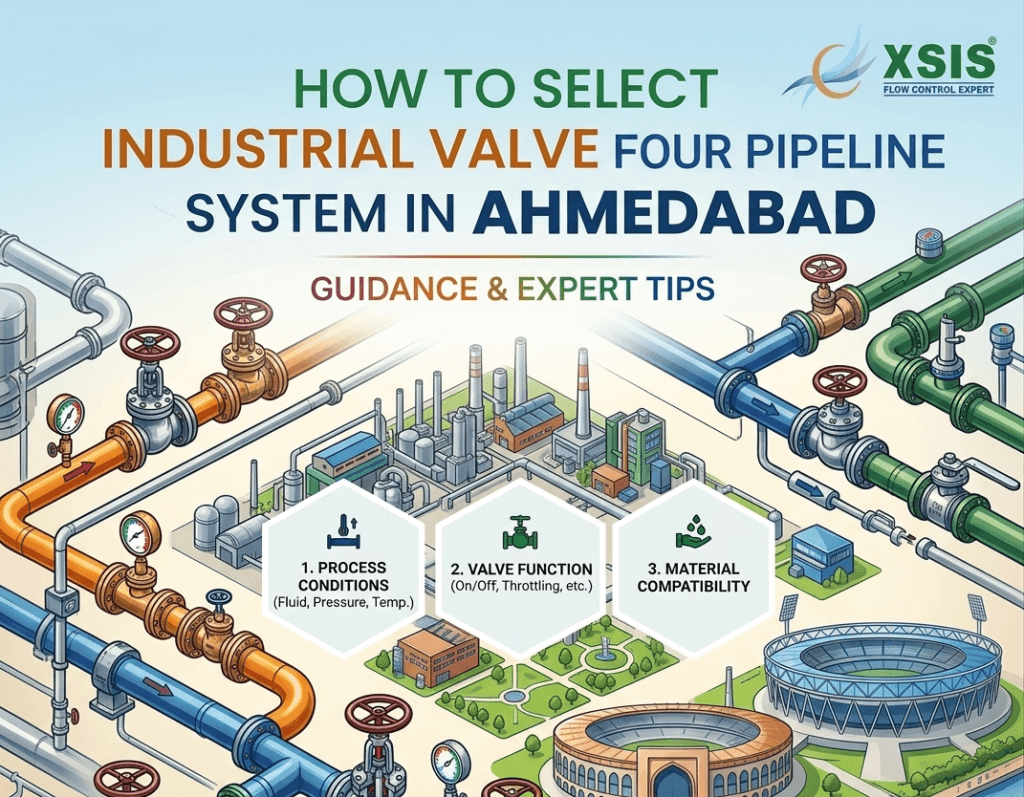
Industrial valves play a critical role in controlling, regulating, and directing the flow of liquids, gases, and slurries within pipeline systems. Whether you operate in manufacturing, water treatment, oil and gas, pharmaceuticals, food processing, or chemical industries, selecting the right valve can significantly impact operational efficiency, safety, and maintenance costs.
Understanding how to select an industrial valve for your pipeline system in Ahmedabad requires careful evaluation of process conditions, fluid characteristics, pressure requirements, environmental factors, and industry regulations. Ahmedabad’s rapidly growing industrial sector demands reliable valve solutions that ensure uninterrupted operations and long-term performance.
This comprehensive guide explains every important factor involved in choosing the right industrial valve for your application while helping businesses make informed purchasing decisions.
Why Industrial Valve Selection Matters for Pipeline Systems?
Choosing the wrong valve can lead to leakage, pressure loss, equipment damage, increased maintenance costs, and operational downtime. A properly selected valve improves system performance and extends equipment lifespan.
Industrial facilities across Ahmedabad often operate under demanding conditions involving high pressure, corrosive fluids, temperature variations, and continuous processing. Selecting a suitable valve helps maintain process integrity while ensuring safety and regulatory compliance.
Impact on Operational Efficiency
Valves directly influence flow control, pressure management, and process stability. An incorrectly sized or unsuitable valve may restrict flow, create turbulence, or reduce overall efficiency.
The right valve design minimizes pressure drops and allows smooth fluid movement throughout the pipeline. This contributes to energy savings and improved production output over time.
Importance for Industrial Safety
Industrial valves act as critical safety components by controlling hazardous fluids and isolating sections of the pipeline when required.
Reliable valve performance reduces the risk of leaks, contamination, equipment failure, and workplace accidents. This is particularly important in industries handling chemicals, steam, and combustible materials.
Understanding Different Types of Industrial Valves
Industrial valves are essential components in pipeline systems, designed to control, regulate, direct, or stop the flow of liquids, gases, and other process media. Each valve type serves a specific purpose and offers unique advantages depending on the application.
Before learning how to select an industrial valve for your pipeline system in Ahmedabad, it is important to understand the major valve types available in the market.
Ball Valves
Ball valves use a rotating ball with a bore to control fluid flow. They provide excellent shut-off capabilities and are commonly used in industrial pipelines.
These valves are suitable for applications requiring quick operation, low maintenance, and tight sealing performance. They are widely used in water treatment, oil and gas, and chemical processing industries.
Butterfly Valves
Butterfly valves regulate flow through a rotating disc positioned inside the pipeline. Their compact design makes them ideal for large-diameter applications.
They are cost-effective, lightweight, and easy to install. Industries often choose butterfly valves for water distribution systems, HVAC systems, and wastewater treatment facilities.
Gate Valves
Gate valves operate by lifting or lowering a gate to start or stop fluid flow. They are commonly used where full flow or complete shut-off is required.
These valves are ideal for pipelines that remain fully open or fully closed during operation. They offer minimal pressure drop when completely open.
Globe Valves
Globe valves are designed for precise flow regulation and throttling applications. Their internal structure allows accurate control of fluid movement.
Industries requiring frequent flow adjustments often prefer globe valves due to their excellent regulating capabilities and durability.
Check Valves
Check valves prevent reverse flow within a pipeline system. They automatically allow fluid movement in one direction only.
These valves help protect pumps, compressors, and other critical equipment from damage caused by backflow conditions.
Key Factors to Consider When Selecting Industrial Valves
Selecting the right industrial valve requires a thorough understanding of the operating environment and process requirements. Industrial valves play a vital role in controlling, regulating, and isolating fluid flow within pipeline systems, making their selection critical for efficiency, safety, and long-term reliability.
Understanding process requirements is essential when evaluating how to select an industrial valve for your pipeline system in Ahmedabad.
Fluid Type and Characteristics
The nature of the fluid significantly affects valve selection. Different fluids possess varying properties such as viscosity, corrosiveness, abrasiveness, and temperature sensitivity.
For example, corrosive chemicals require specialized valve materials like stainless steel or alloy-based constructions, while abrasive slurries demand wear-resistant valve designs.
Operating Pressure
Every industrial valve has a specified pressure rating. Selecting a valve that cannot handle operating pressure may result in leakage or mechanical failure.
Always evaluate both normal operating pressure and potential pressure surges that may occur during system operation.
Operating Temperature
Temperature plays a crucial role in valve performance and material compatibility. High-temperature applications require valves designed to withstand thermal stress.
Likewise, low-temperature processes need materials capable of maintaining structural integrity without becoming brittle.
Flow Rate Requirements
Flow rate directly influences valve sizing and performance. A valve that is too small may restrict flow, while an oversized valve may reduce control accuracy. Proper flow calculations help ensure efficient system operation and minimize unnecessary energy consumption.
How to Select an Industrial Valve for Your Pipeline System in Ahmedabad Based on Industry Applications?
Selecting the right industrial valve is not a one-size-fits-all process; it varies significantly depending on the industry in which it is used. Each sector has unique operational requirements, fluid characteristics, safety standards, and environmental conditions.
Understanding industry-specific needs is essential when deciding how to select an industrial valve for your pipeline system in Ahmedabad based on industry applications, ensuring optimal performance, safety, and cost efficiency.
Chemical Processing Industry Requirements
The chemical industry deals with highly corrosive, toxic, and reactive fluids that demand specialized valve solutions. In such environments, material compatibility becomes the top priority to prevent chemical reactions and leakage risks.
Stainless steel, PTFE-lined, and alloy-based valves are commonly used to ensure durability and safety under aggressive chemical conditions.
Water Treatment and Distribution Systems
Water treatment plants require valves that can handle large volumes of water with consistent flow control and minimal maintenance. Butterfly valves, gate valves, and check valves are widely used due to their efficiency and cost-effectiveness.
These valves help regulate flow, prevent backflow, and maintain pressure stability throughout the distribution network.
Oil and Gas Industry Applications
The oil and gas sector operates under extreme pressure and temperature conditions, making valve reliability a critical factor. Ball valves, gate valves, and high-performance control valves are preferred for their strong sealing capabilities and durability.
These valves ensure safe handling of hydrocarbons while maintaining system integrity in demanding environments.
Pharmaceutical and Food Processing Industry
Industries like pharmaceuticals and food processing require hygienic and contamination-free operations. Valves used in these sectors must meet strict sanitary standards and allow easy cleaning and sterilization.
Stainless steel sanitary valves are commonly used to ensure product purity and compliance with regulatory guidelines.
HVAC and Industrial Utility Systems
Heating, ventilation, air conditioning, and utility systems require valves that provide precise flow control and energy efficiency. Butterfly valves and globe valves are often selected for their ability to regulate temperature-controlled fluids effectively. These systems prioritize operational efficiency and consistent performance over long periods.
Power Generation and Heavy Engineering Applications
Power plants and heavy engineering industries require valves capable of handling steam, high-pressure fluids, and thermal stress. Gate valves, globe valves, and specially engineered control valves are used to ensure reliability under continuous operation. These valves contribute to stable energy production and safe plant operations.
Choosing the Right Valve Material
Selecting the correct valve material is a critical decision in ensuring the long-term performance, safety, and efficiency of pipeline systems. The material directly impacts corrosion resistance, pressure handling capacity, temperature tolerance, and overall durability of the valve.
In industrial applications across sectors like chemical processing, water treatment, oil and gas, and pharmaceuticals, choosing the wrong material can lead to frequent failures, contamination risks, and increased maintenance costs. Therefore, material selection must always be aligned with fluid properties, operating conditions, and environmental exposure.
Stainless Steel Valves for Corrosive and Hygienic Applications
Stainless steel is one of the most widely used materials in industrial valve manufacturing due to its excellent corrosion resistance, strength, and durability. It is highly suitable for applications involving corrosive chemicals and high-moisture environments.
It has hygienic processes such as in the food, beverage, and pharmaceutical industries. Its smooth surface also helps prevent contamination buildup, making it ideal for systems requiring strict cleanliness standards.
Cast Iron Valves for Low- to Medium-Pressure Systems
Cast iron valves are commonly used in water distribution systems and low- to medium-pressure applications. They are cost-effective and provide adequate strength for general-purpose industrial use.
However, they are not recommended for highly corrosive fluids or extreme temperature conditions, as their resistance capabilities are comparatively limited.
Carbon Steel Valves for High-Pressure Applications
Carbon steel valves are known for their high strength and durability, making them suitable for demanding industrial environments such as oil and gas, power plants, and heavy manufacturing.
They perform well under high-pressure and high-temperature conditions but may require protective coatings or treatments to prevent corrosion in aggressive environments.
Alloy and Special Material Valves for Extreme Conditions
Alloy-based valves, including those made from nickel, chrome, or other specialized combinations, are designed for extreme operating conditions. These valves offer superior resistance to heat, corrosion, and abrasive fluids.
Making them ideal for chemical processing plants and highly specialized industrial applications. Although more expensive, they provide long-term reliability in harsh environments.
Factors to Consider When Selecting Valve Material
Choosing the right valve material requires careful evaluation of multiple factors, including fluid composition, operating temperature, pressure levels, and environmental conditions. Engineers must also consider long-term maintenance requirements and lifecycle costs.
A well-informed material selection ensures improved performance, reduced downtime, and enhanced safety across the entire pipeline system.
Valve Sizing Considerations for Pipeline Systems
Proper valve sizing is a crucial step in ensuring efficient pipeline performance and reliable flow control. A valve that is too large may lead to poor regulation and unnecessary costs, while an undersized valve can restrict flow, increase pressure loss, and reduce overall system efficiency.
When selecting an industrial valve, engineers must evaluate factors such as flow rate, operating pressure, fluid characteristics, pipe diameter, and system requirements to achieve optimal performance. Correct valve sizing not only improves operational efficiency but also minimizes maintenance costs and extends the lifespan of the entire pipeline system.
Avoiding Oversized Valves
Oversized valves are a common selection mistake that can negatively affect system performance. They often operate at very low opening positions, reducing flow control accuracy and increasing wear on internal components. Selecting a valve that matches the actual process requirements ensures better efficiency and long-term reliability.
Preventing Undersized Valves
An undersized valve can create excessive pressure drops and restrict fluid movement within the pipeline. This may result in increased energy consumption, reduced productivity, and potential damage to pumps and other connected equipment. Proper flow analysis helps avoid these operational issues.
Understanding Flow Coefficient (Cv)
The flow coefficient, commonly referred to as “Cv,” indicates the amount of fluid a valve can pass under specific conditions. Evaluating Cv values helps engineers choose valves that can handle the required flow rate without causing unnecessary pressure losses. Accurate Cv calculations contribute to improved system performance and process stability.
Considering Pressure Drop Requirements
Pressure drop is an important factor in valve sizing because it directly affects system efficiency. Excessive pressure loss can increase operating costs and reduce process effectiveness. Selecting a valve with the correct size and design helps maintain the desired pressure balance throughout the pipeline network.
Matching Valve Size with Pipe Diameter
While valve size is often related to pipe diameter, they should not always be assumed to be identical. Engineers must consider actual flow requirements and operating conditions rather than relying solely on pipe size. This approach ensures better control and overall system optimization.
Planning for Future Capacity Needs
Many industrial facilities expand operations over time, increasing flow demands within existing pipeline systems. Selecting a valve with reasonable capacity for future growth can reduce the need for costly replacements and modifications. Proper planning supports long-term operational flexibility and scalability.
Common Mistakes to Avoid During Valve Selection
Selecting the right industrial valve is essential for ensuring pipeline efficiency, safety, and long-term reliability. However, many businesses make avoidable mistakes during the selection process, which can lead to increased maintenance costs, operational downtime, and reduced system performance. Understanding these common errors can help engineers and facility managers choose valves that meet both current and future operational requirements while maximizing return on investment.
Ignoring Process Conditions
One of the most common mistakes is selecting a valve without thoroughly evaluating process conditions such as pressure, temperature, flow rate, and fluid characteristics.
Every application has unique requirements, and overlooking these factors can result in premature valve failure, leakage, or poor performance. A detailed assessment of operating conditions helps ensure the selected valve can withstand the demands of the system.
Choosing the Wrong Valve Type
Different valve types serve different functions, and selecting the wrong one can negatively impact system efficiency. For example, using a gate valve for flow regulation or a globe valve for full shut-off applications may reduce effectiveness and increase wear.
Understanding the purpose and operating characteristics of each valve type is critical for achieving optimal performance.
Focusing Only on Initial Purchase Cost
Many buyers prioritize the lowest purchase price rather than considering the total cost of ownership. While a cheaper valve may reduce upfront expenses, it can lead to higher maintenance costs, frequent replacements, and unexpected downtime.
Evaluating factors such as durability, efficiency, and lifecycle costs often results in better long-term value.
Overlooking Material Compatibility
Valve materials must be compatible with the fluid being handled and the operating environment. Using unsuitable materials can cause corrosion, erosion, contamination, and reduced service life.
Selecting materials based on chemical resistance, temperature tolerance, and pressure requirements helps maintain system reliability and safety.
Incorrect Valve Sizing
Improper valve sizing is a major cause of performance issues in industrial pipeline systems. Oversized valves can reduce control accuracy, while undersized valves may restrict flow and create excessive pressure drops.
Accurate flow calculations and engineering analysis are essential to determine the correct valve size for the application.
Neglecting Maintenance and Future Expansion
Some organizations fail to consider maintenance accessibility and future operational needs when selecting valves. Valves that are difficult to service can increase downtime and maintenance expenses.
Additionally, choosing a valve without considering potential capacity expansions may require costly upgrades later. Planning for maintenance and future growth helps ensure long-term operational efficiency.
Why Work with a Reliable Industrial Valve Supplier in Ahmedabad?
Working with a reliable industrial valve supplier in Ahmedabad plays a crucial role in ensuring the efficiency, safety, and long-term performance of pipeline systems. A trusted supplier not only provides high-quality valves but also offers technical expertise, application-based recommendations, and after-sales support.
This helps industries select the right valve type, material, and sizing based on specific operational requirements, reducing the risk of costly mistakes and system failures.
Access to High-Quality and Certified Products
A dependable supplier ensures that all industrial valves meet required quality standards and industry certifications. This guarantees better durability, corrosion resistance, and performance under demanding conditions.
Certified products also help industries maintain compliance with safety and regulatory standards, which is essential in sectors like chemical processing, oil and gas, and water treatment.
Technical Expertise and Application Support
Reliable suppliers in Ahmedabad provide valuable technical guidance to help customers choose the most suitable valve for their applications.
Their expertise covers flow conditions, pressure ratings, temperature compatibility, and material selection. This support ensures that businesses make informed decisions aligned with their operational needs.
Availability of a Wide Range of Valve Types
Established suppliers offer a comprehensive range of valves, including ball valves, gate valves, butterfly valves, globe valves, and check valves.
This variety allows industries to find exact solutions for different pipeline applications without compromising on performance or quality. It also simplifies procurement by providing multiple options under one roof.
Improved Cost Efficiency and Long-Term Value
While high-quality valves may have a higher initial cost, working with a reliable supplier ensures better long-term value.
Durable products reduce maintenance frequency, minimize downtime, and lower replacement costs. This leads to improved overall cost efficiency across industrial operations.
Strong After-Sales Support and Maintenance Assistance
A trusted valve supplier provides ongoing support even after the purchase, including installation guidance, troubleshooting assistance, and maintenance recommendations.
This helps industries maintain consistent performance and quickly resolve any operational issues. Strong after-sales service ensures long-term reliability and customer satisfaction.
Ensuring Timely Delivery and Project Efficiency
Reliable suppliers in Ahmedabad maintain efficient inventory and logistics systems to ensure timely delivery of industrial valves. This helps prevent project delays and supports smooth execution of industrial operations.
On-time availability of critical components is essential for maintaining productivity in fast-paced industrial environments.
Conclusion
Understanding How to Select an Industrial Valve for Your Pipeline System in Ahmedabad involves evaluating multiple factors, including valve type, material, pressure rating, temperature requirements, flow characteristics, and industry-specific needs. Making the right selection improves operational efficiency, safety, and long-term reliability.
Whether your facility operates in chemical processing, water treatment, food manufacturing, pharmaceuticals, or oil and gas, choosing the appropriate industrial valve is a critical investment. By carefully assessing application requirements and working with trusted valve suppliers, businesses can achieve optimal pipeline performance while reducing maintenance costs and downtime.
Explore Our Recent Blog
- Cryogenic Valves: How They Work and Where They Are Used
- Top Valve Suppliers in Ahmedabad: How to Choose the Right One
- Industrial Valves for Food and Beverage Industry: What You Need to Know
- Top 5 Signs Your Industrial Valve Needs Replacement Right Now
- Industrial Valve Maintenance: Common Problems and How to Prevent Them
Frequently Asked Questions
1. What is the most important factor when selecting an industrial valve?
The most important factor is understanding the process conditions, including fluid type, pressure, temperature, and flow requirements. These variables determine the appropriate valve type, material, and pressure rating. Proper evaluation ensures reliable performance and long service life.
2. Which valve is best for flow control applications?
Globe valves are generally preferred for precise flow control and throttling operations. Their design allows accurate adjustment of fluid flow rates. They are widely used in industrial processes that require continuous regulation.
3. Why is valve material selection important?
Different materials offer varying levels of corrosion resistance, temperature tolerance, and mechanical strength. Choosing the wrong material can lead to premature failure and safety risks. Proper material selection ensures durability and efficient operation.
4. How do I determine the correct valve size?
Valve sizing depends on flow rate, pressure conditions, pipe diameter, and process requirements. Engineers often use flow coefficient calculations and system design data to determine the correct size. Proper sizing helps optimize performance and reduce energy losses.
5. Are automated valves better than manual valves?
Automated valves provide faster operation, improved control, and integration with industrial automation systems. However, manual valves may be sufficient for simple applications with limited operational demands. The choice depends on process complexity and operational objectives.
6. How often should industrial valves be inspected?
Inspection frequency depends on operating conditions, industry standards, and criticality of the application. Many facilities perform routine inspections quarterly or annually. Regular maintenance helps identify wear, leakage, and performance issues before they become major problems.