
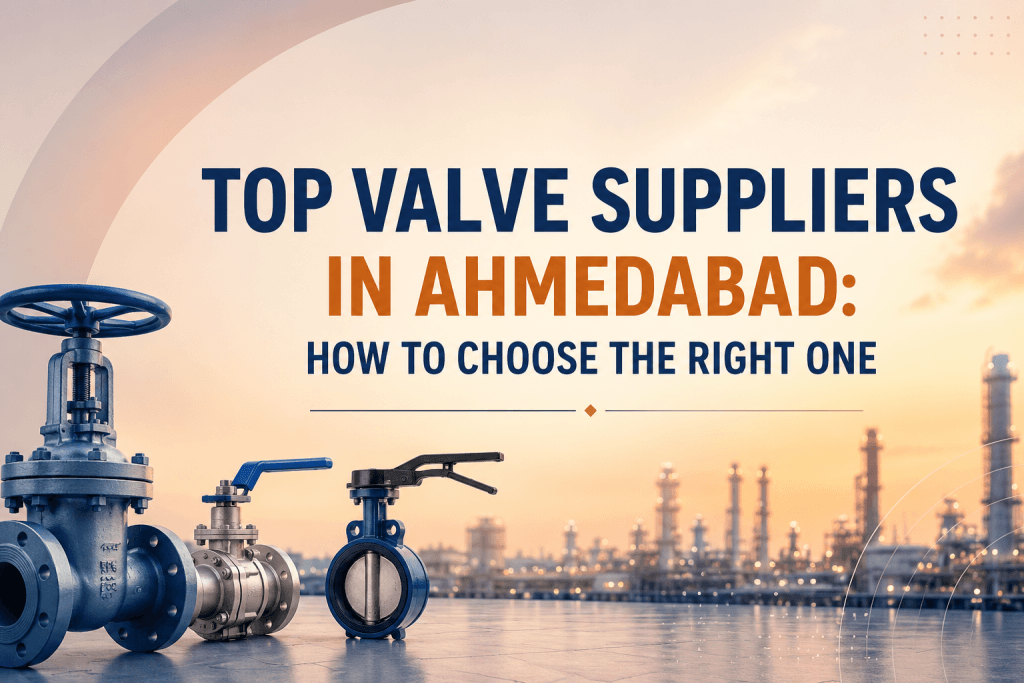
Ahmedabad has established itself as one of India’s leading industrial manufacturing centers, serving sectors such as chemicals, pharmaceuticals, oil and gas, water treatment, power generation, and process industries. As these industries continue to expand, the demand for high-quality industrial valves has grown significantly.
Valves play a critical role in controlling fluid flow, maintaining system safety, and ensuring operational efficiency, making supplier selection an important business decision. Understanding Top Valve Suppliers in Ahmedabad: How to Choose the Right One can help businesses identify reliable partners that offer quality products, technical expertise, and dependable after-sales support.
From evaluating certifications and manufacturing standards to comparing local and imported brands, several factors influence the purchasing process. Making an informed choice can improve system performance, reduce maintenance costs, and contribute to long-term operational success.
Why Ahmedabad Is a Major Hub for Industrial Valve Manufacturing?
Ahmedabad has emerged as one of India’s leading centers for industrial valve manufacturing, supported by a strong engineering base, modern production facilities, and growing industrial demand. Several factors have contributed to the city’s reputation as a preferred destination for high-quality valve manufacturing and supply.
- Advanced Manufacturing Infrastructure: Ahmedabad is home to well-established manufacturing facilities equipped with modern machinery, testing equipment, and production technologies that support high-quality valve manufacturing.
- Strong Industrial Ecosystem: The city serves major industries such as chemicals, pharmaceuticals, oil and gas, power generation, and water treatment, creating consistent demand for industrial valves and flow-control solutions.
- Skilled Workforce and Engineering Expertise: Ahmedabad benefits from a large pool of experienced engineers, technicians, and manufacturing professionals who contribute to product innovation and quality assurance.
- Wide Range of Valve Solutions: Local manufacturers offer a comprehensive portfolio of products, including ball valves, gate valves, globe valves, butterfly valves, check valves, and control valves for diverse industrial applications.
- Access to Domestic and International Markets: Its strategic location and strong logistics network enable manufacturers to efficiently serve customers across India as well as global export markets.
- Growing Focus on Innovation and Automation: Increasing demand for industrial automation, smart manufacturing, and advanced process control systems continues to strengthen Ahmedabad’s position as a key hub for industrial valve production.
Key Factors to Consider When Choosing Valve Suppliers
Product Quality and Manufacturing Standards
High-quality valves are essential for maintaining safe and efficient industrial processes. Reputable suppliers follow strict manufacturing standards and quality control procedures to ensure product reliability.
Look for suppliers that comply with recognized certifications such as ISO standards and industry-specific quality requirements. These certifications demonstrate a commitment to product consistency and performance.
Product Range and Availability
A reliable valve supplier should offer a comprehensive range of industrial valves for different applications. Having access to multiple valve types simplifies procurement and ensures compatibility with various systems.
Suppliers with extensive inventories can also provide faster delivery and better support for urgent replacement needs. This helps minimize downtime and maintain operational continuity.
Industry Experience and Expertise
Experience is an important indicator of a supplier’s capability and reliability. Established valve manufacturers often possess in-depth knowledge of industry requirements and application challenges.
Their expertise can help customers select the most suitable valve solutions for specific operating conditions. Technical guidance often leads to improved efficiency and longer equipment life.
Types of Valves Commonly Offered by Ahmedabad Suppliers
Ahmedabad valve suppliers offer a wide range of industrial valves designed to meet the requirements of various industries, including chemical processing, pharmaceuticals, oil and gas, water treatment, and power generation. Each valve type serves a specific function, from simple on-off flow control to precise regulation of pressure, temperature, and flow rates. Understanding the different valve options available can help businesses select the most suitable solution for their operational needs and improve overall system efficiency.
- Ball Valves: Widely used for on-off flow control applications. They provide excellent sealing performance and quick operation.
- Gate Valves: Suitable for full-flow applications where minimal pressure drop is required. They are commonly used in pipelines and utility systems.
- Globe Valves: Designed for precise flow regulation and throttling operations. They are frequently used in process industries.
- Butterfly Valves: Lightweight and compact, these valves are ideal for large-diameter piping systems. They offer cost-effective flow control.
- Check Valves: Prevent reverse flow within pipelines and protect equipment from backflow-related damage.
- Control Valves: Used in automated systems to regulate pressure, temperature, and flow rates with high accuracy.
Evaluating Supplier Certifications and Compliance
Supplier certifications and regulatory compliance are important indicators of a manufacturer’s commitment to quality, safety, and reliability. Certified valve suppliers follow established manufacturing processes, quality control procedures, and testing standards to ensure their products perform consistently in demanding industrial environments.
Working with certified suppliers helps businesses reduce risks and gain confidence in the quality of the products they purchase. Before selecting a valve supplier, buyers should verify compliance with recognized standards such as ISO certifications, API specifications, pressure testing requirements, and material traceability procedures.
These certifications demonstrate that the supplier meets industry benchmarks for product quality and performance. Choosing a compliant supplier not only supports regulatory requirements but also contributes to improved operational efficiency, safety, and long-term equipment reliability.
Importance of Choosing the Right Valve Supplier
Selecting the right valve supplier is a critical decision that can significantly impact the performance, safety, and reliability of industrial operations. Beyond pricing, businesses must evaluate a supplier’s product quality, technical expertise, certifications, and support capabilities to ensure long-term success.
- Ensures Product Quality: Reliable suppliers provide high-quality valves manufactured to industry standards, helping maintain consistent performance and durability in demanding applications.
- Improves Operational Safety: Quality valves reduce the risk of leaks, equipment failures, and safety incidents, protecting both personnel and industrial assets.
- Enhances System Reliability: Well-manufactured valves contribute to smooth process operations, minimizing unexpected downtime and operational disruptions.
- Reduces Maintenance Costs: Durable and properly engineered valves require less frequent repairs and replacements, helping businesses lower maintenance expenses over time.
- Provides Technical Expertise: Experienced suppliers offer valuable guidance in valve selection, installation, and troubleshooting, ensuring optimal system performance.
- Offers Long-Term Support: Trusted suppliers provide after-sales services, spare parts availability, warranty assistance, and technical support, creating greater long-term value for customers.
Customer Support and After-Sales Service
Customer support and after-sales service are important factors that can significantly influence the overall experience of working with a valve supplier. Industrial systems often require expert guidance during product selection, installation, commissioning, and maintenance.
Suppliers that provide prompt technical assistance can help businesses resolve operational issues quickly, minimize downtime, and maintain efficient system performance. A strong after-sales support network also reflects a supplier’s commitment to long-term customer satisfaction.
Services such as warranty coverage, spare parts availability, technical documentation, repair assistance, and maintenance guidance add substantial value beyond the initial purchase. Choosing a supplier with reliable customer support ensures businesses receive ongoing assistance throughout the lifecycle of their industrial valve systems.
Pricing Versus Long-Term Value
Price is an important consideration when selecting a valve supplier, but it should never be the only deciding factor. Choosing the lowest-priced option may seem cost-effective initially however, inferior product quality can lead to frequent repairs, higher maintenance costs, reduced equipment lifespan, and unexpected operational downtime.
Businesses should evaluate the overall value a supplier offers rather than focusing solely on upfront costs. High-quality industrial valves often deliver better performance, enhanced durability, and lower lifecycle expenses over time.
Reliable products can improve system efficiency, minimize operational disruptions, and reduce the need for frequent replacements. By prioritizing long-term value over short-term savings, businesses can achieve greater reliability, improved productivity, and a stronger return on investment.
Questions to Ask Before Selecting a Valve Supplier
Can They Provide Custom Solutions?
Different industries often have unique operating requirements. A capable supplier should be able to customize valve specifications based on application needs.
Custom engineering support can improve system compatibility and overall performance. This flexibility is especially valuable in specialized industries.
Do They Have Proven Industry References?
Customer references and case studies provide insight into a supplier’s track record. Positive feedback from existing clients demonstrates reliability and product quality.
Reviewing past projects can help buyers assess whether the supplier has experience in similar industrial applications.
What Are the Latest Trends in Industrial Valve Manufacturing?
As industries increasingly focus on automation, efficiency, and sustainability, industrial valve manufacturing is undergoing significant technological advancements. Modern valve solutions are no longer limited to basic flow control, they now incorporate smart monitoring capabilities. Advanced materials and energy-efficient designs that enhance operational performance. These innovations are helping industries reduce maintenance costs, improve safety, and meet evolving environmental and regulatory requirements.
- Smart Valves and IoT Integration: Modern industrial valves are increasingly equipped with sensors and IoT technology. These smart valves provide real-time monitoring, performance tracking, and predictive maintenance capabilities.
- Automation and Remote Operation: Industries are adopting automated valve systems to improve process efficiency and reduce manual intervention. Remote operation also enhances safety in hazardous environments.
- Energy-Efficient Valve Designs: Manufacturers are developing valves that minimize pressure loss and optimize fluid flow. This helps reduce energy consumption and lowers operational costs.
- Advanced Materials and Coatings: New materials and protective coatings are being used to improve corrosion resistance, durability, and performance in demanding industrial applications.
- Focus on Sustainability: Environmental regulations are driving the demand for eco-friendly valve solutions. Manufacturers are investing in technologies that reduce emissions, leakage, and waste.
- Customized and Application-Specific Solutions: Many industries now require valves tailored to specific operating conditions. Manufacturers are increasingly offering customized valve designs to meet unique process requirements.
Should I Buy Directly from Manufacturers or Distributors?
Buying directly from manufacturers is often the best option for businesses that require bulk orders, customized valve solutions, or competitive pricing. Manufacturers can provide detailed technical guidance, product customization, and direct access to quality assurance processes. This approach is particularly beneficial for large industrial projects with specific operational requirements.
Distributors, however, offer convenience, faster product availability, and access to multiple valve brands under one source. They are ideal for businesses that need smaller quantities, quick replacements, or a broader product selection. The right choice depends on factors such as project size, budget, delivery timelines, and technical requirements.
Ahmedabad Valve Manufacturers vs Imported Valve Brands
Choosing between Ahmedabad valve manufacturers and imported valve brands depends on factors such as budget, application requirements, quality expectations, and after-sales support. Both options offer unique advantages, making it important for businesses to evaluate their operational needs before making a purchasing decision.
- Cost-Effectiveness: Ahmedabad valve manufacturers generally offer more competitive pricing due to lower production and logistics costs. This makes them a cost-effective option for many industrial projects.
- Faster Delivery Times: Local manufacturers can often provide quicker delivery and shorter lead times compared to imported brands. This helps businesses avoid project delays and reduce inventory challenges.
- Customization Capabilities: Many Ahmedabad manufacturers offer customized valve solutions designed to meet specific industry requirements. This flexibility is especially valuable for specialized applications.
- Local Technical Support: Domestic suppliers typically provide easier access to technical assistance, maintenance support, and replacement parts. This can improve operational efficiency and reduce downtime.
- Global Reputation and Specialized Products: Imported valve brands often have a long-established international reputation and may offer advanced technologies or highly specialized products for critical applications.
- Quality and Certification Comparison: Both local and imported valves should be evaluated based on certifications, material quality, performance standards, and reliability. Businesses should compare these factors alongside pricing and support services to determine the best overall value.
Conclusion
Choosing the right valve supplier is essential for maintaining the safety, efficiency, and reliability of industrial operations. Understanding Top Valve Suppliers in Ahmedabad: How to Choose the Right One helps businesses make informed purchasing decisions based on product quality, certifications, technical expertise, pricing, delivery capabilities, and customer support.
A reliable supplier not only provides high-performance valves but also contributes to long-term operational success and reduced maintenance costs. As industrial requirements continue to evolve, businesses should focus on suppliers that embrace innovation, automation, and sustainable manufacturing practices.
By carefully evaluating all key factors discussed in this guide, companies can confidently apply the insights from Top Valve Suppliers in Ahmedabad: How to Choose the Right One: Select a trusted partner that delivers value, performance, and long-term reliability.
Explore Our Recent Blog
- Valve Pressure Rating: PN, ANSI & Class Explained
- Smart Industrial Valves: IoT & Automation in Flow Control
- Ball Valve Manufacturer in Ahmedabad: Quality & Uses
- Corrosion-Resistant Industrial Valves: Why Chemical and Pharma Industries Need Them
- Cryogenic Valves: How They Work and Where They Are Used
Frequently Asked Questions
1. Why is Ahmedabad known for valve manufacturing?
Ahmedabad has a strong industrial base and advanced manufacturing infrastructure. The city supports numerous engineering and process industries that drive demand for industrial valves. Its skilled workforce and established supply chain contribute to its reputation as a valve manufacturing hub.
2. What should I look for in a valve supplier?
Key factors include product quality, certifications, industry experience, technical support, pricing, and delivery capabilities. Evaluating these aspects helps ensure reliable supplier performance. A well-qualified supplier provides both quality products and expert guidance.
3. Are certifications important when choosing a supplier?
Yes, certifications demonstrate compliance with recognized manufacturing and quality standards. They provide confidence in product reliability and performance. Certified suppliers typically maintain stricter quality control processes.
4. Which industries commonly use industrial valves?
Industrial valves are widely used in chemical processing, pharmaceuticals, oil and gas, power generation, water treatment, food processing, and manufacturing industries. These sectors depend on precise flow-control systems for safe operations. Different applications require specialized valve designs.
5. How can I verify a supplier’s reliability?
Review customer testimonials, project references, certifications, and years of industry experience. You can also evaluate their technical support capabilities and after-sales services. Reliable suppliers are transparent about their manufacturing processes and quality standards.
6. Is price the most important factor when selecting a valve supplier?
No, focusing solely on price can lead to quality and performance issues. Long-term value, durability, support services, and reliability should also be considered. Investing in quality products often reduces overall operational costs.