
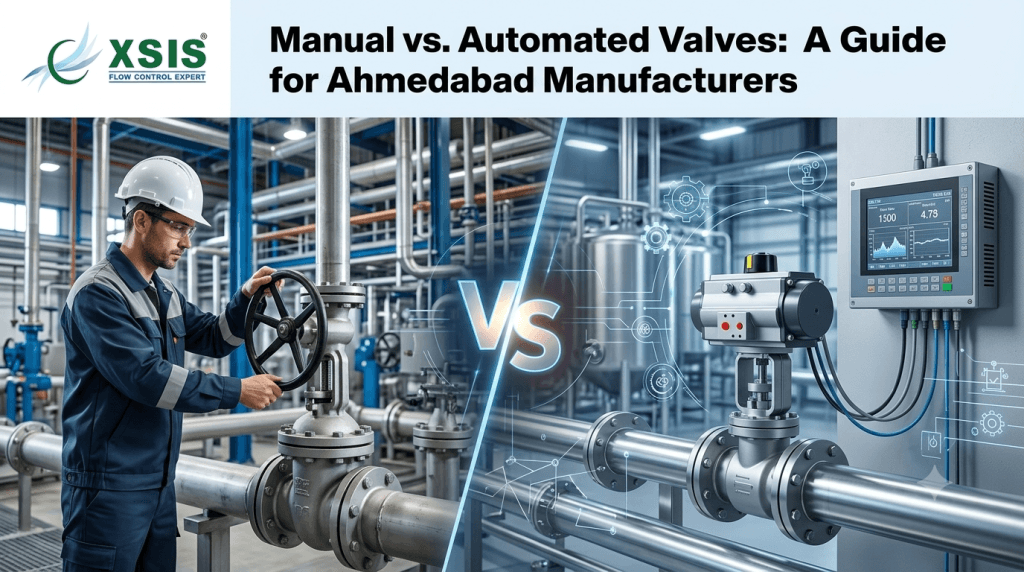
Industrial production requires reliable flow control systems to manipulate liquids, gases, chemical materials, and unique system substances effectively. Valves play a vital role in controlling pressure, regulating flow, and ensuring operational safety across various industrial applications. However, selecting the proper valve type has become a widespread challenge for manufacturers seeking to enhance productivity and reduce operational stress.
Manual vs. Automated Valves: A Guide for Ahmedabad Manufacturers help industries understand the differences among those valve solutions and pick out the most suitable option for their strategies. Ahmedabad’s developing business sectors, which encompass chemical processing, pharmaceuticals, water treatment, textiles, food processing, and manufacturing facilities, require reliable valve technology to maintain smooth operations.
What Are the Main Differences Between Manual and Automated Valves?
Manual and automated valves perform the same primary function of controlling fluid flow, but their operation techniques and abilities vary significantly. Understanding those differences allows manufacturers to choose valves that meet their operational requirements and production goals. Manual valves require physical effort from operators to open, close, or alter the valve feature.
These valves are generally applied in packages in which not unusual changes are not required and wherein accessibility for manual operation is simple. They are preferred for their simplicity, lower initial cost, and easy maintenance. Automated valves, also called actuated valves, use mechanical devices, including pneumatic actuators, electric actuators, or hydraulic actuators, to control valve movement mechanically.
Key Differences Between Manual and Automated Valves
- Operation Method: Manual valves rely upon human intervention through hand wheels, levers, or gears for operation. Automated valves use actuators and control indicators to function without non-stop manual involvement.
- Control Accuracy: Manual valves offer clean control with the float control; however, they may also have obstacles in maintaining specific adjustments. Automated valves deliver correct positioning and constant flow control through advanced control systems.
- Labor Requirement: Manual valve systems require operators for starting, last, and tracking operations. Automated valve solutions reduce hard- work dependency by permitting remote and automatic operation.
- Installation Cost: Manual valves commonly have lower installation costs due to the fact they do not require extra automation components. Automated valves require investment in actuators, sensors, controllers, and integration systems.
- Maintenance Requirements: Manual valves normally contain fewer complex safety requirements. Automated systems may also require actuator servicing, electrical assessments, and control device maintenance.
- Industrial Suitability: Manual valves are suitable for small-scale operations and low-frequency modifications. Automated valves are suitable for large production plants requiring non-stop and precise control.
Why Are Manual Valves Still Used in Ahmedabad Manufacturing Industries?
Despite developing enterprise automation, manual valves remain widely used in Ahmedabad manufacturing industries due to their simplicity, sturdiness, and affordability. Many small and medium-sized businesses rely on manual valve systems for applications in which frequent operation isn’t vital. Industries consisting of water supply plants, small chemical devices, textile centers, and general production operations regularly use manual valves because they offer dependable general performance without requiring complex automation infrastructure.
Their simple design makes them easier to install, operate, and maintain. For manufacturers comparing Manual vs. Automated Valves: A Guide for Ahmedabad Manufacturers, guide valves remain a vital preference when operational requirements are simple and cost-range constraints are a subject. They offer dependable flow isolation and are effective for applications where operators can efficiently access valve locations.
Benefits of Using Manual Valves in Industrial Applications
- Cost-Effective Solution: Manual valves require lower initial funding compared to computerized alternatives. They eliminate the need for additional automation tools, making them appropriate for industries handling restricted budgets.
- Simple Installation Process: These valves have a straightforward design that makes setup quicker and much less complicated. Manufacturers can reduce setup complexity without requiring advanced technical manuals.
- Easy Maintenance: Manual valves contain fewer mechanical and digital components, lowering maintenance requirements. Routine inspection and lubrication are normally sufficient for maintaining overall performance.
- High Reliability: Since guide valves function without electric or pneumatic systems, they are able to maintain functioning even in the event of electrical disasters or device interruptions.
- Suitable for Isolation Applications: Manual valves are typically used for shutting off pipelines, preservation activities, and programs wherein common adjustment isn’t practical.
- Long Service Life: Properly selected manual valves made from appropriate materials can provide long-term consistent performance in demanding commercial environments.
How Do Automated Valves Improve Industrial Efficiency?
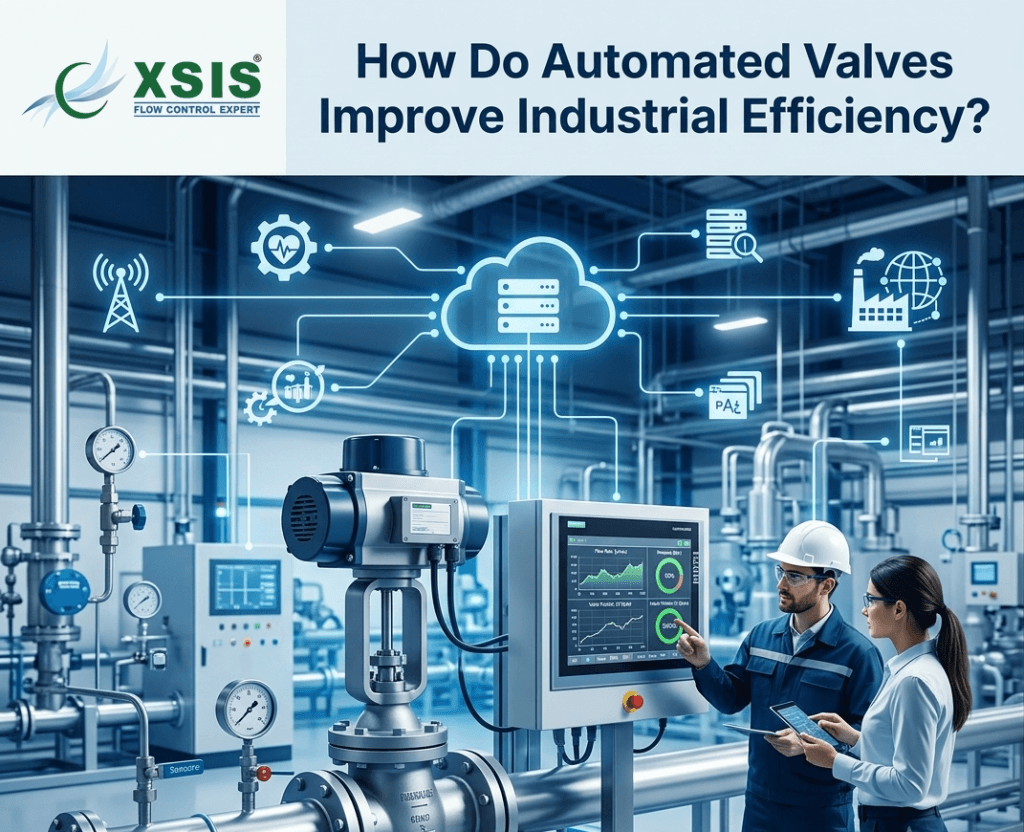
Automated valves have become increasingly crucial for modern-day production centers because they support faster operations, advanced accuracy, and superior process control. As industries in Ahmedabad adopt smart production practices, valve automation systems are helping organizations achieve higher productivity and operational control. Automated valves use actuators and control mechanisms to adjust fluid movement without direct human operation.
They can accumulate signals from programmable logic controllers (PLCs), distributed control systems (DCS), or specific business automation systems to adjust flow according to real-time process requirements. In packages wherein safety, precision, and non-stop operation are critical, automatic valves provide significant benefits. Chemical vegetation, pharmaceutical industries, energy generation equipment, and large-scale processing centers regularly depend on automated valve solutions to maintain ordinary production requirements.
Advantages of Automated Valve Systems
- Improved Process Control: Automated valves provide accurate flow control and better control over business strategies. This permits producers to maintain product quality and reduce operational variations.
- Remote Operation Capability: Operators can control automated valves from centralized locations. This improves workplace safety, in particular in unsafe environments in which manual operation can also create dangers.
- Higher Production Efficiency: Automation reduces delays due to manual valve modifications. Industries can attain quicker response times and smoother manufacturing cycles.
- Enhanced Safety Standards: Automated systems lessen human exposure to risky regions. They are specifically useful in industries dealing with chemical substances, high-pressure fluids, or extreme temperatures.
- Integration With Smart Systems: Automated valves can be integrated into modern commercial automation solutions. This allows data monitoring, predictive maintenance, and advanced decision-making.
- Better Flow Regulation: Automated valves provide unique control of pressure and go with the flow costs. This ensures strong overall performance in complex manufacturing processes.
Which Industries in Ahmedabad Prefer Manual or Automated Valves?
Ahmedabad is certainly one of India’s fundamental industrial centers, with companies operating in the chemical processing, pharmaceuticals, textiles, food processing, engineering, water treatment, and manufacturing sectors. Each organization has particular flow control requirements, making valve selection an essential issue for operational performance and safety. While a few organizations continue to rely on manual valves for easy isolation and control applications.
Large-scale industries increasingly undertake automated valve systems for higher accuracy and productivity. Manual valves are usually desired in applications where operators can easily access pipelines and where valve changes are occasional. Automated valves are decided on for nonstop methods wherein accurate go-with-the-flow regulation, some distance-off tracking, and faster response are important.
Industrial Applications of Manual and Automated Valves
- Chemical Processing Industry: Chemical industries use dependable valves for dealing with corrosive chemical compounds, gases, and process fluids. Automated valves ensure precise control and safety, while manual valves are beneficial for important isolation applications.
- Pharmaceutical Industry: Pharmaceutical manufacturing requires strict tool control and hygiene necessities. Automated valves help ensure correct flow control, contamination prevention, and integration with advanced production systems.
- Water Treatment Plants: Water treatment centers use both manual and automatic valves depending on operational requirements. Manual valves are appropriate for protection and isolation, whilst automatic valves assist in controlling filtration, chemical dosing, and treatment strategies efficiently.
- Textile Manufacturing: Textile industries use valves for controlling steam, dyes, chemical substances, and water flow. Automated valves assist in improving process consistency, while manual valves remain beneficial for critical pipeline control.
- Food and Beverage Industry: Food processing facilities require hygienic and dependable flow control systems. Automated valves help keep manufacturing accuracy, while manual valves are applied in less complex operations.
- Engineering and Manufacturing Units: Engineering industries often integrate both valve types based on application requirements. Manual valves are used for standard applications, while automatic solutions assist advanced production techniques.
What Factors Should Ahmedabad Manufacturers Consider Before Choosing Valves?
Selecting the right valve type requires careful assessment of operating conditions, equipment requirements, and long-term business needs. Choosing between manual and automatic solutions without analyzing those factors can cause higher maintenance costs, reduced performance, and operational challenges. For manufacturers exploring Manual vs. Automated Valves: A Guide for Ahmedabad Manufacturers, the choice should not be based solely on preliminary buy cost.
A complete evaluation should include setup requirements, operating frequency, safety issues, and future automation opportunities. Industries need to select valves that provide dependable overall performance under specific pressure, temperature, and fluid conditions. Consulting professional valve producers can assist agencies in becoming aware of appropriate materials, designs, and automation options for their applications.
Important Valve Selection Factors
- Application Requirements: Manufacturers must assess whether or not or not the valve can be used for isolation, drift regulation, pressure management, or emergency shutdown. The application reason determines the most suitable valve type.
- Operating Frequency: If a valve requires frequent adjustments, automatic solutions provide higher performance. Manual valves are more suitable for operations requiring occasional modifications.
- Safety Requirements: Industries dealing with volatile materials want to consider automatic valves because they permit remote operation and decrease employee exposure to volatile environments.
- Budget Considerations: Manual valves typically have lower upfront costs, at the same time as automatic valves require higher funding but may offer higher long-term operational cost savings.
- Process Automation Goals: Businesses planning smart production upgrades should keep in mind automatic valve structures that could combine with commercial company control systems.
- Maintenance Planning: Manufacturers need to assess available technical support, spare parts availability, and maintenance requirements before choosing a valve solution.
How Much Do Manual and Automated Valves Cost?
Cost is one of the most vital factors when manufacturers compare valve solutions. However, the whole cost of ownership consists of more than the initial purchase price. Installation, safety, energy requirements, labor expenses, and operational performance also have an impact on the overall investment. Manual valves typically have a lower purchase and installation price because they require fewer components.
They are appropriate for businesses looking for low-cost solutions for smooth flow control applications. Automated valves contain additional components, including actuators, positioners, sensors, and control systems, which increase the initial investment. However, they could reduce labor costs, improve performance, and minimize manufacturing losses over time.
Manual vs. Automated Valve Cost Comparison
- Initial Investment: Manual valves are lower in price due to their simple mechanical layout. Automated valves require additional automation equipment, increasing the initial setup fee.
- Operational Expenses: Manual valve systems may include higher labor requirements due to manual operation. Automated valves reduce operational dependency by allowing automated control.
- Maintenance Costs: Manual valves commonly require less technical safety. Automated structures may additionally need actuator servicing and digital component exams.
- Energy Requirements: Manual valves do not require outside energy sources. Automated valves might also require electricity, compressed air, or hydraulic power depending on actuator type.
- Long-Term Savings: Automated valves can provide higher returns in large-scale industries by means of enhancing overall performance and reducing production interruptions.
- Application-Based Value: The optimal choice is based on operational wishes in terms of cost. Industries must compare average performance benefits against investment costs.
How Will Valve Automation Shape the Future of Ahmedabad Manufacturing?
The production area is all of a sudden shifting in the direction of automation, digital tracking, and smart production systems as industries adopt Industry 4. Zero-generation, computerized valves have grown to be an essential issue of modern process management systems. Valve automation permits producers to enhance productivity, reduce human errors, and achieve better control over industrial operations.
Advanced systems equipped with sensors and tracking abilities help companies identify performance problems in advance of them causing expensive downtime. For corporations studying Manual vs. Automated Valves: A Guide for Ahmedabad Manufacturers, future trends advocate the adoption of computerized valve technology, especially in industries where precision, protection, and performance are important.
Future Trends in Industrial Valve Automation
- Smart Valve Technologies: Modern automatic valves have become smarter with digital sensors and tracking capabilities. These technologies help industries track performance and improve safety planning.
- Remote Monitoring Systems: Manufacturers can perform and monitor valve systems remotely via superior management systems. This improves performance and reduces risks in business environments.
- Predictive Maintenance: Automated valve systems can provide performance records that allow identifying functionality failures in advance of breakdowns arising.
- Energy Efficiency Improvements: Advanced valve automation permits optimizing resource utilization by controlling the float more as it should be and lowering unnecessary consumption.
- Integration With Industrial IoT: Automated valves can connect to Industrial Internet of Things (IIoT) systems to assist smarter production operations.
- Increased Safety Standards: Automation reduces manual intervention in unstable regions, supporting industries to keep more stable running environments.
Conclusion
Selecting the proper valve answer is a crucial choice for Ahmedabad manufacturers aiming to improve efficiency, protection, and system reliability. Both manual and automatic valves provide specific benefits depending on business requirements, operating conditions, and manufacturing goals. Manual valves continue to be a realistic choice for easy programs in which price-effectiveness, smooth maintenance, and basic flow isolation are priorities.
Understanding Manual vs. Automated Valves: A Guide for Ahmedabad Manufacturers allow companies to make informed selections based on overall performance requirements in terms of initial investment. By considering elements such as application type, operating frequency, safety goals, and future automation plans, manufacturers can choose the most suitable valve technology for their operations.
Explore Our Recent Blog
- Safety Relief Valves in Ahmedabad
- Needle Valves in Ahmedabad
- Control Valves vs. On/Off Valves for Ahmedabad Industries
- Plug Valve vs. Ball Valve in Ahmedabad
- Diaphragm Valve vs. Gate Valve
Frequently Asked Questions
Manual valves require physical operation via an operator using handles, wheels, or levers to govern fluid flow. Automated valves use actuators together with pneumatic, electric, or hydraulic systems to operate automatically based on control signals. The primary difference is the level of control and automation they provide. While manual valves are appropriate for simple applications, automated valves are desired for industries requiring precise control, remote operation, and continuous system control.
Automated valves aren’t commonly better than manual valves; the right choice depends on the specific utility requirements. Industries requiring commonplace modifications, accurate flow control, and advanced protection often benefit from automated valve systems. However, manual valves remain effective for applications where operations are simple, and automation is not practical.
Many industries in Ahmedabad use automatic valves, including chemical processing, pharmaceuticals, water treatment, food processing, textiles, and engineering manufacturing. These industries require accurate flow regulation and reliable system control. Automated valves are especially valuable in industries in which safety, performance, and continuous operation are important.
Manual valves offer several benefits, which include lower installation costs, easy operation, easy maintenance, and dependable overall performance. They are appropriate for applications where operators can easily gain access to the valve area, and regular adjustments aren’t required. Because they have fewer components, manual valves commonly require far less maintenance compared to automated systems.
Automatic valves enhance manufacturing performance through providing accurate float control, quicker reaction times, and decreased dependence on manual operation. They may be integrated with PLCs, control structures, and commercial automation systems for better system control. These valves also enhance workplace protection by permitting remote operation in hazardous environments.
Manufacturers must consider factors such as application requirements, operating conditions, safety requirements, automation needs, and budget before deciding between manual and automatic valves. A unique assessment helps ensure better performance and value. For easy isolation requirements, manual valves can be enough, while complex manufacturing strategies may also require automated solutions.