

Industrial processes depend heavily on valves to regulate, direct, or stop the movement of liquids, gases, and steam. Choosing the correct valve is essential for maintaining efficiency, safety, and production quality. Among the many valve types available, understanding Control Valves vs. On/Off Valves for Ahmedabad Industries is one of the most important decisions for engineers, plant operators, and procurement teams.
Ahmedabad is home to a wide range of industries, including pharmaceuticals, chemicals, food processing, textiles, oil and gas, and water treatment. Each industry has unique operational requirements, making valve selection a critical factor in system performance. This guide explains the differences, working principles, applications, advantages, and selection criteria to help industries choose the right valve for their operations.
What Is the Difference Between Control Valves and On/Off Valves?
Understanding the difference between control valves and on/off valves is essential for selecting the right equipment in industrial systems. Although both valve types regulate the movement of fluids, they serve different purposes and are designed for different operating conditions. Control Valves vs. On/Off Valves for Ahmedabad Industries explains that control valves provide precise and continuous flow regulation, whereas on/off valves simply start or stop the flow.
Choosing the right valve improves process efficiency, reduces downtime, enhances product quality, and supports safe operations across Ahmedabad’s chemical, pharmaceutical, textile, food processing, and water treatment industries.
Key Differences Between Control Valves and On/Off Valves
- Functionality: Control valves continuously regulate flow, pressure, or temperature based on process requirements. On/off valves only allow complete opening or complete shut-off without intermediate control.
- Operation Method: Control valves use controllers and actuators to adjust valve positions automatically. On/off valves operate manually or with simple actuators for open-and-close functions.
- Level of Precision: Control valves provide accurate flow regulation for sensitive industrial processes. On/off valves are designed mainly for isolation rather than precise flow control.
- Industrial Applications: Control valves are widely used in chemical, pharmaceutical, and water treatment plants. On/off valves are commonly installed for pipeline isolation and emergency shutdown systems.
- Cost and Maintenance: Control valves require a higher investment and periodic calibration for reliable performance. On/off valves have a simpler design, making them easier and less expensive to maintain.
- Automation Compatibility: Control valves integrate easily with PLC and DCS systems for continuous automation. On/off valves support basic automation where only open and closed positions are required.
How Do Control Valves Work in Industrial Processes?
Control valves play a vital role in industrial automation by continuously regulating the flow of liquids, gases, and steam according to process requirements. Unlike on/off valves, they adjust their opening automatically based on signals received from a controller to maintain precise flow, pressure, temperature, or liquid levels.
In Control Valves vs. On/Off Valves for Ahmedabad Industries, understanding how control valves work helps industries improve production accuracy, reduce energy consumption, and maintain stable operating conditions. Their ability to respond to changing process variables makes them essential for industries such as pharmaceuticals, chemicals, food processing, textiles, and water treatment.
How Control Valves Operate Step by Step
- Receive Control Signals: The valve receives electronic or pneumatic signals from a PLC, DCS, or process controller. These signals determine the required valve position for accurate flow control.
- Actuator Moves the Valve: The actuator converts the control signal into mechanical movement to open or close the valve. This allows precise regulation of the fluid passing through the pipeline.
- Monitor Process Variables: Sensors continuously measure pressure, temperature, flow rate, or liquid level within the system. The collected data is transmitted to the controller for continuous monitoring.
- Automatic Flow Adjustment: Based on sensor feedback, the controller adjusts the valve opening in real time. This maintains the desired operating conditions without manual intervention.
- Maintain Process Stability: Continuous valve adjustments minimize fluctuations in flow, pressure, and temperature. This improves product quality while reducing equipment wear.
- Enable Industrial Automation: Control valves integrate with automated control systems for remote operation and monitoring. This increases efficiency, enhances safety, and reduces operational downtime.
When Should Industries Use On/Off Valves?
On/off valves are the ideal choice for applications where the primary objective is to either allow full fluid flow or completely stop it. Unlike control valves, these valves are not designed for regulating flow but instead provide reliable isolation and quick shut-off during normal operations, maintenance, or emergency situations.
In Control Valves vs. On/Off Valves for Ahmedabad Industries, understanding when to use on/off valves helps industries improve safety, simplify operations, and reduce installation and maintenance costs. These valves are widely used across Ahmedabad’s chemical, pharmaceutical, food processing, textile, oil and gas, and water treatment industries for dependable isolation and system protection.
Common Applications of On/Off Valves
- Pipeline Isolation: On/off valves completely isolate sections of a pipeline during maintenance or repairs. This prevents leakage and provides a safe working environment for maintenance teams.
- Emergency Shutdown Systems: These valves instantly stop the flow of fluids during emergencies or equipment failures. Quick shut-off helps protect workers, machinery, and the surrounding environment.
- Equipment Protection: Pumps, boilers, compressors, and storage tanks use on/off valves for safe isolation when equipment is idle. This reduces unnecessary wear and simplifies maintenance activities.
- Utility and Distribution Lines: Water, steam, compressed air, and gas distribution systems commonly use on/off valves for reliable flow control. Their simple operation ensures dependable performance in utility networks.
- Cost-Effective Industrial Operations: On/off valves have a straightforward design with fewer moving parts, making them economical. They offer lower installation, maintenance, and replacement costs compared to control valves.
- Manual and Automated Systems: On/off valves can be operated manually or equipped with pneumatic or electric actuators. This flexibility makes them suitable for both conventional and automated industrial processes.
Which Industries in Ahmedabad Benefit Most from Control Valves?
Ahmedabad’s diverse industrial landscape includes sectors such as chemicals, pharmaceuticals, textiles, food processing, and water treatment, all of which require reliable flow control solutions. Maintaining precise control over flow, pressure, temperature, and liquid levels is essential for achieving consistent product quality and safe operations. Control valves play a vital role in automatically regulating these process variables according to changing system requirements.
Their ability to provide accurate and continuous adjustment helps reduce product waste, improve energy efficiency, and minimize equipment wear. Industries that rely on automated manufacturing systems particularly benefit from the precision and reliability offered by control valves. As a result, control valves have become an essential component for enhancing productivity, safety, and operational performance across Ahmedabad’s industrial sector.
Chemical Industries
- Precise Chemical Dosing: Control valves regulate the exact flow of chemicals to maintain accurate formulations and consistent production quality.
- Process Safety: They control pressure and temperature to prevent hazardous conditions and ensure safe plant operations.
- Reduced Material Waste: Accurate flow regulation minimizes chemical wastage, improving efficiency and lowering production costs.
Pharmaceutical Manufacturing
- Consistent Product Quality: Control valves maintain precise flow rates during mixing, sterilization, and batch processing for uniform results.
- Regulatory Compliance: Accurate process control helps manufacturers meet strict pharmaceutical quality and safety standards.
- Reliable Sterile Operations: They ensure controlled movement of clean steam and purified water, supporting hygienic production processes.
Food and Beverage Processing
- Accurate Ingredient Control: Control valves regulate the flow of ingredients to maintain consistent taste and product quality.
- Efficient Cleaning Systems: They control water and cleaning solutions during CIP processes, ensuring proper sanitation.
- Energy-Efficient Steam Control: Precise steam regulation improves heating efficiency while reducing energy consumption.
Water Treatment Plants
- Controlled Chemical Dosing: Control valves regulate disinfectants and treatment chemicals for effective water purification.
- Pressure Management: They maintain stable pressure throughout the treatment system, preventing pipeline damage.
- Optimized Water Distribution: Accurate flow control improves filtration efficiency and reduces operational costs.
What Are the Advantages of Control Valves Compared to On/Off Valves?
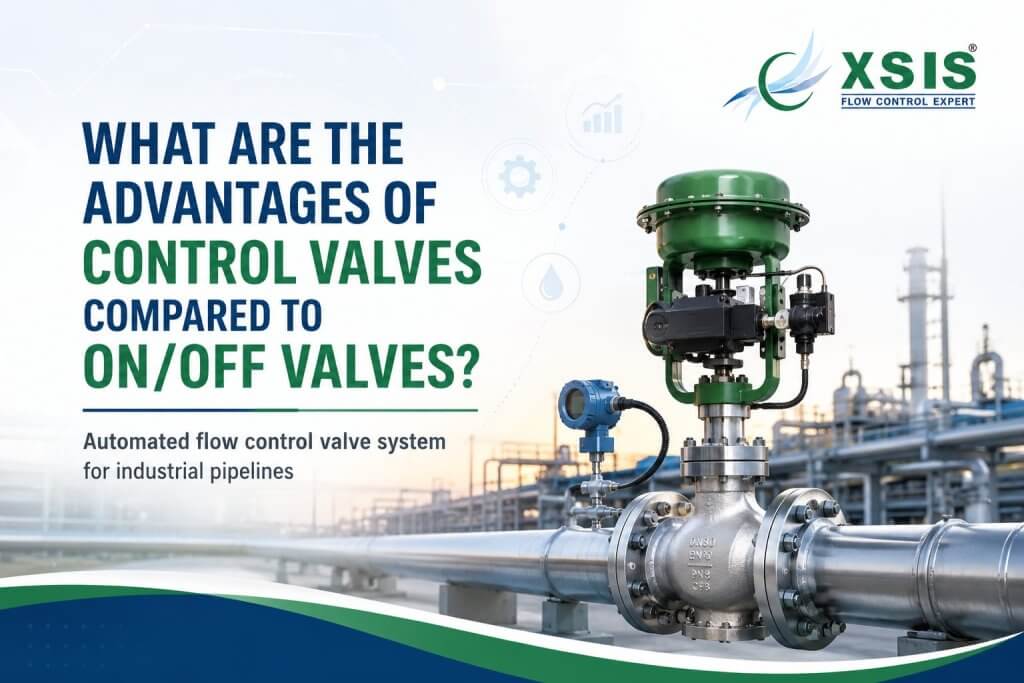
Selecting the right valve plays a crucial role in improving industrial productivity, operational efficiency, and overall system reliability. Although both control valves and on/off valves are essential for different applications, their performance varies based on process requirements. Control valves are specifically designed for continuous and precise flow regulation, making them ideal for automated industrial systems.
They help maintain stable pressure, temperature, and flow rates, resulting in consistent product quality. Additionally, control valves reduce energy consumption, minimize process variations, and lower long-term maintenance costs. For industries in Ahmedabad, investing in the right valve solution leads to safer operations and greater long-term profitability.
Advantages of Control Valves Compared to On/Off Valves
- Precise Flow Regulation: Control valves continuously adjust fluid flow according to changing process conditions, ensuring consistent production quality and reducing operational variations.
- Higher Automation Efficiency: These valves integrate with PLCs and DCS systems, allowing fully automated industrial operations with minimal manual intervention.
- Improved Energy Savings: Accurate flow regulation minimizes unnecessary pumping, heating, and cooling, reducing overall energy consumption throughout the plant.
- Enhanced Product Quality: Stable temperature, pressure, and flow conditions improve manufacturing consistency, particularly in pharmaceutical and chemical industries.
- Lower Process Variations: Continuous monitoring and automatic adjustments reduce fluctuations that could otherwise affect product specifications.
- Better Safety Performance: Control valves help prevent overpressure, overheating, and unstable operating conditions by maintaining precise process control.
How Do You Choose Between Control Valves and On/Off Valves?
Choosing between control valves and on/off valves requires a thorough evaluation of your industrial process and operational requirements. Factors such as flow regulation, operating pressure, temperature, automation needs, and maintenance expectations all influence the selection process.
While control valves are ideal for applications requiring continuous and precise flow control, on/off valves are better suited for simple isolation and shut-off functions. Understanding these differences helps industries improve efficiency, reduce downtime, and optimize long-term operating costs. Consulting an experienced valve manufacturer can further ensure that the selected valve meets both current and future process requirements.
- Understand Process Requirements: Determine whether the application requires continuous flow regulation or simple isolation. This forms the foundation of proper valve selection.
- Evaluate Operating Conditions: Consider pressure, temperature, fluid type, viscosity, and corrosion resistance before finalizing valve specifications.
- Consider Automation Needs: Automated plants benefit significantly from process control valves, while manually operated systems often require only on/off valves.
- Analyze Maintenance Requirements: Control valves require periodic calibration and actuator maintenance, whereas on/off valves generally require less frequent servicing.
- Review Budget Constraints: Although control valves have higher initial costs, their operational savings often justify the investment over the equipment lifecycle.
- Consult Experienced Manufacturers: Working with a trusted control valve manufacturer in Ahmedabad ensures proper sizing, material selection, and long-term technical support.
What Common Mistakes Should Industries Avoid When Selecting Industrial Valves?
Selecting the right industrial valve is essential for maintaining efficient operations, reducing maintenance costs, and ensuring long-term system reliability. In Control Valves vs. On/Off Valves for Ahmedabad Industries, avoiding common valve selection mistakes helps businesses improve process efficiency, minimize downtime, and achieve safer industrial performance. Careful evaluation of operating conditions, valve specifications, and automation requirements ensures the right investment for long-term success.
Common Valve Selection Mistakes to Avoid
- Choosing the Wrong Valve Type: Using a control valve where only isolation is needed, or an on/off valve for flow regulation, reduces efficiency. It can also affect overall process performance and product quality.
- Incorrect Valve Sizing: Oversized or undersized valves can cause unstable flow and unnecessary wear. Proper sizing improves accuracy, efficiency, and equipment lifespan.
- Ignoring Process Conditions: Selecting a valve without considering pressure, temperature, or media characteristics can lead to failures. The right material and design ensure reliable long-term operation.
- Focusing Only on Price: Choosing the lowest-cost valve may result in frequent repairs and higher maintenance expenses. Evaluating lifecycle costs provides better long-term value.
- Overlooking Automation Needs: Ignoring compatibility with PLC or DCS systems limits future automation opportunities. Automation-ready valves improve productivity and operational flexibility.
- Skipping Expert Consultation: Working with an experienced valve manufacturer helps ensure proper valve selection and installation. Expert guidance minimizes costly errors and improves system reliability.
Why Is Choosing the Right Valve Supplier Important for Ahmedabad Industries?
Choosing the right valve supplier is just as important as selecting the correct valve type for any industrial application. A reliable supplier not only delivers high-quality valves but also provides valuable technical guidance throughout the selection process. They help industries choose the right valve based on operating pressure, temperature, flow requirements, and process conditions.
Trusted manufacturers also ensure that their products comply with industry standards and quality certifications. In addition, dependable after-sales support, maintenance assistance, and spare parts availability help reduce unexpected downtime. Partnering with an experienced valve supplier ultimately improves operational efficiency, enhances system reliability, and lowers long-term maintenance costs.
Benefits of Choosing a Reliable Valve Supplier
- High-Quality Products: Reputable suppliers manufacture durable valves that meet industry standards. They ensure consistent performance and a longer service life.
- Technical Expertise: Experienced suppliers recommend the most suitable valve for each application. This helps improve efficiency and avoid costly selection mistakes.
- Customization Options: Reliable manufacturers offer valves in different materials, sizes, and actuator types. This ensures the valve matches specific industrial requirements.
- Reliable After-Sales Support: Prompt technical assistance and spare parts availability reduce maintenance delays. This helps keep industrial operations running smoothly.
- Compliance with Industry Standards: Trusted suppliers provide valves that comply with national and international quality standards. This improves safety, reliability, and product performance.
- Long-Term Cost Savings: High-quality valves require less frequent maintenance and fewer replacements. This lowers overall operating costs and increases return on investment.
Conclusion
Understanding Control Valves vs. On/Off Valves: A Guide for Ahmedabad Industries is essential for selecting the right valve solution that aligns with specific industrial applications and operational goals. While control valves are designed for precise and continuous regulation of flow, pressure, and temperature, on/off valves are best suited for reliable isolation and quick shut-off operations.
Choosing the appropriate valve improves process efficiency, enhances product quality, minimizes downtime, and reduces long-term maintenance costs. Industries such as chemicals, pharmaceuticals, food processing, textiles, and water treatment can significantly benefit from proper valve selection based on their unique process requirements.
Partnering with an experienced control valve manufacturer in Ahmedabad ensures expert guidance on valve sizing, material selection, actuator compatibility, and installation. Investing in the right valve technology ultimately leads to safer operations, improved productivity, greater energy efficiency, and long-term industrial success.
Explore Our Recent Blog
- Butterfly Valves in Ahmedabad: Working, Types, and Industrial Applications
- Plug Valves in Ahmedabad: Construction, Uses, and Advantages
- Diaphragm Valves in Ahmedabad: How They Work and Where They’re Used
- Safety Relief Valves in Ahmedabad
- Needle Valves in Ahmedabad
Frequently Asked Questions
1. What is the main difference between control valves and on/off valves?
Control valves regulate flow continuously, while on/off valves only provide fully open or fully closed operation. Control valves are used for precise automation, whereas on/off valves mainly serve isolation purposes. The correct choice depends on the application’s operational requirements.
2. Which valve is better for automated industrial systems?
Control valves are the preferred choice for automated systems because they communicate with controllers and adjust flow automatically. They improve efficiency, product quality, and process stability. On/off valves are generally used for isolation rather than continuous control.
3. Which industries in Ahmedabad commonly use control valves?
Chemical, pharmaceutical, textile, food processing, oil and gas, and water treatment industries extensively use control valves. These industries require accurate regulation of flow, pressure, and temperature to maintain consistent production quality and operational safety.
4. Are on/off valves less expensive than control valves?
Yes. On/off valves generally have lower purchase and maintenance costs because of their simpler construction. However, control valves often provide better long-term value through improved efficiency, reduced waste, and enhanced automation.
5. What factors should be considered while selecting industrial valves?
Engineers should evaluate operating pressure, temperature, fluid characteristics, automation requirements, maintenance needs, valve material, actuator type, and lifecycle costs. Proper sizing and compatibility with the entire process are equally important.
6. Can control valves replace on/off valves?
Not always. Although some control valves can fully close, they are primarily designed for modulation rather than isolation. Many industrial systems require both valve types to achieve efficient process control and safe equipment isolation.