

Industrial valves are essential components in fluid management systems at various stages in production plants, water treatment centers, chemical processing facilities, material industries, pharmaceutical facilities, and infrastructure projects. Choosing the right valve material without delay influences device standard performance, sturdiness, maintenance fees, and operational protection. Among the most commonly used materials, stainless steel and forged iron valves remain the most popular alternatives for many industries.
For companies evaluating Stainless Steel vs Cast Iron Valves for Ahmedabad Industries, understanding the benefits, barriers, and applications of each choice is vital. Ahmedabad’s business panorama consists of chemical production, pharmaceuticals, textiles, meal processing, the power era, and water manipulation, making valve preference a strategic choice. This manual explores the critical component differences amongst stainless-steel and cast-iron valves and allows industries to decide which option best suits their operational necessities.
Why Are Industries Comparing Stainless Steel vs. Cast Iron Valves?
Industries evaluate stainless-steel and cast-iron valves because of the reality that each material offers specific benefits in terms of sturdiness, corrosion resistance, price, and application suitability. The proper choice depends on elements alongside fluid type, operating pressure, temperature, and environmental conditions. For Ahmedabad industries, the concerns are especially critical in chemical, pharmaceutical, textile, food processing, and water treatment facilities.
Stainless metallic valves are usually preferred for demanding environments wherein corrosion resistance, hygiene, and long-term durability are important. Cast iron valves, however, can provide a cost-effective option for water systems, HVAC networks, and fire protection systems. Comparing the 2 materials permits industries to balance initial funding with renovation requirements and company life. A cautious assessment can help reduce operational dangers, unexpected maintenance, and long-term opportunity charges.
Key Factors to Consider When Comparing Valve Materials
- Corrosion Resistance: Stainless steel gives robust resistance to rust and corrosive fluids. Cast iron can also require protective coatings whilst exposed to moisture or corrosive environments.
- Initial Cost: Cast iron valves are generally reasonably priced and suitable for fee-range-aware commercial duties. Stainless steel valves have a higher initial cost; however, they can offer a longer service life.
- Operating Conditions: Valve selection is based on operating strain, temperature, fluid type, and device requirements. Both materials need to be decided on in step with their unique rankings and operating limits.
- Industrial Applications: Stainless steel valves are generally used in chemical, pharmaceutical, food, and corrosive environments. Cast iron valves are regularly suitable for water, HVAC, wastewater, and desired application structures.
- Maintenance Requirements: Stainless steel can lessen corrosion-related maintenance in demanding operating environments. Cast iron may also require regular inspection and protective measures in corrosive situations.
- Total Cost of Ownership: The cheapest valve isn’t always the one with the lowest purchase fee. Maintenance, downtime, failure frequency, and predicted service life ought to all be considered.
What Are Stainless Steel Valves, and How Do They Work?
Stainless steel valves are made from corrosion-resistant metal alloys that contain chromium and other elements. These valves are designed to adjust, isolate, or manipulate the flow of liquids, gases, and steam within commercial enterprise systems. Their resistance to rust, oxidation, and chemical exposure makes them suitable for harsh environments.
Industries such as pharmaceutical production, food processing, chemicals, and petrochemicals often rely on chrome steel valves due to their hygienic properties and long service life. They can perform effectively in high-pressure and high-temperature conditions while maintaining structural integrity. Their sturdiness often results in lower long-term maintenance costs, despite a higher initial investment.
Key Benefits of Stainless Steel Valves
- Superior Corrosion Resistance: Stainless steel performs quite well in environments exposed to moisture, chemical materials, and corrosive fluids. This permits a longer valve lifespan and maintains operational reliability.
- High Temperature Performance: Stainless steel valves can handle elevated temperatures without significant loss of performance. This makes them appropriate for steam and thermal processing structures.
- Excellent Mechanical Strength: These valves offer robust resistance to stress, vibration, and mechanical stress. They are wonderful for demanding commercial operations.
- Hygienic Properties: Smooth surfaces and corrosion resistance make stainless steel appropriate for food, beverage, pharmaceutical, and healthcare programs.
- Long Service Life: The sturdiness of stainless steel regularly results in prolonged operational performance and reduced replacement frequency.
- Lower Maintenance Requirements: Their resistance to corrosion and wear allows reduced maintenance interventions and restoration costs over the years.
What Are Cast Iron Valves, and Where Are They Used?
Cast iron valves are made from iron alloys that offer excellent structural strength and durability for hundreds of industrial applications. These valves are typically utilized in water distribution systems, HVAC systems, wastewater treatment plants, and industrial applications in which working conditions are a lot less corrosive.
One of the number one reasons industries pick out solid iron valves is their affordability. They provide reliable, widespread overall performance in low-to-medium pressure applications and are available in several sizes and configurations. For facilities prioritising price-effectiveness, cast-iron valves regularly offer a sensible answer even as corrosion resistance isn’t the number one undertaking.
Advantages of Cast Iron Valves
- Cost-Effective Solution: Cast iron valves typically cost less than stainless steel alternatives, making them attractive for budget-conscious projects.
- Strong Structural Design: Their robust manufacturing permits dependable operation in hundreds of commercial and industrial applications.
- Suitable for Water Systems: Cast iron valves are commonly used in municipal water delivery and wastewater management networks.
- Availability in Large Sizes: Manufacturers frequently produce solid iron valves in large dimensions suitable for infrastructure obligations.
- Good Vibration Resistance: Their solid construction and weight help absorb vibrations effectively. This makes cast iron valves suitable for many mechanical and industrial systems.
- Widely Used Technology: Long-standing use in industry means that components and technical specifications are normally available.
Which Valve Material Offers Better Corrosion Resistance?
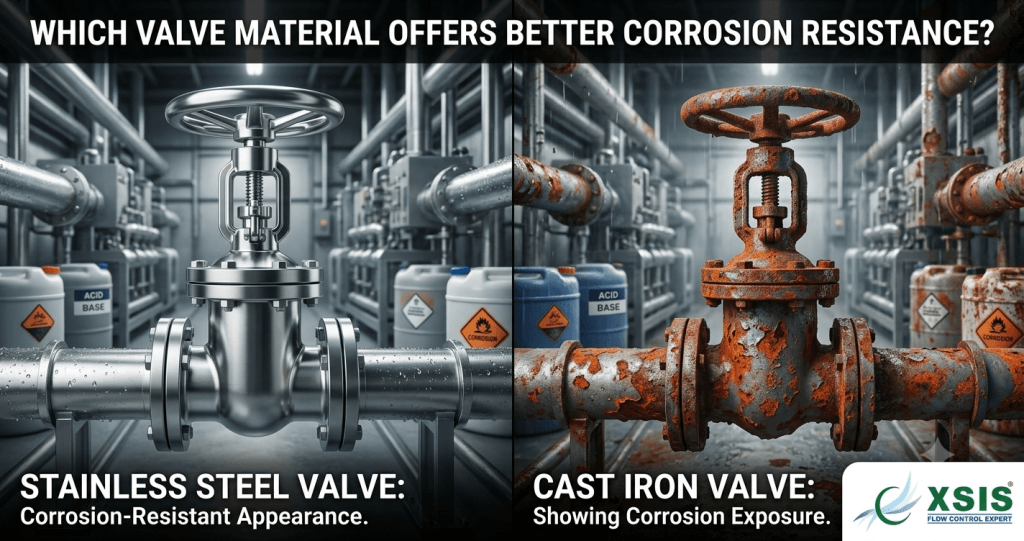
Corrosion resistance is regularly one of the most important elements when comparing Stainless Steel vs Cast Iron Valves for Ahmedabad Industries. Ahmedabad’s industrial sectors frequently handle chemical substances, process water, steam, and corrosive fluids that may significantly impact the overall performance of traditional valves. In such environments, corrosion can significantly impact operational reliability.
Stainless steel valves, in fact, outperform cast iron valves in corrosive situations. Their chromium-rich composition forms a protective oxide layer that helps prevent rust and floor deterioration. Cast iron valves, while durable in many applications, may be prone to corrosion when exposed to moisture, chemical materials, or aggressive environments for prolonged periods.
Corrosion Resistance Comparison
- Chemical Processing: Stainless steel provides strong resistance to many corrosive chemical materials and wastewater. Cast iron can also require careful material selection and protective measures in such environments.
- Water Exposure: Stainless steel offers sturdy resistance to rust and corrosion, provided it is properly selected for the water chemistry. Cast iron can corrode even when continuously exposed to moisture, especially without proper protection.
- Outdoor Installations: Outdoor exposure to rain, humidity, and changing climate can increase corrosion risks for solid iron valves. Protective coatings and regular inspections can help extend their service life.
- Long-Term Reliability: Materials with suitable corrosion resistance can help lessen leakage, deterioration, and unplanned protection. Stainless steel may be tremendous in which corrosive exposure is a primary concern.
- Surface Protection: Stainless steel forms a passive chromium-oxide layer that enables it to defend its surface from corrosion. Cast iron normally is predicated more closely on coatings or one-of-a-kind protective measures.
- Maintenance Impact: Better resistance to the actual operating environment can reduce corrosion-associated maintenance needs. Proper material choice can also contribute to longer and more reliable valve service lives.
Which Is Better for Ahmedabad’s Chemical and Pharmaceutical Industries?
Ahmedabad is a prime hub for chemical manufacturing and pharmaceutical production. These industries function under strict safety, protection, and contamination control requirements. Equipment substances should face up to chemical exposure at the identical time as maintaining system integrity and regulatory compliance.
For chemical and pharmaceutical centers, chrome steel valves are generally the popular choice. Their resistance to chemical attack, hygienic design, and durability make them pretty suitable for sensitive applications. Cast iron valves might also be applied in non-critical utility applications; however, stainless steel typically provides superior overall performance when product quality and infection prevention are priorities.
Why Stainless Steel Is Preferred
- Corrosion Resistance: Stainless steel offers strong resistance to many chemicals and corrosive process fluids. This makes it suitable for demanding industrial environments.
- Hygienic Properties: Stainless steel offers clean and easy-to-clean surfaces for pharmaceutical applications. It facilitates effective hygiene and infection-control requirements.
- Chemical Compatibility: Suitable stainless-steel grades can handle many industrial chemicals effectively. The grade must be determined in accordance with the particular fluid and operating conditions.
- Easy Maintenance: Stainless steel surfaces are mainly easy to clean and maintain in industrial settings. Their corrosion resistance can also reduce corrosion-related protection.
- Long Service Life: Properly selected chrome steel valves can offer dependable performance over prolonged periods. Their sturdiness can lessen the need for frequent replacement.
- Process Reliability: Stainless steel valves can help everyday go along with the flow control in demanding processes. Their resistance to corrosion and deterioration allows improved operational reliability.
How Do Stainless Steel and Cast Iron Valves Compare in Cost?
Cost is mostly a locating out problem throughout enterprise procurement. Cast iron valves usually have a lower purchase cost, making them appealing for large-scale installations and price-sensitive projects. Their affordability permits centers to install multiple valves without sizable capital expenditure.
However, comparing valve cost can go beyond the initial purchase price. Stainless steel valves can also require a bigger upfront investment, but they regularly offer lower maintenance costs, fewer replacements, and longer operational life. Over time, common ownership costs can also favour chrome steel, mainly in demanding commercial enterprise environments.
Key Cost Comparison Factors
- Initial Purchase Price: Cast iron valves are normally less expensive than chrome steel alternatives. Stainless steel valves usually require higher upfront funding.
- Maintenance Costs: Stainless steel can reduce corrosion-associated maintenance in suitable applications. Cast iron might also require extra shielding protection in corrosive environments.
- Replacement Frequency: Properly selected stainless steel valves can offer a lengthy service life in worrying conditions. Cast iron valves additionally can be long-lasting whilst used within suitable operating limits.
- Downtime Costs: Valve failures can interrupt manufacturing and boost operational fees. Reliable valve selection can help lessen unexpected downtime and repair charges.
- Operating Environment: Corrosive chemical substances and harsh conditions can shorten the lifecycle of improper materials. Selecting the right material for the fluid can improve the service life.
- Total Ownership Cost: The lowest purchase price does not always constitute the lowest overall cost. Maintenance, replacements, downtime, and company lifestyles should be considered together.
Which Valve Material Performs Better Under High Pressure and Temperature?
Industrial structures operating under accelerated stress and temperature conditions require materials capable of retaining structural integrity. Valve failure in such environments can create safety hazards, operational disruptions, and high costs. Therefore, overall performance under extreme conditions is a critical consideration.
Stainless steel valves commonly offer higher performance under extreme stress and high-temperature conditions. Their mechanical strength, thermal balance, and resistance to deformation make them suitable for demanding industrial applications. Cast iron valves can perform well within particular limits but can be much less suitable for especially demanding operating environments.
Performance Under Extreme Conditions
- Pressure Handling: Stainless steel valves can provide sturdy overall performance in high-pressure applications. The valve’s pressure performance and design should typically meet the tool’s requirements.
- Thermal Stability: Stainless steel can perform reliably throughout an extensive temperature variety at the identical time as the best grade is chosen. Temperature ratings need to be checked before setup.
- Structural Integrity: Properly selected, chrome steel valves can withstand mechanical pressure and deformation. This makes them suitable for demanding industrial applications.
- Safety Considerations: Valves designed for the actual pressure and temperature situations can assist in lessening operational risks. Correct sizing, setup, and maintenance are further essential.
- Steam Applications: Stainless steel valves can be suitable for steam and thermal processing systems. Their temperature and pressure ratings should be tested for the specific application.
- Long-Term Durability: Suitable stainless-steel valves can preserve dependable, well-known performance under challenging conditions. Proper material choice and protection can help increase their service life.
How Do Maintenance and Service Life Differ?
Maintenance requirements have a significant effect on operational performance and total cost of ownership. Facilities pick valve options that minimise downtime whilst preserving everyday overall performance. Service life is mainly critical in industries wherein valve failure can disrupt manufacturing.
Stainless metallic valves generally provide longer service life because of their corrosion resistance and sturdiness. Cast iron valves can also provide reliable, not unusual, general performance at the same time as used in appropriate applications and maintained well. However, exposure to corrosive environments can also shorten their lifespan and increase maintenance needs.
Maintenance and Longevity Considerations
- Corrosion Prevention: Stainless steel gives robust resistance to rust and corrosion in suitable environments. This can assist in reducing deterioration and corrosion-associated upkeep.
- Inspection Requirements: Cast iron valves can also require more frequent inspection when exposed to moisture or corrosive conditions. Regular exams can assist in detecting coating damage, corrosion, or other issues.
- Repair Frequency: Properly selected and maintained valves can lessen the need for routine maintenance. Stainless steel may additionally offer an advantage when corrosion is a major concern.
- Operational Reliability: Reliable valves help maintain consistent performance, manage drift, and support uninterrupted commercial enterprise operations. Proper upkeep is important for attaining dependable performance.
- Spare Part Requirements: Fewer unexpected valve screw-ups can reduce the need for emergency replacements and spare stock. However, critical systems need to continually hold appropriate replacement components.
- Lifecycle Performance: Service life, safety, protection, and replacements all have an effect on overall ownership costs. Evaluating these factors lets industries pick out a valve fabric that offers long-term value.
Which Valve Should Ahmedabad Industries Choose?
The approach to Stainless Steel vs Cast Iron Valves for Ahmedabad Industries relies in large part on application requirements, environmental conditions, price variety considerations, and long-term operational goals. Industries managing chemicals, prescription drugs, food products, steam, or corrosive fluids generally gain more from stainless steel valves due to their sturdiness and corrosion resistance.
For water distribution systems, HVAC networks, wastewater treatment centers, and non-corrosive industrial applications, solid iron valves can offer a cost-effective and reliable solution. The best approach is to assess operating conditions, protection expectations, safety requirements, and lifecycle costs before developing a final selection.
Selection Guidelines
- Choose Stainless Steel For: Chemical processing, pharmaceutical manufacturing, meal processing, and corrosive environments. It can also be suitable for worrying about stress and temperature conditions at the same time as being properly unique.
- Choose Cast Iron For: Water supply, wastewater management, HVAC, and ultra-modern utility packages. It may be a practical preference in which operating situations are suitable, and cost is a number one factor.
- Consider Environmental Conditions: Evaluate exposure to moisture, chemical compounds, temperature fluctuations, and outdoor conditions. Material compatibility should continuously match the actual operating environment.
- Review Maintenance Capacity: Consider the ability to inspect, protect, and restore valves in advance of choosing a valve. Applications with limited protection may additionally benefit from long-lasting, corrosion-resistant materials.
- Assess Safety Requirements: Critical applications require valves that meet the machine’s strain, temperature, and company requirements. Proper sizing, material choice, and relevant specifications must be considered.
- Evaluate Lifecycle Costs: Consider purchase price, upkeep, replacement frequency, and capability downtime. A better initial investment can also provide better long-term cost in demanding applications.
Conclusion
When evaluating Stainless Steel vs Cast Iron Valves for Ahmedabad Industries, there can be no single answer that fits every application. Stainless steel valves excel in corrosive, high-strain, high-temperature, and hygienic environments, making them suitable for Ahmedabad’s chemical, pharmaceutical, and food processing sectors. Their durability and low maintenance needs often provide long-term value regardless of a higher initial cost.
Cast iron valves are a sensible choice for water systems, HVAC installations, wastewater management, and cost-conscious tasks. By comparing operating conditions, safety requirements, and lifecycle costs, Ahmedabad industries can choose the valve material that best supports performance, reliability, and long-term operational performance.
Explore Our Recent Blog
- ISO and API Certified Valve Manufacturers in Ahmedabad: Why It Matters
- How to Choose the Right Industrial Valve Manufacturer in Ahmedabad
- Top Industrial Valve Suppliers in Ahmedabad: What to Look For
- Complete Guide to Industrial Valve Types for Ahmedabad Industries
- Best Industrial Valves for Water Treatment Plants in Ahmedabad
Frequently Asked Questions
1. Are chrome steel valves higher than forged iron valves?
Stainless steel valves usually offer better corrosion resistance, sturdiness, and standard overall performance in stressful industrial environments. They are often favored for chemical, pharmaceutical, and food processing applications. However, cast-iron valves remain powerful for many software programs and water-associated structures.
2. Why do Ahmedabad chemical industries pick stainless-steel valves?
Chemical processing centers frequently handle corrosive substances that could harm traditional materials. Stainless steel offers advanced resistance to chemical attack and permits maintaining operational reliability. Its durability additionally helps provide longer service life and reduced maintenance requirements.
3. Are solid iron valves suitable for water treatment plants?
Yes, cast iron valves are extensively utilized in water distribution and wastewater treatment systems. They offer strength, affordability, and dependable overall performance in many industrial applications. Proper protection and protective coatings can further enhance their service life.
4. Which valve fabric lasts longer?
In most corrosive or demanding business environments, stainless-steel valves usually last longer than cast-iron valves. Their resistance to rust, oxidation, and chemical exposure contributes to prolonged operational life. Actual lifespan is primarily based on protection practices and working conditions.
5. Are chrome steel valves properly well worth the higher cost?
For many industries, the higher preliminary investment may be justified through decreased preservation fees, fewer replacements, and advanced reliability. Long-term ownership costs often favour stainless steel in difficult environments. Evaluating standard lifecycle price offers a more accurate assessment.
6. How ought industries to select the proper valve cloth?
Industries need to test running stress, temperature, fluid developments, corrosion risk, protection expectations, and price range requirements. Consulting experienced valve manufacturers and carriers can also assist in determining the most suitable answer. A lifecycle fee assessment often helps with better decision-making.