

Ahmedabad has emerged as one of India’s main business hubs, supporting sectors such as chemicals, pharmaceuticals, textiles, water treatment, oil and fuel, food processing, and the energy sector. These industries depend closely on dependable valve structures to regulate drift, strain, and protection within their operations. As commercial company needs become more sophisticated, choosing the right valve dealer becomes increasingly essential for operational efficiency and long-term normal performance.
When comparing the Top Industrial Valve Suppliers in Ahmedabad: What to Look For, groups ought to look beyond pricing and focus on key requirements, production capabilities, certifications, after-sales support, and technical knowledge. Choosing the proper supplier can lessen downtime, enhance overall performance, and ensure compliance with business regulations. This manual explains the most crucial elements consumers need to bear in mind before making a buying decision.
Why Are Industrial Valves Important for Modern Industries?
Industrial valves are important components in modern-day business structures because they control the flow of liquids, gases, steam, and various media. Industries including chemical processing, prescription drugs, textiles, water treatment, and the energy sector depend on valves to maintain smooth and efficient operations. Without properly functioning valves, production systems can experience interruptions, safety problems, and reduced operational performance.
As business processes become increasingly complex, the need for dependable and high-performance valve solutions continues to grow. Industrial valves help control pressure, temperature, and costs, ensuring that equipment operates within stable parameters. Their function in preventing leaks, reducing power waste, and supporting automation makes them critical in present-day manufacturing and processing environments.
Key Functions of Industrial Valves
- Flow Control: Industrial valves adjust the flow of fluids and gases through pipelines, ensuring steady and managed operations. This allows manufacturers to maintain overall performance and prevents disruptions in industrial systems.
- Pressure Regulation: Valves maintain stable pressure levels in industrial equipment and pipelines, reducing the risk of equipment failures. Proper pressure control additionally enhances operational protection and system sturdiness.
- Leak Prevention: High-quality industrial valves create tight seals that limit fluid or gas leakage. This improves facility protection while also reducing product loss and environmental impact.
- Process Isolation: Valves allow particular sections of a system to be isolated during maintenance or upkeep. This guarantees smoother servicing strategies without shutting down the whole operation.
- Energy Efficiency: Efficient valve operation reduces unnecessary pressure drops and waste in a machine. As a final result, industries can decrease energy intake and operating costs.
- Automation Support: Modern commercial valves may be equipped with automated control systems for precise flow management. This improves productivity, accuracy, and overall system performance.
How Do You Identify the Top Industrial Valve Suppliers in Ahmedabad?
Identifying the right industrial valve enterprise calls for cautious evaluation of their experience, product quality, certifications, and company reputation. The high-quality carriers understand the precise necessities of industries in conjunction with chemical substances, prescribed drugs, textiles, water treatment, and oil and gas. Their capacity to provide reliable products and technical know-how frequently suggests their commitment to customer satisfaction and long-term business relationships.
When trying to find the Top Industrial Valve Suppliers in Ahmedabad, agencies should look beyond pricing and focus on quality. A supplier with superior manufacturing capabilities, strict quality control strategies, and a strong after-sales service system can substantially improve overall operational performance. Reviewing customer feedback, service, and product certifications can help clients make informed procurement decisions.
Factors to Evaluate When Choosing a Valve Supplier
- Industry Experience: Suppliers with extensive experience in valve production and distribution are better prepared to understand complex industrial requirements.
- Product Range: A provider offering gate valves, ball valves, butterfly valves, globe valves, check valves, and control valves can meet numerous business needs. A large portfolio moreover shows robust production skills.
- Quality Certifications: Certifications alongside ISO 9001 and API requirements display a commitment to quality and compliance. These certifications help ensure consistent product performance and reliability.
- Customer Reputation: Positive evaluations, testimonials, and long-term consumer relationships are strong indicators of provider credibility. A good reputation frequently indicates dependable products and a professional provider.
- Technical Expertise: Experienced engineering and support teams can help with valve selection, installation, and troubleshooting. This technical guidance enables optimized product performance.
- After-Sales Support: Reliable protection help, spare parts availability, and responsive customer support are vital for long-term operational achievement. Strong support services reduce downtime and prevent annoying conditions.
What Certifications Should Industrial Valve Suppliers Have?
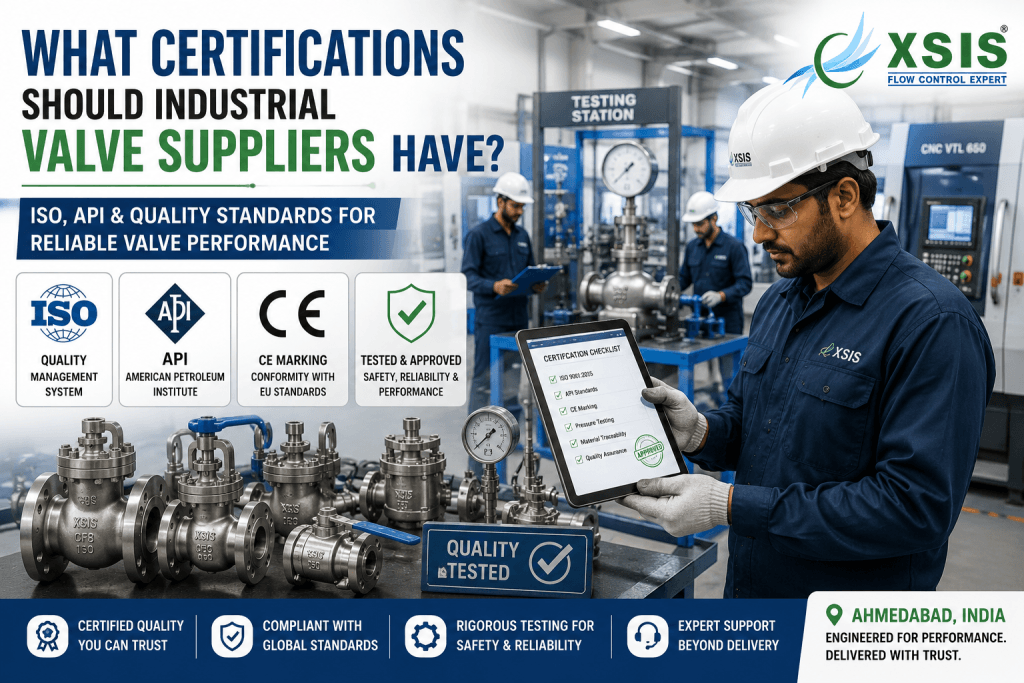
Certifications play a critical role in verifying the quality, protection, and reliability of industrial valves. Reputable valve organizations observe internationally recognized standards to ensure their products meet industry requirements and perform consistently under harsh operating conditions. Certifications additionally show a provider’s commitment to quality control, manufacturing excellence, and regulatory compliance.
When comparing enterprise valve suppliers, clients need to prioritize companies that may provide documented evidence of relevant certifications and compliance requirements. Certified companies are much more likely to supply products that meet traditional overall performance expectations, lessen operational dangers, and follow enterprise-specific policies. This is especially crucial for sectors that include oil and gas, pharmaceuticals, chemicals, and the energy sector.
Important Certifications to Look For
- ISO 9001 Certification: This certification confirms that the supplier follows a total quality management system. It helps ensure consistent product quality, customer satisfaction, and continuous improvement.
- API Certification: API (American Petroleum Institute) requirements are widely recognized within the oil and fuel industry. These certifications suggest that valves meet strict performance, protection, and reliability requirements.
- CE Certification: CE marking demonstrates compliance with European health, safety, and environmental safety requirements. It is regularly required for merchandise supplied in global markets.
- ISO 14001 Certification: This certification displays a supplier’s dedication to environmental management and sustainable production practices. It enables companies to comply with environmentally responsible manufacturing standards.
- Material Test Certifications (MTC): Material test certificates verify the chemical composition and mechanical properties of valve materials. They provide a guarantee that products meet essential requirements.
- Pressure and Performance Testing Standards: Suppliers should conduct hydrostatic, pneumatic, and ordinary performance testing in accordance with industry standards.
Which Types of Industrial Valves Should a Supplier Offer?
A reliable commercial enterprise valve provider wants to provide a wide variety of valve products to meet the diverse needs of numerous industries. Different applications require outstanding valve designs based mostly on factors such as pressure, temperature, fluid type, and the form of fluid being treated. Suppliers with a huge product portfolio can offer more suitable answers and simplify procurement for industrial clients.
Industries such as chemical materials, pharmaceuticals, water treatment, oil and gas, and production regularly require more than one kind of valve within a single facility. Choosing a supplier that offers a wide range of valves ensures compatibility, consistent quality, and access to technical information for every type of operational need. This flexibility can enhance device overall performance and decrease upkeep demanding situations.
Essential Industrial Valves Every Supplier Should Provide
- Ball Valves: Ball valves offer excellent on/off control and are widely used for controlling the flow of liquids and gases. Their long-lasting design guarantees dependable ordinary performance and minimal leakage.
- Butterfly Valves: These valves are lightweight, compact, and ideal for large-diameter piping systems. They are typically utilized in water treatment, irrigation, HVAC systems, and commercial process systems.
- Gate Valves: Gate valves are designed for on/off operations in which minimal pressure drop is needed. They are frequently utilized in pipelines that require complete opening or closing.
- Globe Valves: Globe valves provide unique flow regulation and are suitable for applications requiring accurate throttling and manipulation. They are frequently utilized in steam, water, and process manipulation systems.
- Check Valves: Check valves prevent backflow within pipelines, a protective device that maintains system integrity. They are important for pumps, compressors, and fluid-handling structures.
- Control Valves: Control valves automatically regulate flow, pressure, and temperature in industrial processes. They play an essential role in automation and improving overall operational performance.
How Important Is Manufacturing Quality and Testing?
Manufacturing quality and testing are critical elements that determine the overall performance, reliability, and lifespan of industrial employer valves. Even a minor defect in valve manufacturing can result in leakage, pressure loss, machine damage, or unexpected tool failures. High-pleasant production strategies make certain that valves can resist stressful commercial enterprise conditions at the same time as maintaining steady common performance through the years.
Reliable valve manufacturers invest in advanced manufacturing technology, precision machining, and rigorous quality management strategies to meet industry requirements. Comprehensive testing allows confirmation that each valve performs correctly before reaching the purchaser. For industries wherein protection and operational continuity are essential, selecting valves that go through thorough testing can appreciably reduce safety costs and downtime.
Key Quality and Testing Standards to Evaluate
- Hydrostatic Testing: This test checks the valve’s ability to withstand internal pressure without leakage. It ensures the valve can perform appropriately under particular working conditions.
- Material Inspection: Manufacturers check raw materials to confirm their chemical composition and mechanical properties. This technique helps ensure sturdiness and compliance with required standards.
- Dimensional Accuracy Testing: Precise measurements are taken to confirm that valve components meet layout specs. Accurate dimensions contribute to proper installation and everyday performance.
- Leakage Testing: Valves are examined to detect any internal or external leakage before shipment. This ensures dependable sealing and operational safety in enterprise packages.
- Performance Testing: Manufacturers have a look at valve functionality under simulated operating conditions. These tests help confirm flow control, pressure handling, and overall performance.
- Non-Destructive Testing (NDT): Techniques such as ultrasonic, radiographic, or magnetic particle testing are used to find hidden defects without damaging the valve. This improves product reliability and provides greater assurance.
What Role Does Material Selection Play in Valve Performance?
Material preference is one of the most crucial factors affecting the overall performance, sturdiness, and reliability of industrial valves. Different commercial enterprise environments expose valves to diverse levels of strain, temperature, corrosion, and chemical reactions. Choosing the proper material ensures that valves perform effectively while minimizing the risk of failure, downtime, or costly safety issues.
A knowledgeable valve provider needs to recommend materials based on the particular application and operating conditions. Whether a valve is used in a chemical processing plant, water treatment facility, pharmaceutical unit, or energy technology device, the right material can drastically improve equipment life and overall performance. Proper fabric choice moreover enhances protection and decreases long-term operational fees.
Common Valve Materials and Their Benefits
- Stainless Steel Valves: Stainless steel offers superb corrosion resistance and sturdiness in harsh commercial environments. It is commonly used in chemical, pharmaceutical, and food processing applications.
- Cast Iron Valves: Cast iron valves are cost-effective and suitable for water distribution systems and large industrial applications. They offer dependable overall performance under normal operating conditions.
- Carbon Steel Valves: Carbon metallic valves are seemed for their energy and potential to stand as a great deal as immoderate pressure and temperature. They are commonly used in oil and gas, steam, and power generation structures.
- Bronze Valves: Bronze provides excellent corrosion resistance, especially in water and marine applications. These valves are regularly used where long-term durability is required.
- Alloy Steel Valves: Alloy metallic valves are designed for demanding applications associated with high temperatures and pressures. They offer superior mechanical strength and advanced overall performance.
- Specialised Materials: Materials that incorporate duplex stainless steel, Hastelloy, and Monel are used for highly corrosive or specialised industrial applications. These substances offer high-quality resistance to harsh working environments.
How Important Is Technical Support and After-Sales Service?
Technical support and after-sales service are vital elements when choosing a commercial valve supplier. While product quality is essential, ongoing support ensures that valves continue to perform successfully over their operational lifespan. Reliable vendors help customers with setup, safety, troubleshooting, and product choice, assisting industries in avoiding high-priced operational disruptions.
Strong after-sales service can considerably reduce downtime and improve overall system reliability. Industrial centers often function constantly, making quick access to technical help and replacement parts vital. Suppliers that offer responsive customer service and long-term support add value beyond the initial purchase of commercial valves.
Essential Technical Support and After-Sales Services
- Installation Assistance: Professional guidance during setup helps ensure valves are ready efficiently and function as intended. Proper installation reduces the threat of typical overall performance issues and premature failures.
- Maintenance Support: Suppliers should offer maintenance suggestions and expert guidance to maximise valve lifespan. Regular upkeep helps you avoid unexpected breakdowns and costly repairs.
- Spare Parts Availability: Quick access to proper spare parts minimizes system downtime and helps ensure uninterrupted operations. Reliable vendors keep sufficient stock of possible components.
- Technical Consultation: Experienced engineers can recommend the most suitable valve solutions for specific applications. Their expertise helps improve overall performance, safety, and machine performance.
- Troubleshooting Assistance: Prompt assistance for diagnosing and resolving operational troubles helps industries preserve productivity. Effective troubleshooting can prevent small problems from turning into major disasters.
- Training and Product Guidance: Some companies provide training packages to help protection and operations companies understand valve operation and best practices. This improves tool handling and long-term reliability.
How Can You Compare Pricing Without Compromising Quality?
Price is a critical factor when buying industrial valves; however, focusing solely on the lowest price can bring about long-term operational troubles. Low-priced valves might not meet required specifications, resulting in common safety issues, unexpected failures, and higher replacement costs. Businesses need to examine the total cost of a valve instead of making choices based primarily on the initial purchase price.
When evaluating industrial valve companies, it is critical to take into account elements such as product quality, certifications, material specs, warranty coverage, and after-sales support. A slightly better investment in a reliable valve can often provide higher overall performance, improved performance, and reduced maintenance costs over its service life. This approach permits businesses to gain a stronger return on investment and extra operational reliability.
Smart Ways to Evaluate Valve Pricing
- Compare Product Specifications: Ensure that valves being compared have similar materials, stress scores, and overall performance characteristics. Accurate comparisons help you discover the real price of each product.
- Review Quality Certifications: Certified valves frequently provide higher reliability and protection than uncertified alternatives. Certifications can justify a better rate by ensuring compliance with commercial enterprise requirements.
- Assess Lifecycle Costs: Consider renovation, repair, strength intake, and alternative costs over the valve’s lifespan. A long-lasting valve might also provide lower everyday ownership expenses.
- Evaluate Warranty Coverage: Strong guarantee terms suggest the company’s confidence in product quality. Comprehensive warranties can lessen financial risks.
- Consider After-Sales Support: Technical help, spare parts availability, and safety offerings add value beyond the purchase fee. Reliable assistance can lessen downtime and operational disruptions.
- Analyze Long-Term Performance: High-quality valves often provide higher typical performance, sturdiness, and reliability over time. Investing in tested merchandise can lead to significant financial savings in the end.
Why Do Industries Prefer Ahmedabad-Based Valve Suppliers?
Ahmedabad has established itself as one of India’s principal manufacturing and engineering hubs, making it a preferred destination for business valve procurement. The metropolis is home to numerous valve producers and companies that serve industries such as chemical materials, pharmaceuticals, textiles, water treatment, oil and gas, and energy technology. With robust industrial infrastructure and access to skilled engineering talent, Ahmedabad-based valve suppliers are well-positioned to deliver excellent valve solutions.
Many industries depend on Ahmedabad-based valve suppliers because of their competitive pricing, advanced production skills, and commitment to quality. These suppliers regularly integrate modern-day production technologies with substantial business expertise, letting them meet every local and worldwide requirement. Their ability to provide custom-designed solutions, well-timed deliveries, and reliable technical assistance similarly strengthens their reputation within the commercial vicinity.
Benefits of Choosing Ahmedabad-Based Valve Suppliers
- Strong Manufacturing Infrastructure: Ahmedabad has a well-developed industrial environment that enables efficient valve manufacturing and strong quality control.
- Competitive Pricing: Local manufacturing capabilities and streamlined delivery chains assist suppliers in offering cost-effective valve solutions. Businesses can regularly reap better value without compromising on quality.
- Wide Product Range: Ahmedabad-based suppliers normally provide a wide range of industrial valves for numerous applications. This allows clients to source multiple valve types from a single dealer.
- Skilled Engineering Expertise: Many providers hire experienced engineers and technical experts who understand complex enterprise requirements. Their know-how allows clients to pick out the most suitable valve solutions.
- Customization Capabilities: Suppliers can often format and manufacture custom-designed valves to satisfy unique operational goals. This flexibility is especially useful for specialized commercial applications.
- Reliable Delivery and Support: Strong logistics networks and committed customer support companies help ensure well-timed deliveries and effective after-sales support. This contributes to smoother operations and long-term customer satisfaction.
Conclusion
Selecting the Top Industrial Valve Suppliers in Ahmedabad: What to Look For calls for careful attention to multiple factors, including certifications, manufacturing quality, quality control, product variety, technical support, and pricing. Businesses that prioritize these criteria are much more likely to find reliable valve solutions that improve operational standards and overall performance and reduce long-term costs.
Ahmedabad’s industrial valve production region continues to grow, providing businesses with access to interperformance and national-quality products and engineering expertise. By partnering with skilled and legitimate providers, industries can enhance device overall performance, ensure regulatory compliance, and achieve greater operational reliability. Taking the time to assess companies thoroughly will, in the long run, motivate higher purchasing options and more potent long-term business outcomes.
Explore Our Recent Blog
- Industrial Valves for Power Plants Near Ahmedabad
- Valves for HVAC Systems in Ahmedabad
- Industrial Valves for the Dyeing and Textile Processing Industry in Ahmedabad
- ISO and API Certified Valve Manufacturers in Ahmedabad: Why It Matters
- How to Choose the Right Industrial Valve Manufacturer in Ahmedabad
Frequently Asked Questions
Start by evaluating the supplier’s experience, certifications, manufacturing capabilities, and customer reputation. Review their product range and quality testing procedures to ensure they meet industry requirements. Reliable technical support and after-sales service should also be considered before making a final decision.
ISO 9001 certification is one of the most important quality management standards. Depending on your industry, API certification, CE certification, and specific testing approvals may also be required. Certifications help verify product quality and regulatory compliance.
Industrial valves are widely used in chemical processing, pharmaceuticals, textiles, water treatment, oil and gas, food processing, and power generation. Each industry requires specific valve types and materials based on operational conditions. Selecting the right valve ensures safety and efficiency.
Different materials provide varying levels of corrosion resistance, pressure tolerance, and durability. Selecting the correct material improves performance and extends valve lifespan. Material choice should always align with the application’s operating environment.
Ball valves, butterfly valves, gate valves, globe valves, check valves, and control valves are among the most commonly used types. Each serves a specific purpose within industrial systems. The choice depends on flow control requirements and operating conditions.
Quality should always be a primary consideration because poor-quality valves can lead to expensive failures and maintenance costs. While pricing is important, evaluating lifecycle value provides a more accurate picture of total ownership costs. Investing in reliable products often results in greater long-term savings.