

Industrial valves play a critical role in controlling the flow of liquids, gases, steam, and chemicals across various industries. Whether it is a chemical processing plant, pharmaceutical unit, textile factory, water treatment facility, or oil and gas operation, selecting the right valve manufacturer directly impacts efficiency, safety, and long-term operational performance.
Ahmedabad has emerged as one of India’s leading industrial hubs, making it home to several reputable valve manufacturers serving domestic and international markets. Understanding How to Choose the Right Industrial Valve Manufacturer in Ahmedabad can help businesses avoid costly mistakes, reduce maintenance expenses, and ensure compliance with industry regulations.
With numerous manufacturers offering different valve types, materials, certifications, and service levels, buyers need a structured approach to evaluate suppliers. This guide explores the key factors, industry standards, and selection criteria that help businesses partner with a reliable industrial valve manufacturer.
What Should You Look for in an Industrial Valve Manufacturer in Ahmedabad?
Selecting a valve manufacturer requires much more than comparing prices. The manufacturer should possess extensive industry experience, technical expertise, and the capability to meet your operational requirements. A well-established company typically has a proven track record of supplying valves to industries such as oil and gas, power generation, pharmaceuticals, chemicals, and water treatment.
When evaluating manufacturers, assess their production capabilities, engineering support, customization options, and quality assurance processes. A reputable industrial valve manufacturer in Ahmedabad should offer comprehensive solutions rather than simply supplying products. Their ability to provide technical consultation and after-sales support often reflects their commitment to customer satisfaction.
Key Factors to Evaluate
- Industry Experience: Manufacturers with extensive industry experience understand industry challenges and operational requirements. They can recommend suitable valve solutions for different industrial applications.
- Production Capacity: Strong manufacturing infrastructure ensures timely delivery and consistent product quality. It also helps meet both bulk and customized order requirements efficiently.
- Engineering Expertise: Skilled engineers assist in selecting the right valve types and materials. Their expertise helps improve system performance, safety, and reliability.
- Customization Options: Many industries require valves tailored to specific operating conditions. Customization ensures better compatibility, efficiency, and performance.
- After-Sales Service: Reliable support helps resolve technical issues and minimize downtime. Maintenance assistance and spare parts availability add long-term value.
- Client Portfolio: A diverse customer base reflects the manufacturer’s credibility and experience. Positive client relationships indicate consistent product quality and service.
Why Are Certifications Important When Choosing a Valve Manufacturer?
Certifications provide valuable evidence that a manufacturer follows recognised quality, safety, and manufacturing standards. When considering How to Choose the Right Industrial Valve Manufacturer in Ahmedabad, certifications should be among the key evaluation criteria. They demonstrate compliance with applicable industry requirements and provide greater confidence in product reliability and consistency.
Certifications and standards such as ISO 9001, relevant API requirements, CE marking, and other applicable quality systems indicate that a manufacturer follows established manufacturing and inspection procedures. These credentials are especially important for industries with strict safety, quality, and regulatory requirements. Buyers should also verify that the certifications are valid and relevant to the specific valve products and applications they require.
Important Certifications to Check
- ISO 9001 Certification: Ensures consistent quality management practices throughout the manufacturing process. It demonstrates the manufacturer’s commitment to maintaining high production standards.
- API Standards Compliance: Essential for industries such as oil and gas that require strict performance and safety standards. Compliance indicates reliable and industry-approved valve manufacturing.
- CE Certification: Demonstrates compliance with international safety, health, and environmental regulations. It helps ensure product acceptance in global markets.
- Material Test Certificates: Verify the chemical composition and mechanical properties of valve materials. These certificates confirm suitability for specific industrial applications.
- Pressure Testing Standards: Confirm that valves can safely operate under specified pressure conditions. Proper testing helps prevent leaks and operational failures.
- Quality Inspection Documentation: Provides complete transparency and traceability throughout the manufacturing process. It ensures that every valve meets required quality specifications.
Which Types of Industrial Valves Should a Manufacturer Offer?
A reliable manufacturer should offer a comprehensive range of industrial valves to meet diverse application requirements. Different industries need specific valve types based on flow control, pressure ratings, temperature conditions, and fluid characteristics. A broad product portfolio demonstrates manufacturing expertise and the ability to serve varied industrial needs.
Businesses researching How to Choose the Right Industrial Valve Manufacturer in Ahmedabad should prioritise manufacturers that can supply multiple valve categories from a single source. This can simplify procurement, improve product consistency, and streamline technical support. It also makes it easier to maintain uniform quality standards across different industrial projects.
Common Industrial Valve Types
- Ball Valves: Suitable for quick shut-off applications and efficient flow control in industrial systems. They provide reliable sealing and require minimal maintenance.
- Gate Valves: Commonly used for on-off service where unrestricted flow is required. These valves are ideal for applications needing full flow capacity.
- Globe Valves: Ideal for throttling and regulating fluid flow in pipelines. They offer precise control and are widely used in process industries.
- Butterfly Valves: Widely used for large-diameter piping systems due to their compact design. They are lightweight, cost-effective, and easy to operate.
- Check Valves: Prevent reverse flow and protect equipment from operational damage. They help maintain system efficiency and operational safety.
- Control Valves: Essential for automated industrial processes requiring precise flow regulation. These valves improve process accuracy and overall system performance.
How Do Material Selection and Manufacturing Quality Affect Valve Performance?
Material selection significantly influences valve durability, corrosion resistance, and overall performance. Industrial environments can expose valves to extreme temperatures, high pressures, and aggressive chemicals. Choosing the appropriate material helps ensure long-term reliability, safety, and resistance to operating conditions.
Manufacturing quality also plays a crucial role in achieving leak-free operation and consistent performance. Manufacturers investing in advanced machining, casting, inspection, and testing technologies can produce more precise and reliable valves. High-quality manufacturing ultimately contributes to longer service life, reduced maintenance, and improved operational efficiency.
Important Material Considerations
- Stainless Steel Valves: Offer excellent corrosion resistance and durability in harsh environments. They are widely used in chemical, pharmaceutical, and food processing industries.
- Carbon Steel Valves: Suitable for high-pressure and high-temperature industrial applications. Their strength and durability make them ideal for demanding operating conditions.
- Cast Iron Valves: Commonly used in water treatment, HVAC, and general industrial systems. They provide a cost-effective solution for low to moderate pressure applications.
- Alloy Steel Valves: Designed to withstand extreme temperatures, pressures, and corrosive environments. They are frequently used in power plants and petrochemical industries.
- Corrosion Resistance: Protects valves and equipment from chemical damage and environmental exposure. This helps extend service life and reduce maintenance costs.
- Manufacturing Precision: Ensures accurate dimensions, proper sealing, and reliable valve operation. High precision contributes to improved efficiency and long-term performance.
How Can You Evaluate the Quality Testing Process of a Valve Manufacturer?
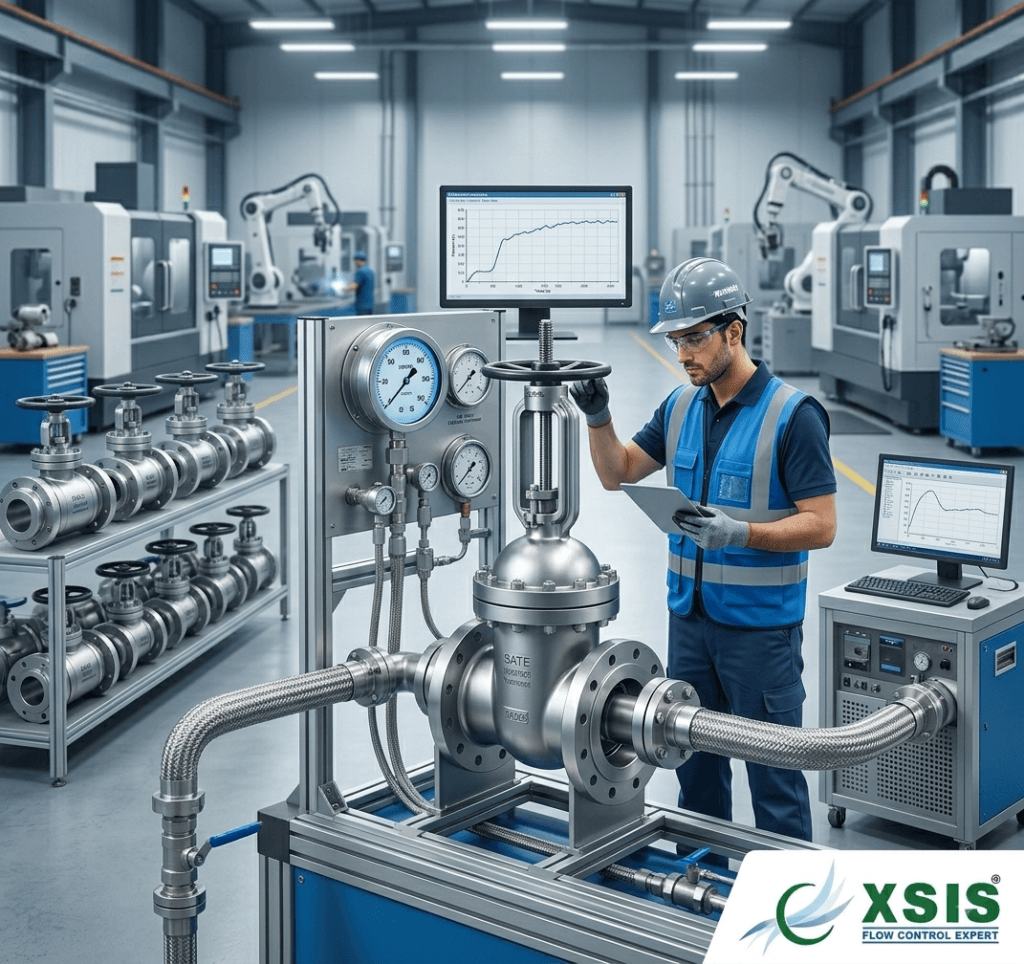
Quality testing is one of the most critical aspects of industrial valve manufacturing. Even an advanced valve design can fail if proper quality control and inspection procedures are not followed. Therefore, buyers should carefully evaluate a manufacturer’s testing capabilities before making a purchasing decision.
A reputable industrial valve manufacturer in Ahmedabad should have dedicated testing facilities equipped with modern instruments and inspection systems. Comprehensive testing helps verify pressure resistance, sealing performance, dimensions, and overall functionality. These procedures ensure that industrial valves can perform reliably under demanding real-world operating conditions.
Essential Testing Procedures
- Hydrostatic Testing: Verifies valve integrity by testing it under specified pressure conditions. It helps identify leaks and ensures safe operation in industrial systems.
- Pneumatic Testing: Assesses valve sealing performance using compressed air or gas. This test helps detect leakage that may not appear during other inspections.
- Material Inspection: Confirms that valve materials meet required specifications and industry standards. Proper inspection ensures durability and application suitability.
- Dimensional Verification: Ensures all valve components meet precise design dimensions and tolerances. Accurate measurements contribute to reliable performance and proper installation.
- Performance Testing: Evaluates valve functionality under simulated operating conditions. This process helps verify efficiency, responsiveness, and operational reliability.
- Final Quality Inspection: Conducted before shipment to ensure the valve meets all quality requirements. It confirms product readiness and customer specifications compliance.
What Role Does Industry Experience Play in Manufacturer Selection?
Industry experience often distinguishes established manufacturers from average suppliers. Experienced manufacturers have handled diverse industrial applications and developed practical solutions for complex operating conditions. Their expertise helps customers avoid common installation, selection, and operational challenges.
When learning How to Choose the Right Industrial Valve Manufacturer in Ahmedabad, buyers should evaluate project references, client testimonials, and years of industry experience. Manufacturers with a strong track record can provide more accurate technical guidance and product recommendations. Their practical knowledge can also contribute to safer, more efficient, and reliable valve systems.
Benefits of Experienced Manufacturers
- Application Knowledge: Experienced manufacturers have a deep understanding of industry-specific requirements and operating conditions. This helps ensure the selection of the most suitable valve solutions.
- Technical Consultation: They provide expert guidance on valve selection, sizing, and system design. Their recommendations help improve performance, safety, and efficiency.
- Proven Reliability: Established manufacturers have a successful track record across multiple industrial sectors. Their products are trusted for consistent quality and dependable performance.
- Problem-Solving Capability: Experienced teams can effectively address complex operational and technical challenges. They offer practical solutions that minimize risks and downtime.
- Process Optimization: Their expertise helps identify opportunities to improve system efficiency and reduce maintenance costs. This contributes to better long-term operational performance.
- Long-Term Support: Reliable manufacturers provide ongoing assistance throughout the product lifecycle. Their support includes maintenance guidance, troubleshooting, and spare parts availability.
How Important Are Pricing and Total Cost of Ownership?
Many buyers focus primarily on the initial purchase price, but long-term value is equally important. Low-cost valves may require frequent maintenance, repairs, or replacements, increasing overall expenses over time. Evaluating the total cost of ownership helps businesses make more informed financial decisions.
A balanced purchasing approach considers quality, durability, maintenance requirements, and operational efficiency alongside pricing. High-quality valves often deliver better performance and a longer service life. Although the upfront investment may be higher, they usually provide greater long-term returns and cost savings.
Cost Evaluation Factors
- Initial Purchase Price: Compare valve pricing while considering product quality, specifications, and certifications. The lowest-priced option may not always provide the best long-term value.
- Maintenance Costs: Valves with lower maintenance requirements help reduce ongoing operational expenses. This can significantly lower the total cost of ownership over time.
- Operational Efficiency: High-performance valves improve system productivity and energy efficiency. Better efficiency can lead to reduced operating costs and improved output.
- Product Lifespan: Durable valves last longer and require fewer replacements. A longer service life helps businesses save on procurement and maintenance expenses.
- Warranty Coverage: Comprehensive warranty coverage provides additional protection against manufacturing defects. It also reflects the manufacturer’s confidence in product quality.
- Downtime Reduction: Reliable valves help prevent unexpected failures and operational disruptions. Reduced downtime improves productivity and minimizes financial losses.
Why Is After-Sales Support Essential When Choosing a Valve Supplier?
After-sales support is often overlooked during supplier evaluation, but it plays a vital role in customer satisfaction and operational continuity. Industrial valve systems may require installation assistance, troubleshooting support, and regular maintenance guidance. Reliable support services help ensure smooth and efficient system performance.
Manufacturers committed to customer success provide ongoing assistance long after product delivery. Services such as spare parts availability, technical consultation, and maintenance support add significant value. Strong after-sales service reflects confidence in product quality and helps build long-term customer relationships.
Key After-Sales Support Services
- Technical Assistance: Helps customers resolve installation, operational, and troubleshooting challenges efficiently. Timely technical support ensures smooth and uninterrupted system performance.
- Spare Parts Availability: Ensures quick access to replacement components when needed. This helps maintain continuous operations and reduces downtime.
- Maintenance Support: Regular servicing and maintenance guidance improve valve performance and reliability. Proper maintenance also helps extend equipment lifespan.
- Training Programs: Educates operators on correct valve operation, handling, and maintenance procedures. Well-trained personnel can reduce errors and improve system efficiency.
- Emergency Response: Quick support during unexpected failures helps minimize operational disruptions. Fast response times can significantly reduce downtime and associated costs.
- Customer Relationship Management: Continuous engagement helps build strong, long-term business partnerships. Effective communication ensures better customer satisfaction and ongoing support.
How to Compare Multiple Industrial Valve Manufacturers in Ahmedabad?
Comparing manufacturers systematically helps businesses make informed purchasing decisions. Instead of focusing only on pricing, companies should evaluate factors such as quality, certifications, industry experience, and technical expertise. A structured comparison process helps identify the most reliable and capable supplier.
The evaluation process should include reviewing product catalogs, requesting technical documentation, and assessing manufacturing capabilities. Facility visits and quality testing reviews can provide valuable insights into production standards. Additionally, customer references and after-sales support should be examined to ensure a successful long-term partnership.
Comparison Checklist
- Certifications and Standards: Verify that the manufacturer complies with recognized quality, safety, and industry standards. Certifications help ensure reliable products and consistent manufacturing practices.
- Product Portfolio: Assess the range of industrial valves and customization options available. A diverse portfolio indicates the ability to meet various application requirements.
- Manufacturing Infrastructure: Evaluate the manufacturer’s production facilities, machinery, and technological capabilities. Advanced infrastructure often contributes to better quality and efficiency.
- Testing Facilities: Review the quality assurance processes and testing equipment used during production. Comprehensive testing helps ensure product reliability and performance.
- Customer Reviews: Analyze feedback, testimonials, and references from existing clients. Positive reviews can provide valuable insights into product quality and service standards.
- Support Capabilities: Compare technical assistance, maintenance services, and after-sales support offerings. Strong support capabilities help ensure long-term operational success.
Conclusion
Understanding How to Choose the Right Industrial Valve Manufacturer in Ahmedabad is essential for businesses seeking reliable, efficient, and long-lasting valve solutions. From evaluating certifications and manufacturing capabilities to assessing quality testing procedures and after-sales support, every factor contributes to successful supplier selection. Taking a strategic approach helps organizations minimize risks and maximize operational performance.
As Ahmedabad continues to grow as a major industrial manufacturing hub, businesses have access to numerous valve suppliers offering diverse products and services. By carefully evaluating experience, quality standards, material expertise, pricing, and customer support, companies can confidently choose the right industrial valve manufacturer in Ahmedabad and ensure long-term success for their operations.
Explore Our Recent Blog
- Valves for Chemical Processing Plants in Ahmedabad
- Industrial Valves for Power Plants Near Ahmedabad
- Valves for HVAC Systems in Ahmedabad
- Industrial Valves for the Dyeing and Textile Processing Industry in Ahmedabad
- ISO and API Certified Valve Manufacturers in Ahmedabad: Why It Matters
Frequently Asked Questions
1. How do I identify a reliable industrial valve manufacturer in Ahmedabad?
Look for manufacturers with strong industry experience, recognized certifications, advanced testing facilities, and positive customer references. Their ability to provide technical support and customized solutions is also important. A reliable manufacturer focuses on quality, compliance, and long-term customer satisfaction.
2. Which certifications should industrial valve manufacturers have?
Manufacturers should ideally possess ISO 9001 certification and comply with relevant API, CE, or industry-specific standards. These certifications indicate adherence to quality management systems and manufacturing best practices. They also demonstrate commitment to safety and performance standards.
3. Why is material selection important in industrial valves?
Material selection affects corrosion resistance, pressure handling capability, and operational lifespan. Different industries require specific materials based on fluid characteristics and environmental conditions. Choosing the correct material helps improve safety and reduce maintenance costs.
4. What types of valves are commonly used in industrial applications?
Common industrial valves include ball valves, gate valves, globe valves, butterfly valves, check valves, and control valves. Each type serves a specific purpose depending on flow control requirements. Selecting the right valve type ensures optimal system performance.
5. Should I choose the cheapest industrial valve available?
Not necessarily. While cost is important, long-term reliability and performance should be prioritized. High-quality valves often provide lower maintenance costs, reduced downtime, and longer service life, resulting in better overall value.
6. How important is after-sales support when selecting a valve manufacturer?
After-sales support is crucial for maintaining operational continuity and addressing technical issues. Manufacturers that provide maintenance assistance, spare parts availability, and technical guidance help maximize equipment performance. Strong support services also reduce downtime and improve productivity.