
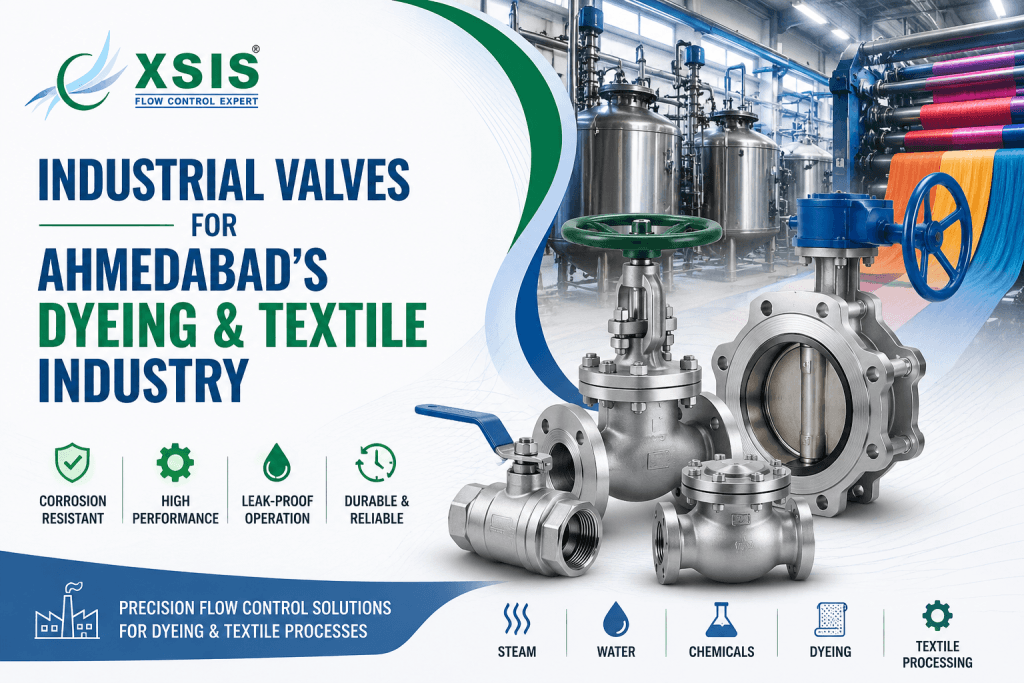
Ahmedabad is one of India’s essential textile and dyeing hubs, with manufacturing processes that rely on steam, water, chemicals, dyes, compressed air, and specialized process fluids. In those stressful environments, reliable flow-control tools are important for maintaining production performance, product quality, employee safety, and consistent processing conditions. Industrial Valves for Ahmedabad’s Dyeing & Textile Industry are consequently an important part of modern-day textile processing infrastructure.
The proper valve lets material producers modify, isolate, divert, and manage fluids throughout processes, including cloth handling, dyeing, washing, bleaching, finishing, and steam generation. Valve choice is based on pressure, temperature, chemical compatibility, flow requirements, operating frequency, and installation conditions. Choosing appropriate valves can reduce leakage, minimize downtime, improve system control, and assist longer machine life.
What Types of Industrial Valves Are Used in Ahmedabad’s Dyeing and Textile Industry?
Textile processing plants use top-notch valve types because every stage of production has unique flow-control requirements. Industrial Valves for Ahmedabad’s Dyeing & Textile Industry may include ball valves, butterfly valves, gate valves, globe valves, check valves, diaphragm valves, control valves, and specialized steam valves. The appropriate choice is based on the fluid being handled and the desired degree of isolation or regulation.
Ball and butterfly valves are generally considered when quick close-off and precise flow control are required. Globe and control valves are more suitable for applications requiring specific flow control, while gate valves are commonly used for isolation rather than throttling. Check valves prevent unwanted reverse flow, and diaphragm valves can be useful in applications involving corrosive or infection-sensitive fluids.
Common Valve Applications in Textile Processing
- Steam Control: Steam valves help control steam supplied to dyeing machines, boilers, dryers, presses, and other thermal tools. Proper steam control helps maintain temperature and decreases unnecessary energy consumption during processing.
- Water Management: Water is extensively used for laundry, dyeing, rinsing, and cleaning operations. Industrial valves assist in managing water supply, distribution, isolation, and discharge in the direction of unique processing lines.
- Chemical Handling: Chemical-resistant valves are required for dyes, bleaching outlets, acids, alkalis, and special machine chemicals. Material compatibility is vital to lessen corrosion, leakage, and premature valve failure.
- Compressed Air: Pneumatic structures perform actuators and other devices throughout textile plants. Suitable valves provide reliable isolation and control of compressed-air traces beneath repeated operating cycles.
- Dye Circulation: Dyeing systems call for controlled flow of dye liquor and distinctive approach fluids. Correct valve choice allows maintaining steady flow and helps uniform colour application.
- Wastewater Lines: Wastewater may additionally contain dyes, chemical substances, fibers, and suspended solids. Appropriate valve designs can offer dependable isolation and flow control while reducing maintenance issues.
How Do Industrial Valves Improve Textile Processing Efficiency?
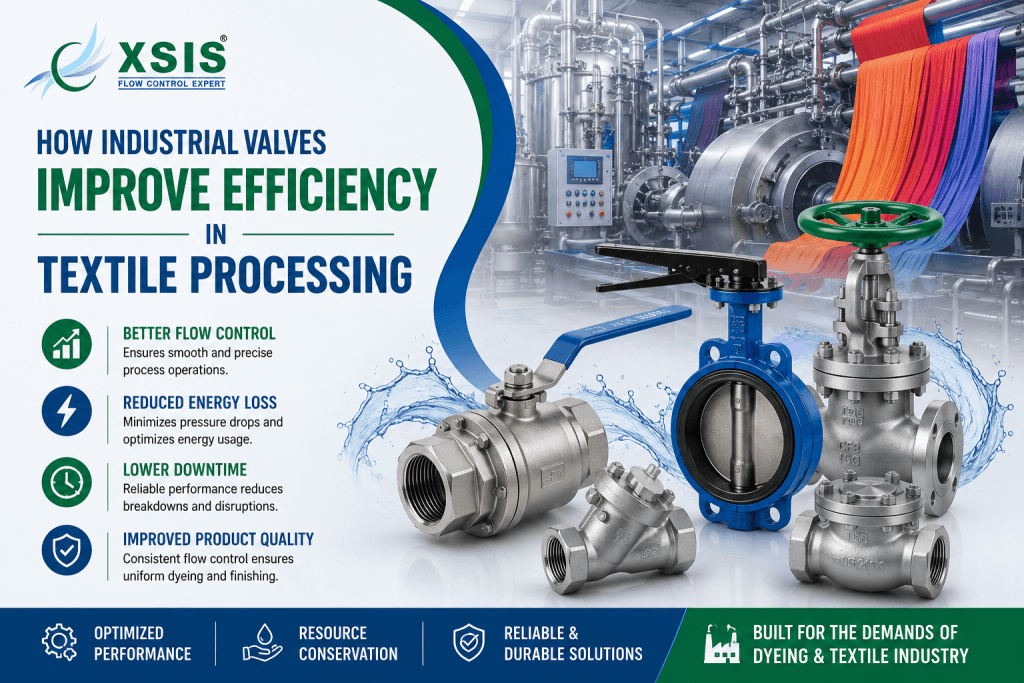
Efficient flow control directly influences fabric production standard performance. Properly selected valves permit operators to manipulate steam, water, chemicals, compressed air, and various media without unnecessary flow losses or interruptions. Industrial Valves for Ahmedabad’s Dyeing & Textile Industry can assist manufacturers in maintaining strong process conditions and improving the repeatability of cloth operations.
Valve performance is particularly important in processes that function continuously or involve common setup and shutdown. A dependable valve reduces the possibility of leakage, pressure instability, and unexpected shutdowns. When valves are efficiently sized and coupled to the system, textile producers can also improve overall system performance while reducing maintenance requirements and operating costs.
Efficiency Benefits of Proper Valve Selection
- Better Flow Control: Correctly selected valves provide more predictable control of approach fluids. This allows operators to maintain required flow fees and process conditions more consistently.
- Reduced Energy Losses: Efficient valves can minimize unnecessary stress drops in appropriately designed systems. This is particularly useful in steam, water, and compressed-air packages in which electricity consumption is widespread.
- Lower Downtime: Reliable industrial agency valves reduce the chance of unexpected leakage and mechanical failure. Fewer valve-associated breakdowns help textile plants maintain manufacturing schedules.
- Improved Process Consistency: Stable fluid flow allows consistent dyeing, washing, heating, and finishing conditions. This can contribute to more uniform fabric quality and fewer processing variations.
- Simplified Maintenance: Valves determined in step with operating conditions are generally less difficult to maintain over their service life. Proper access, suitable materials, and properly matched components can further improve maintenance performance.
- Longer Equipment Life: Excessive stress, corrosion, vibration, or wrong operating conditions can harm valves and associated equipment. The correct choice helps shield the complete process system from avoidable stress.
Which Valves Are Best for Steam Applications in Textile Mills?
Steam is a primary application in many textile production operations because it provides controlled heat for processes such as dyeing, drying, pressing, and finishing. Steam systems require valves able to deal with extended temperatures and pressures while providing reliable shut-off or regulation. Globe valves, control valves, ball valves, gate valves, and steam-specific valve preparations may be used depending on the application.
For precise steam control, control valves are often considered because they can regulate flow in accordance with system requirements. Isolation valves, such as gate or ball valves, can be used where the purpose is to stop or allow steam to float completely. Steam traps and related components are also vital for efficient condensate control, notwithstanding the fact that their selection needs to be treated one at a time from general isolation and control valves.
Key Steam Valve Selection Considerations
- Temperature Rating: The valve must be capable of handling the highest operating temperature of the steam device. Insufficient temperature capability can accelerate deterioration and create critical reliability issues.
- Pressure Rating: Valve pressure ratings should meet or exceed the actual operating conditions. Designers want to take into account normal, maximum, and capacity brief pressures.
- Flow Regulation: Applications requiring particular steam adjustment need a valve designed for throttling and control. Using an isolation valve for non-stop throttling can also result in premature seating and risky operation.
- Material Selection: Valve frame and inner materials need to be appropriate for the steam temperature and pressure. Material selection also influences resistance to corrosion and mechanical degradation.
- Actuation Requirements: Automated steam valves can also require pneumatic or electric-powered actuators. The actuator ought to provide adequate torque or thrust for reliable operation under real tool conditions.
- Maintenance Access: Steam valves must be installed where inspection, servicing, and maintenance may be done safely. Accessible installations help reduce maintenance time during plant shutdowns.
How Should Valves Be Selected for Dyeing and Chemical Processes?
Dyeing and chemical processing expose valves to a wide range of fluids with high concentrations, temperatures, and chemical properties. Selecting a valve primarily based on pipe length alone is not sufficient because chemical compatibility, pressure, temperature, flow behavior, and operating frequency also affect valve performance. Industrial Valves for Ahmedabad’s Dyeing & Textile Industry need to be determined in step with the complete process environment rather than a single specification.
Manufacturers must identify the right chemical composition and concentration of the media before finalizing valve materials. Stainless steel, specialized alloys, lined components, or extraordinary corrosion-resistant substances can be considered depending on the application. The valve layout should additionally minimize areas where dyes, fibers, or chemical residues can gather and interfere with operation.
Chemical and Dyeing Valve Selection Checklist
- Identify the Process Fluid: Determine whether or not the valve will contend with dyes, acids, alkalis, solvents, water, steam, or wastewater. Accurate fluid identity is the region to start for selecting properly matched valve materials.
- Check Chemical Compatibility: Valve body, seat, seals, gaskets, and specific wetted components need to be well matched with the process medium. Incompatible materials can swell, crack, corrode, or go to pot prematurely.
- Evaluate Temperature: Dyeing and chemical strategies may additionally incorporate elevated temperatures. The entire valve assembly must be appropriate for the most operating and cleaning temperatures.
- Assess Pressure: Determine normal and maximum line pressure before deciding on the stress elegance. Pressure fluctuations and functionality surges have to be additionally taken into consideration where applicable.
- Consider Solids and Fibers: Textile wastewater and device streams might also additionally consist of fibers or suspended material. Valve designs must be evaluated for resistance to clogging, accumulation, and hard cleaning situations.
- Plan for Cleaning: Valves implemented in fabric processing might also require everyday flushing or cleaning. Selecting designs that assist effective protection can improve hygiene, reliability, and operational lifestyles.
What Factors Should Ahmedabad Textile Manufacturers Consider Before Buying Industrial Valves?
Purchasing industrial valves must be approached as an engineering need rather than simply a fee assessment. Textile producers ought to evaluate valve type, size, strain elegance, material, connection, temperature rating, actuator requirements, operating frequency, and safety goals. A valve that looks less expensive to begin with may also become more expensive if it requires frequent replacement or causes production interruptions.
Local operating conditions also depend. Ahmedabad fabric flora may additionally have one-of-a-kind technique layouts, software structures, water trends, chemical necessities, and automation tiers. Buyers ought to therefore provide companies with correct application data and request technical documentation before finalising Industrial Valves for Ahmedabad’s Dyeing & Textile Industry.
Important Buying Factors
- Application Requirements: Clearly outline whether or not the valve is intended for isolation, throttling, non-cross-return service, pressure control, or automatic valve control. The intended feature ought to determine the basic valve design.
- Valve Size and Rating: Valve length should be primarily based on required flow as opposed to actually matching the present pipe diameter. Pressure and temperature ratings need to correspond to actual running conditions.
- End Connections: Consider whether or not the installation calls for flanged, threaded, welded, wafer, lug, or another connection type. Correct connections simplify installation and decrease compatibility issues.
- Automation: High-cycle or remotely controlled techniques may also benefit from actuated valves. Pneumatic, electric, or other actuation strategies ought to be selected in line with plant requirements.
- Supplier Reliability: Choose a provider capable of offering technical data, product documentation, spares, and after-sales assistance. Consistent aid is valuable at the same time as valves are important to manufacturing.
- Total Cost of Ownership: Compare buy cost with renovation, strength, alternative, and downtime fees. A dependable valve with a higher initial price can also offer better long-term cost.
Why Is Valve Material Important in Textile Processing Plants?
Valve material has an instantaneous impact on reliability, in particular in material plants where chemical materials, steam, hot water, and wastewater are often present. Corrosion can damage valve bodies and internal components, while incorrect elastomers or seats can go to pot when exposed to corrosive chemicals or elevated temperatures. Material selection needs to be based on the actual operating medium and conditions, consequently.
Common valve materials can include carbon steel, chrome steel, ductile iron, cast iron, and specialized alloys or coated systems. However, no single material is ideal for each material application. Engineers have to look at chemical activity, temperature, pressure, abrasion, fluid cleanliness, and anticipated service life before deciding on the final valve material.
Material Selection Considerations
- Corrosion Resistance: Chemical processing can accelerate corrosion of incorrect valve materials. Corrosion-resistant design can help extend service life and reduce leakage risks.
- Chemical Compatibility: The frame fabric isn’t the best hobby. Seats, seals, gaskets, stems, and other wetted elements must also tolerate the process medium.
- Temperature Resistance: Steam and hot-water systems require materials that stay mechanically strong at elevated temperatures. Temperature limits must be checked for each vital issue.
- Abrasion Resistance: Wastewater and some process streams can also contain fibers or suspended debris. Abrasion-resistant substances and suitable valve designs can reduce wear in demanding services.
- Mechanical Strength: Valves installed in industrial plants need to withstand as much walking stress and mechanical loads. Material strength becomes especially crucial in high-pressure applications and steam systems.
- Service Environment: Outdoor installations can also experience humidity, dust, temperature changes, and other environmental factors. External coatings and appropriate production can provide extra safety where required.
How Can Textile Plants Reduce Valve Maintenance and Downtime?
Preventive maintenance is critical for keeping business valve systems reliable. Textile plants frequently perform more than one software and processing line simultaneously, so a small valve trouble can interrupt a far larger manufacturing process. Regular inspection can detect leakage, corrosion, actuator issues, excessive vibration, hard operation, and seal deterioration before they become critical failures.
A comprehensive protection program should classify valves in accordance with their criticality and operating conditions. Frequently operated valves, high-temperature steam valves, chemical-service valves, and valves serving production-critical equipment might also require closer tracking. Maintaining records of inspections, preservation, potential components, and failure styles can also help plants improve their maintenance strategy.
Practical Valve Maintenance Practices
- Inspect for Leakage: Regularly check valve bodies, stems, connections, and seals for visible leakage. Early detection can prevent product loss, safety concerns, and further large harm.
- Check Valve Operation: Operators should verify whether or not the valves open and close easily. Increased running strain or unusual motion can also indicate internal issues, corrosion, or actuator problems.
- Monitor Actuators: Automated valves require periodic inspection of pneumatic or electric actuators. Check connections, air supply, electrical components, and control signs consistent with the device requirements.
- Inspect Seals: Seats, packing, gaskets, and different sealing additives can turn out to be worse with use. Replace worn components before they cause significant leakage or process instability.
- Maintain Critical Spares: Production-critical valves and additives ought to have appropriate spare parts available. Maintaining essential spares can shorten repair time in the event of unexpected failures.
- Record Maintenance History: Document inspections, maintenance, replacements, and ordinary screw-ups. Maintenance facts can display patterns and assist in determining when a valve needs to be repaired or replaced.
What Are the Benefits of Working With a Reliable Industrial Valve Supplier in Ahmedabad?
A dependable industrial valve supplier can provide more than just products by assisting producers in forming valve specs to real process requirements. Technical guidance is mainly valuable when applications incorporate high-temperature steam, corrosive chemical materials, automatic systems, or complex system situations. A knowledgeable dealer can assist in discovering appropriate valve types, materials, strain ratings, connection techniques, and actuation options.
For Ahmedabad cloth manufacturers, network availability can also help with quicker communication, technical support, product development, and service coordination. However, proximity should not be the most effective selection criterion. Buyers want to assess product quality, technical understanding, documentation, customization abilities, delivery reliability, guarantee terms, and after-sales support before deciding on a supplier.
What to Check in a Valve Supplier
- Technical Expertise: The provider needs to understand commercial process-control applications and material processing requirements. Technical data helps ensure that recommendations are based on actual operating conditions.
- Product Range: A huge variety of valve types may also make it much easier to standardize tools across different plant systems. It also allows consumers to select software-specific solutions.
- Quality Assurance: Check whether or not products are manufactured and examined in accordance with relevant industry requirements. Quality documentation can offer more confidence in valve standard universal performance.
- Custom Solutions: Some fabrication strategies require particular substances, actuators, dimensions, or configurations. A dealer able to support customized requirements can be valuable for specialized packages.
- After-Sales Support: Technical assistance, replacement parts, servicing, and troubleshooting can significantly affect long-term valve performance. Responsive support helps reduce downtime when problems arise.
- Consistent Supply: Textile plants may need regular replacement valves and components. A supplier with dependable stock and shipping skills can assist in preserving operational continuity.
Conclusion
The right flow-management system is critical for textile manufacturing processes that depend on correct control of steam, water, chemical materials, compressed air, dye liquor, and wastewater. Industrial Valves for Ahmedabad’s Dyeing & Textile Industry must be selected in step with equipment conditions, cloth compatibility, stress, temperature, flow requirements, automation needs, and protection issues.
Ahmedabad textile producers can enhance operational reliability with the beneficial resource of blending suitable valve technology with proper installation, preventive maintenance, and reliable technical support. Whether the requirement entails steam isolation, chemical management, water distribution, automatic control, or wastewater management, application-specific valve choice can contribute to more stable operations, reduced downtime, and more environmentally friendly material manufacturing.
Explore Our Recent Blog
- Manual vs. Automated (Actuated) Valves
- Industrial Valves for the Textile Industry in Ahmedabad
- Valves for Chemical Processing Plants in Ahmedabad
- Industrial Valves for Power Plants Near Ahmedabad
- Valves for HVAC Systems in Ahmedabad
Frequently Asked Questions
1. Which industrial valves are commonly used in textile industries?
Common options include ball valves, butterfly valves, gate valves, globe valves, test valves, diaphragm valves, and control valves. The correct type is based on whether the utility calls for isolation, throttling, non-return safety, or automatic float regulation. Steam, water, chemical compounds, dye liquor, compressed air, and wastewater can also each require unique valve configurations.
2. Why are industrial valves important for dyeing plants?
Industrial valves manipulate the movement of water, steam, dyes, chemical substances, compressed air, and wastewater throughout the plant. Reliable flow control helps maintain regular processing conditions and enables efficient production. Proper valve choice can also reduce leakage, safety requirements, energy losses, and sudden downtime.
3. Which valve is suitable for steam applications in textile mills?
The appropriate steam valve is predicated on pressure, temperature, flow rate, and whether or not the application requires isolation or control. Control or globe valves can be considered for precise steam control, while ball or gate valves may be used for appropriate isolation applications. The valve must always be selected consistent with the actual steam-tool specs.
4. How do I choose valve materials for chemical processing?
Start by determining the chemical composition, concentration, temperature, pressure, and physical properties of the process fluid. The body, seat, seals, gaskets, and other wetted components need to all be checked for chemical compatibility. Consulting technical material-compatibility statistics and the valve manufacturer is usually recommended before making the final preference.
5. How often should industrial valves be maintained?
Maintenance frequency is predicated on valve type, working conditions, service fluid, working cycles, and criticality. High-cycle valves and valves exposed to aggressive chemicals or high temperatures may also require more frequent inspection. A preventive maintenance program based on manufacturer guidelines and real plant operating conditions is normally the simplest technique.
6. What should Ahmedabad textile companies consider when buying valves?
Companies must test valve type, size, pressure rating, temperature rating, materials, connection type, actuation, flow requirements, safety needs, and supplier support. Chemical compatibility is mainly essential for dyeing and chemical-processing programs. Buyers must also not forget common ownership costs as a risk of selecting valves entirely on initial purchase cost.