

Selecting the right valve material is critical for achieving dependable flow control, extended service life, and secure enterprise operation. In Ahmedabad, industries such as chemical compounds, prescription drugs, textiles, meal processing, water treatment, petrochemicals, and manufacturing operate with notable fluids, temperatures, pressures, and environmental conditions. These factors make material selection a critical part of valve specification, rather than deciding on a valve based totally and mostly on size or charge.
When industries understand how to choose valve materials for industries in Ahmedabad, they will reduce corrosion, leakage, premature wear, maintenance requirements, and sudden manufacturing interruptions. The suitable fabric ought to be shaped by the way fluid, operating temperature, stress, chemical compatibility, and setup environment. This guide explains the crucial factors Ahmedabad industries ought to keep in mind when deciding on valve materials for dependable and efficient industrial applications.
Why Is Valve Material Selection Important for Ahmedabad Industries?
Valve material selection in Ahmedabad is essential for ensuring dependable overall performance, sturdiness, and safety in commercial operations. Ahmedabad industries cope with one-of-a-kind fluids, temperatures, pressures, and chemical environments that might have an impact on valve performance. Choosing the proper material helps save you from corrosion, leakage, untimely shutdowns, and unexpected tool failure. It also enables efficient flow management and reduces long-term safety requirements.
The correct valve material has to meet the right operating conditions of each commercial business enterprise program. Factors such as chemical compatibility, temperature, stress, fluid tendencies, and setup surroundings need to be cautiously evaluated. A suitable material can support valve carrier operations and minimise production interruptions. This makes right valve material selection a vital part of green and cost-effective plant operation.
Key Benefits of Proper Valve Material Selection
- Improves Corrosion Resistance: Suitable materials face up to corrosive chemical substances, moisture, and competitive fluids, helping prevent premature valve damage.
- Enhances Valve Service Life: Application-specific materials reduce corrosion and deterioration, permitting valves to perform reliably for longer durations.
- Reduces Leakage Risks: Compatible substances guard valve bodies, trim, and sealing components, helping minimise leakage inside the line of operation.
- Supports Safe Industrial Operations: Proper materials allow valves to cope with particular strain, temperature, and technique conditions very well.
- Lowers Maintenance Costs: Durable substances reduce commonplace upkeep, replacements, inspections, and unexpected renovation charges.
- Improves Process Efficiency: Reliable valves offer steady flow control and help minimise manufacturing disruptions due to issue failure.
How Does the Process Fluid Affect Valve Material Selection?
The process fluid is one of the most important factors whilst deciding on an appropriate valve material for commercial enterprise programs. Different fluids, along with water, steam, acids, alkalis, oils, solvents, and gases, can react in an extraordinary way with valve materials. Understanding the fluid’s chemical properties helps prevent corrosion, erosion, swelling, or degradation of valve additives. Industries therefore want to check fluid compatibility before finalising the valve body, trim, seat, and sealing materials.
Fluid recognition, temperature, flow speed, and the presence of suspended debris can also affect material performance. Highly corrosive or abrasive fluids can also require specialised alloys or protective materials to maintain dependable operation. Engineers need to evaluate the complete equipment surroundings in the vicinity when choosing a material, rather than basing it primarily on the shape of the fluid. Proper valve material compatibility allows improved company existence, reduces leakage risks, and minimises renovation requirements.
Key Factors to Consider
- Chemical Compatibility: The valve material needs to resist chemical reactions with the process fluid to prevent corrosion, degradation, and premature failure.
- Fluid Concentration: Chemical concentration can have an effect on cloth resistance, making it important to assess the suitability of the fluid for the valve material.
- Operating Temperature: Higher fluid temperatures can affect chemical behaviour and cloth performance, requiring substances rated for the actual operating temperature.
- Flow Velocity: High go together with the flow velocity can increase erosion and wear, especially when fluids include abrasive particles or suspended solids.
- Suspended Particles: Slurries and particle-stuffed fluids can damage valve surfaces, making put-on-resistant materials important for reliable operation.
- Fluid Contaminants: Chlorides, moisture, oxygen, and different contaminants can increase corrosion risks and want to be considered in the course of material selection.
Which Valve Materials Are Commonly Used in Industrial Applications?
Different valve materials are used throughout industrial applications depending on the fluid, pressure, temperature, corrosion risk, and mechanical requirements. Carbon steel, stainless steel, cast iron, ductile iron, and engineered plastics are the most commonly considered alternatives. Each choice gives specific advantages and limitations that have to be evaluated before installation. Choosing the right material helps ensure dependable performance, durability, and cost-effectiveness.
Industries need to avoid deciding on valve materials based solely on cost or brand reputation. The material needs to be well suited to the medium and capable of coping with the anticipated operating conditions. In harsh environments, specialized alloys or superior materials may be required for improved corrosion resistance or high-temperature performance. Proper industrial valve cloth choice can reduce maintenance needs and increase ordinary valve lifespan.
Common Valve Materials
- Carbon Steel: Carbon steel provides high mechanical strength and can be a cost-effective choice for non-corrosive fluids and general industrial applications.
- Stainless Steel: Stainless steel gives particular corrosion resistance and durability, making it suitable for chemical, medical, pharmaceutical, and demanding applications.
- Cast Iron: Cast iron is commonly used in water, sewage, and wastewater systems where operating conditions are within its material properties.
- Ductile Iron: Ductile iron presents greater strength and impact resistance than conventional cast iron, making it appropriate for numerous water and business enterprise systems.
- PVC and CPVC: These engineered plastics offer beneficial chemical resistance and might be well suited for applications in which pressure and temperature stay within their design limits.
- Specialised Alloys: Special alloys can offer extra strong resistance to aggressive chemical substances, excessive temperatures, and difficult working conditions in which desired materials won’t be appropriate.
How Do Temperature and Pressure Influence Valve Material Selection?
Temperature and pressure are crucial factors at the same time as selecting valve materials for industrial applications. High temperatures could affect material strength, chemical resistance, dimensional stability, and overall sealing performance. Similarly, high-strain locations place greater mechanical strain on valve bodies, connections, and internal components. Selecting materials in line with the whole working range ensures consistent, reliable, and long-lasting overall valve performance.
Industries want to evaluate every ordinary working situation and viable pressure or temperature conditions. Materials that perform well at low temperatures or pressures won’t continue to be appropriate under stressful conditions. Engineers have to consider stress-temperature ratings, wall thickness, connection type, and applicable specifications in advance of finalising the valve. Proper assessment helps lessen the danger of leakage, deformation, premature failure, or catastrophic failure.
Key Factors to Consider
- Operating Temperature: Valve materials must maintain their strength, stability, and chemical resistance within the required operating temperature range.
- Operating Pressure: The chosen material needs to effectively withstand up to the device’s working and design stress without excessive deformation or failure.
- Pressure-Temperature Rating: Valves want to be checked in opposition to stress-temperature ratings to ensure secure standard performance even as each condition exchanges.
- Material Strength: High-strain applications require materials with sufficient mechanical strength to withstand non-stop indoor and outdoor stresses.
- Thermal Stability: Materials utilized in high-temperature services want to withstand softening, brittleness, swelling, or loss of dimensional stability.
- Sealing Performance: Seats, gaskets, and packing substances should also be appropriate for the anticipated temperature and stress to minimise leakage risks.
How Can Industries Choose Between Carbon Steel and Stainless Steel Valves?
Carbon steel and stainless steel valves are widely used across industrial applications, but their suitability depends on the process conditions. Carbon steel can provide excellent mechanical strength and cost efficiency for compatible fluids and controlled environments. Stainless steel is generally preferred where corrosion resistance, cleanliness, and long-term durability are more important. Industries should evaluate the process medium, operating conditions, and environmental exposure before making a selection.
The choice should not be based only on the initial purchase price or general material preference. Carbon steel may be economical for applications with manageable corrosion risks, while stainless steel can provide better performance in demanding or corrosive environments. Factors such as temperature, pressure, chemical compatibility, maintenance requirements, and expected service life should be compared. A proper evaluation helps industries select the most suitable valve material for reliable long-term operation.
Key Factors for Choosing Between Carbon Steel and Stainless Steel Valves
- Corrosion Resistance: Stainless steel generally offers better corrosion resistance, while carbon steel is suitable where corrosion exposure is limited or manageable.
- Mechanical Strength: Carbon steel provides strong mechanical performance and can be suitable for applications requiring robust pressure-handling capabilities.
- Process Fluid: Evaluate the chemical composition and characteristics of the process fluid to determine which material provides better compatibility.
- Operating Conditions: Compare temperature and pressure requirements with the material’s capabilities to ensure safe and reliable valve operation.
- Maintenance Requirements: Stainless steel may reduce corrosion-related maintenance in demanding environments, while carbon steel can be practical in controlled conditions.
- Total Cost: Consider purchase price, service life, maintenance, replacement, and downtime costs to determine the most economical long-term option.
What Role Does Corrosion Resistance Play in Selecting Valve Materials?
Corrosion resistance is a number one consideration when deciding on valve materials for commercial enterprise applications. Valves may be exposed to acids, alkalis, salts, moisture, chemicals, and extremely aggressive process media that can, over time, damage their components. If the material isn’t properly matched with the operating environment, corrosion can weaken the valve frame, trim, stem, and connections. Choosing a corrosion-resistant material allows for greater reliability, reduces leakage, and extends valve service life.
Industries must assess the particular type and severity of corrosion expected in their working environment. Factors alongside chemical exposure, temperature, flow rate, chloride content, material type, oxygen availability, and service period could have an effect on material performance. A material that resists one type of chemical won’t perform equally well in each unique environment. Therefore, corrosion-resistant valve materials need to be decided on primarily based on actual operating conditions and technical compatibility information.
Key Corrosion Resistance Factors
- Chemical Exposure: The valve material needs to withstand the unique acids, alkalis, solvents, or chemical substances present inside the device without rapid degradation.
- Chloride Resistance: Chloride-containing fluids can cause corrosion dangers, making suitable stainless steels or specialized alloys critical for demanding applications.
- Temperature Effects: Higher temperatures can accelerate chemical reactions and corrosion, so fabric resistance should be evaluated at the real operating temperature.
- Moisture Exposure: Continuous exposure to water or humid environments can cause corrosion, especially when the wrong metallic substances are used.
- Flow Conditions: High flow rate or turbulent fluids can increase erosion-corrosion, requiring materials able to deal with stressful flow conditions.
- Long-Term Durability: Selecting a corrosion-resistant fabric can reduce premature failure, safety risks, leakage risks, and unplanned downtime.
How Should Ahmedabad Industries Select Valve Materials for Different Applications?
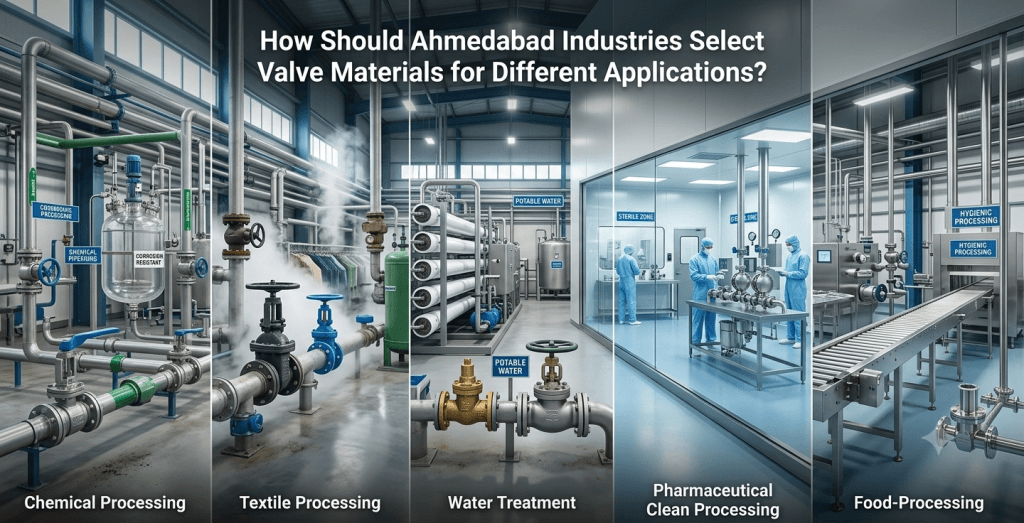
Different industries in Ahmedabad handle numerous fluids, temperatures, pressures, and working conditions, so valve materials need to be selected in line with the particular application. Chemical plants may also require sturdy chemical resistance, while pharmaceutical and meal-processing facilities regularly prioritise cleanliness and corrosion resistance. Textile, water-treatment, and manufacturing industries may additionally have particular necessities primarily based on their media and operating environments.
Before choosing a fabric, industries have to study the fluid, operating temperature, pressure, corrosion risk, flow conditions, and required service life. The valve frame, trim, stem, seats, and sealing components should additionally be checked for compatibility with the fluid. Choosing materials based mostly on real working conditions can reduce leakage, wear, corrosion, and sudden safety issues. It moreover allows groups to maintain stability, consistent overall performance, protection, and lifecycle cost.
Application-Based Valve Material Selection
- Chemical Processing: Select substances that may resist acids, alkalis, solvents, and other aggressive chemicals at the preferred recognition and temperature.
- Pharmaceutical Manufacturing: Choose hygienic and corrosion-resistant substances with appropriate floor finishes and sealing components to assist smooth processing.
- Textile Industry: Consider substances properly matched with dyes, chemical compounds, water, steam, and special system fluids utilized in material manufacturing operations.
- Water Treatment: Evaluate water chemistry, stress, temperature, and corrosion conditions when choosing materials for raw water, treated water, or wastewater systems.
- Food Processing: Prioritise hygienic, corrosion-resistant materials that can withstand cleaning techniques and meet the unique requirements of food-processing structures.
- General Manufacturing: Match valve materials to utilities and process media, which include air, water, steam, oil, and chemical substances, rather than using one cloth for every software program.
How Can Industries Balance Valve Cost, Quality, and Service Life?
Balancing valve cost, quality, and service life is crucial for industries that want reliable overall performance without unnecessary costs. A low-cost valve may also reduce the initial investment but can lead to higher maintenance, repair, or replacement costs if the material is not suitable for the application. On the other hand, selecting a completely specialised material can increase the purchase fee without presenting massive advantages. Industries therefore want to take a look at technical suitability alongside the initial cost.
A lifecycle-based approach allows groups to make better value valve picks. Factors such as installation, protection, inspection, downtime, replacement frequency, and predicted service life ought to be considered at the same time as comparing options. The notable valve isn’t always the least expensive one; however, it is the one that offers dependable performance over its anticipated service life. Proper enterprise valve material selection can assist in lessening overall possession costs while maintaining safety and efficiency.
Key Factors for Cost-Effective Valve Selection
- Initial Purchase Cost: Compare valve expenses while ensuring the selected fabric meets the required strain, temperature, fluid, and application specifications.
- Material Quality: Choose dependable materials that can withstand real-world operating conditions and reduce the risk of untimely element failure.
- Maintenance Requirements: Durable valve materials can reduce unnecessary inspections, protection, replacements, and associated maintenance expenses.
- Expected Service Life: Consider how long the valve is expected to function reliably beneath the preferred operating conditions before replacement is needed.
- Downtime Costs: Evaluate the financial impact of leakage, valve failure, manufacturing interruptions, and unplanned shutdowns while comparing valve alternatives.
- Total Cost of Ownership: Consider purchase, setup, protection, energy, downtime, and replacement charges to determine the valve’s long-term monetary cost.
What Should Industries Check Before Ordering Industrial Valves?
Before ordering industrial valves, Ahmedabad industries need to provide all facts about the intended software program and operating conditions. Details such as valve type, length, pressure rating, temperature, fluid type, application, connection type, and flow requirements help suppliers recommend suitable products. Accurate specifications additionally reduce the risk of selecting valves that might be incompatible with the method. Careful evaluation before purchase can improve reliability, safety, and long-term performance.
Industries must moreover assess company capabilities, technical documentation, testing strategies, and relevant industry requirements before placing an order. Material certificates, pressure-temperature ratings, inspection reports, and testing documents can help verify product quality and suitability. Businesses have to examine technical performance, company support, delivery requirements, and lifecycle cost as opposed to focusing mainly on price. Working with an expert industrial valve organization in Ahmedabad can similarly simplify the selection and purchasing process.
Key Checks Before Ordering Industrial Valves
- Valve Specifications: Confirm the specified valve type, length, strain elegance, connection type, and whether it meets the drift requirements and on-site conditions before placing the order.
- Process Fluid: Provide accurate information about the fluid, including awareness, temperature, corrosiveness, viscosity, and presence of suspended debris.
- Material Compatibility: Verify that the valve frame, trim, stem, seats, gaskets, and packing are well suited to the system medium.
- Pressure and Temperature Ratings: Check that the chosen valve can safely handle each ordinary operating situation and predicted strain or temperature conditions.
- Quality Documentation: Request applicable fabric certificates, inspection records, testing documents, and compliance records to verify product quality.
- Supplier Reliability: Evaluate the company’s technical expertise, product variety, quality practices, shipping capability, and after-sales support before finalising the acquisition.
Conclusion
Understanding how to choose the right valve materials for industries in Ahmedabad is important for attaining reliable flow control and reducing avoidable protection issues. The selection process should consider fluid type, chemical compatibility, temperature, pressure, corrosion resistance, mechanical requirements, actuator type, and expected operating conditions.
Material options need to additionally account for the valve’s body, trim, stem, seats, gaskets, and one kind of wetted additive in the choice, rather than focusing on the frame fabric by itself. Ahmedabad industries can enhance valve reliability with the useful resource of working with technically capable suppliers and obtaining complete technical specifications before ordering.
A well-chosen valve fabric can minimise corrosion, leakage, premature wear, and downtime, while also helping more steady and environmentally friendly plant operations. By balancing technical necessities with lifecycle fees, industries should make informed valve buying choices that deliver long-term value.
Explore Our Recent Blog
- Top Industrial Valve Suppliers in Ahmedabad: What to Look For
- Complete Guide to Industrial Valve Types for Ahmedabad Industries
- Best Industrial Valves for Water Treatment Plants in Ahmedabad
- Stainless Steel vs. Cast Iron Valves for Ahmedabad Industries
- Industrial Valve Problems and Maintenance Tips for Ahmedabad Factories
Frequently Asked Questions
1. What is the best material for commercial valves in Ahmedabad?
There isn’t always a single valve material that is excellent for every industrial software application. Carbon steel, stainless steel, forged iron, ductile iron, plastics, and specialised alloys can all be suitable for specific applications. The best option depends on the fluid, temperature, pressure, corrosion risk, and required service life.
2. Is chrome steel higher than carbon steel for business valves?
Stainless steel can provide better corrosion resistance in many applications, whilst carbon steel can offer a cost-effective balance of strength and overall performance for well-matched applications. Neither fabric is universally superior because suitability depends on the operating environment. Industries need to compare chemical compatibility, temperature, stress, protection necessities, and lifecycle value before they decide.
3. How does temperature have an impact on valve materiel preference?
Temperature can affect cloth strength, chemical resistance, dimensional stability, and sealing performance overall. High-temperature packages together with steam or thermal-fluid structures require substances that will function correctly within the unique temperature range. The valve body, trim, seat, gasket, and packing all need to be evaluated for the intended operating conditions.
4. Why is corrosion resistance vital for commercial valves?
Corrosion can weaken valve components and contribute to leakage, reduced standard performance, and premature failure. It is especially crucial when valves control corrosive substances, saline fluids, moisture, or other corrosive media. Selecting a properly matched fabric can help extend service life and reduce maintenance and replacement needs.
5. Can the same valve material be used for the duration of different industries?
A cloth that works well in one application won’t be suitable for every application because the conditions can vary drastically. For example, a valve handling clean water may additionally have very one-of-a-kind requirements from one managing focused chemicals or immoderate-temperature steam. Material selection ought to therefore be based mostly on the specific conditions of each setup.
6. How can Ahmedabad industries choose reliable valve providers?
Industries must observe a company’s product variety, technical knowledge, material alternatives, testing abilities, documentation, quality practices, and after-sales support. It is also useful to verify whether or not the dealer can offer valves suitable for the required pressure, temperature, technical medium, and industry software.