

Industrial valves are vital components in manufacturing plant life because they manipulate, regulate, isolate, and direct the movement of liquids, gases, steam, and specific media. From chemical and pharmaceutical centers to fabric, meal processing, engineering, and petrochemical flora, dependable valve performance is closely related to safe and green operations.
Regular inspection and maintenance can help identify problems before they lead to leakage, production interruptions, or equipment damage. A powerful Industrial Valve Maintenance Checklist for Ahmedabad Plants has to cover routine inspection, cleaning, lubrication, leakage detection, strain detection, actuator tests, and documentation.
Ahmedabad has a diverse employer base; because of this, valve protection needs can vary with working pressure, temperature, fluid properties, valve type, and application. A comprehensive preservation software program enables plant groups to maintain device reliability while reducing sudden downtime and extending valve service life.
What Should an Industrial Valve Maintenance Checklist Include?
A powerful enterprise valve preservation checklist needs to cover all major valve components, operating conditions, and potential symptoms and signs of failure. Regular inspections help find leakage, corrosion, wear, and mechanical problems before they affect plant operations. The checklist ought to be designed consistent with the valve type, software, strain, temperature, and media. A risk-based approach makes safety standards more consistent and easier to manage.
For Ahmedabad manufacturing plants, preventive valve protection needs to combine regular visual inspections with precise inspections and scheduled servicing. Maintenance organizations need to monitor valve overall performance, connections, sealing additives, and actuators at appropriate intervals. Any defects located in the course of inspection must be recorded and addressed in step with their severity.
Key Points to Include in an Industrial Valve Maintenance Checklist
- Visual Valve Inspection: Check the valve body, bonnet, stem, flanges, and surrounding areas for cracks, corrosion, bodily damage, or unusual conditions.
- Leakage Detection: Inspect valve seals, packing, joints, and connections for visible leakage and look into even minor leaks in advance, before they become critical.
- Valve Operation Check: Verify that the valve opens and closes effortlessly without excessive stress, sticking, vibration, or unusual rattling noise.
- Stem and Packing Inspection: Examine the valve stem and packing for corrosion, cracks, or deterioration, and replace damaged parts at the same time.
- Connections and Fasteners: Check bolts, nuts, flanges, threaded joints, and fittings for looseness, corrosion, or damage that could have an impact on machine integrity.
- Maintenance Documentation: Record inspection dates, defects, maintenance, possible additives, and check consequences to reveal the valve scenario and plan future maintenance.
How Often Should Industrial Valves Be Inspected in Manufacturing Plants?
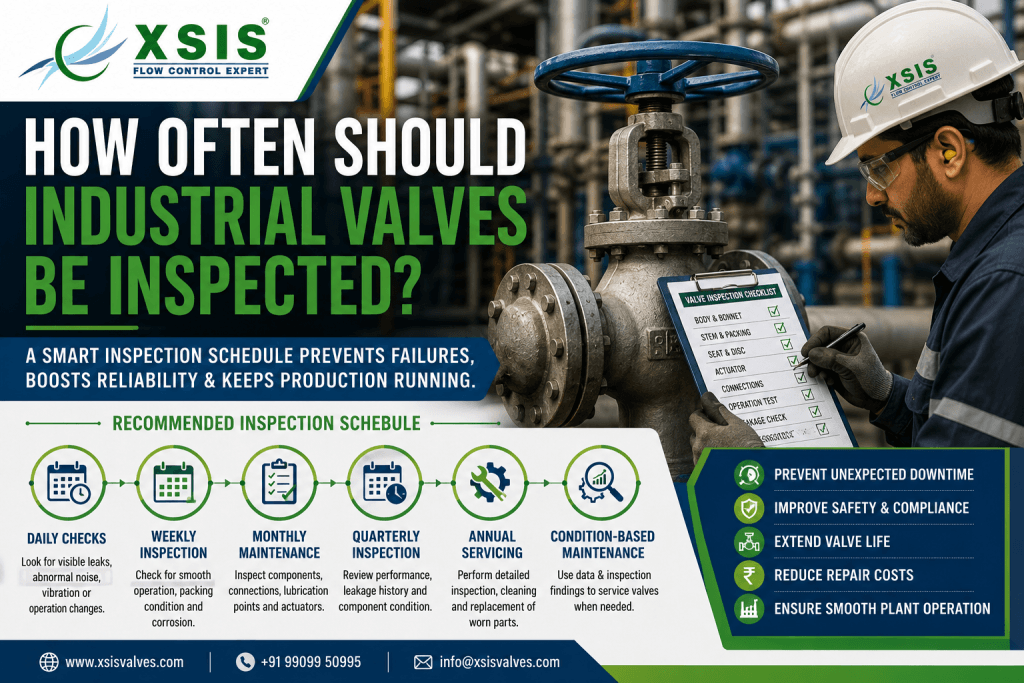
The frequency of commercial enterprise valve inspection is based on elements such as valve type, operating pressure, temperature, media, operating cycles, and equipment criticality. Valves operating in harsh environments may additionally require more frequent inspections than those running under normal conditions. Manufacturers need to set up inspection schedules based on operating risks and manufacturer guidelines. Regular tracking can help identify growing issues earlier than they cause sudden downtime.
A practical safety software application can combine everyday operator checks with weekly, monthly, quarterly, and annual inspections. Critical valves need to receive closer attention, particularly when they control excessive-strain, excessive-temperature, corrosive, or volatile media. Maintenance records can also assist in identifying routine issues and adjusting inspection periods as needed. Condition-based, truly honest maintenance can similarly enhance overall performance by focusing attention on valves showing signs and symptoms of deterioration.
Recommended Industrial Valve Inspection Schedule
- Daily Checks: Operators ought to look for visible leakage, unusual vibration, odd noise, or changes in valve operation in the course of ordinary plant operations.
- Weekly Inspection: Frequently operated valves may be checked for smooth movement, packing condition, corrosion, and visible signs and symptoms of mechanical deterioration.
- Monthly Maintenance: Maintenance teams ought to examine essential components, connections, lubrication factors, and actuator assemblies for early signs of harm or malfunction.
- Quarterly Inspection: Conduct an in-depth evaluation of valve primary performance, leakage statistics, actuator operation, and detailed circumstances based entirely on previous safety statistics.
- Annual Servicing: Critical valves can also require complete cleaning, testing, detailed inspection, and replacement of worn components regularly, per producer recommendations.
- Condition-Based Maintenance: Use inspection findings, going-for-walks information, and failure data to decide whether valves require servicing or closer monitoring.
What Are the Most Common Industrial Valve Problems?
Industrial valves in Ahmedabad can cause major mechanical and operational issues because of improper use, stress fluctuations, corrosion, contamination, incorrect setup, or improper operating conditions. Common problems consist of leakage, sticking, damaged stems, worn sealing additives, and actuator failure. Identifying those issues at an early stage can help prevent costly repairs and unexpected production interruptions. Regular valve inspection permits maintenance.
Manufacturing plants need to pay special attention to valves operating under extreme pressure, extreme temperature, or corrosive and abrasive working conditions. The type of media and frequency of operation can also have an impact on a valve’s overall performance and service life. A systematic preservation software program application enables determining the purpose of valve problems and picking the right corrective action.
Common Industrial Valve Problems to Monitor
- Valve Leakage: Leakage can also occur through the valve frame, stem packing, flange connections, seals, or inner closure additives and needs to be investigated properly.
- Stem Damage: Bent, corroded, scored, or worn valve stems could make operation difficult and might prevent the valve from opening or closing effectively.
- Packing Failure: Damaged or deteriorated packing can cause leakage across the valve stem, mainly in often operated or demanding applications.
- Corrosion and Erosion: Corrosive or abrasive system media can little by little harm valve surfaces, reduce material thickness, and have an impact on sealing and overall performance.
- Sticking or Difficult Operation: Excessive working stress can also additionally endorse inner deposits, insufficient lubrication, damaged components, or mechanical problems.
- Actuator Malfunction: Pneumatic, electric-powered, or hydraulic actuators can also experience connection, control, or movement problems that prevent automatic valves from responding properly.
How Can Manufacturing Plants Prevent Valve Leakage?
Preventing valve leakage calls for correct valve choice, correct setup, regular inspection, and well-timed protection. Manufacturing plants need to select valve materials, seals, gaskets, and packing that are well suited to the process media, stress, and temperature. Routine inspections can help find out minor leaks earlier than they become excessive disasters. A proactive approach additionally helps shield machines, human beings, and primary manufacturing performance.
Maintenance companies also need to check flange alignment, strain situations, fastener tightness, and the condition of internal sealing components. Improper installation, excessive tightening, pressure fluctuations, and factors placed on the valve can all contribute to leakage. Following manufacturer recommendations and implementing preventive measures can enhance valve performance. Prompt corrective action is crucial each time leakage is detected, in time for scheduled inspections.
Key Measures to Prevent Industrial Valve Leakage
- Inspect Sealing Components: Check gaskets, packing, O-rings, and valve seats for wear, cracks, or deterioration, and replace broken components immediately.
- Check Flange Alignment: Ensure connected piping and flanges are properly aligned to save you from unnecessary mechanical strain at the valve and sealing surfaces.
- Monitor Pressure Conditions: Keep operating pressure within the valve’s specific limits and investigate surprising strain fluctuations that could have an impact on the valve’s overall performance.
- Use Compatible Materials: Select valve bodies, seals, gaskets, and packing that are suitable for the process fluid, temperature, pressure, and jogging environment.
- Follow Correct Tightening Practices: Tighten fasteners and packing in step with recommended strategies, avoiding excessive pressure and insufficient tightening.
- Repair Leaks Promptly: Investigate and address recognized leaks as quickly as possible to prevent element damage, safety hazards, and unnecessary downtime.
Which Valve Components Require Regular Maintenance?
Industrial valves encompass several components that work collectively to govern, alter, or isolate the system along with the flow. Regular protection of these components helps prevent leakage, wear, corrosion, and unexpected valve failure. The specific maintenance necessities can vary depending on the valve type, operating conditions, and application. Inspecting key components allows maintenance teams to identify issues early.
Manufacturing plants must pay close attention to components exposed to pressure, motion, friction, temperature, and media. Valves used in harsh applications may also require extra routine inspections and replacement of worn parts. Maintenance teams need to comply with manufacturer guidelines and plant strategies. Proper issue care can improve valve reliability, safety, and service life.
Key Valve Components to Inspect Regularly
- Valve Body: Inspect the frame for cracks, corrosion, erosion, and structural damage that would affect pressure containment and stable operation.
- Valve Stem: Check the stem for bending, corrosion, scoring, and wear to ensure clean and dependable valve movement.
- Valve Seat: Examine the seat for pitting, deposits, or damage that could prevent proper shutoff or have an effect on go-with-the-flow control performance.
- Packing and Seals: Inspect packing, O-rings, gaskets, and other sealing additives for deterioration, wear, or symptoms of leakage.
- Actuator Assembly: Check pneumatic, electric-powered, or hydraulic actuators for correct motion, solid connections, and accurate response to control signals.
- Bolts and Connections: Examine bolts, flanges, threaded joints, and fasteners for corrosion, looseness, or damage that could compromise tool integrity.
How Does Preventive Valve Maintenance Reduce Manufacturing Downtime?
Preventive valve upkeep enables production teams to find developing problems earlier than they result in unexpected tool failure. Regular inspections can detect leakage, corrosion, worn components, sticking, and actuator issues even as the valve stays operational. Addressing these issues during planned maintenance is usually more cost-effective than responding to unexpected breakdowns. A well-implemented maintenance software program can consequently assist preventive production and better device reliability.
For Ahmedabad production plants, planned valve upkeep can also help maintenance teams arrange spare parts, systems, workforce, and service activities in advance. Maintenance statistics offer useful data on routine failures and performance over the years. Plants can use these records to timetable preservation inside the path of deliberate shutdowns or low-production periods. This reduces the risk of sudden valve-related interruptions and helps maintain smooth plant operations.
Ways Preventive Valve Maintenance Reduces Downtime
- Early Problem Detection: Routine inspections can detect leakage, corrosion, unusual movement, and trouble in advance, before those troubles end up in major valve failures.
- Reduced Emergency Repairs: Planned servicing minimizes sudden breakdowns and offers maintenance teams sufficient time to install equipment, spare parts, and assets.
- Improved Equipment Reliability: Properly maintained valves are more likely to operate continuously, supporting robust operations and reliable plant performance.
- Longer Component Life: Cleaning, lubrication, adjustment, and timely replacement of worn elements can lessen unnecessary stress and increase valve service life.
- Better Production Planning: Maintenance teams can schedule valve servicing during planned shutdowns or suitable production periods to limit operational disruption.
- Lower Maintenance Costs: Detecting and correcting small defects early can lessen major repair expenses and reduce losses associated with unplanned production stoppages.
What Safety Checks Should Be Performed During Industrial Valve Maintenance?
Industrial valve maintenance calls for careful protection planning because valves may also involve pressurised, heated, poisonous, corrosive, or dangerous process media. Before starting any protection work, technicians want to understand the valve’s operating conditions and review the plant’s installation protection procedures. Proper isolation and pressure verification are crucial before reading or dismantling valve components. These precautions help reduce the danger of injuries, equipment damage, and unintended exposure.
Maintenance groups must also not forget the area of the valve, related tools, and capability method risks before beginning work. Appropriate personal protective equipment should be selected based on the nature of the maintenance task and the equipment involved. Tools and finding-out devices should be inspected in advance before use and handled properly. After servicing, the valve ought to be very well reassembled, tested, and returned to operation steadily with conventional tactics.
Essential Safety Checks for Industrial Valve Maintenance
- Isolate the Valve: Confirm that the valve and linked device are properly isolated to prevent unexpected flow or pressure in the direction of maintenance.
- Verify Zero Pressure: Release and verify all trapped stress before starting or dismantling the valve, as opposed to depending on handiness on closed upstream or downstream valves.
- Control Hazardous Media: Follow legal methods for draining, venting, flushing, or containing chemicals, gases, steam, or other risky device media.
- Use Appropriate PPE: Wear shielding tools suitable for the undertaking and approach surroundings, such as gloves, eye protection, protective gear, and safety shoes where required.
- Inspect Tools and Equipment: Ensure that protection gear, lifting devices, testing equipment, and other machines are suitable, practical, and secure for the intended assignment.
- Restore and Test Safely: Check that all additives and connections are successfully reassembled before testing and returning the valve to regular service.
How Can Ahmedabad Manufacturing Plants Create a Better Valve Maintenance Program?
Creating an effective valve protection software program requires a systematic method for inspection, servicing, documentation, and safety. Ahmedabad production facilities need to take into account valve type, operating conditions, operating frequency, and equipment criticality when developing maintenance schedules. Critical valves may additionally require more frequent inspections and continuous performance monitoring. A software-based program enables maintenance organizations to become aware of potential failures and take corrective action in a timely manner.
Plants should additionally hold accurate information on valve specs, inspection findings, repairs, replacements, and testing activities. Standardised tactics can assist safety personnel to perform inspections continuously during one-of-a-kind production areas. Training personnel and keeping critical spare components can further lessen delays at some point of corrective safety. Regularly reviewing maintenance data lets the plant improve schedules and increase long-term valve reliability.
Key Steps for a Better Industrial Valve Maintenance Program
- Create a Valve Register: Record valve identification numbers, types, sizes, materials, locations, applications, and safety records for much less complicated monitoring and planning.
- Classify Valve Criticality: Identify valves that would drastically impact safety, production, quality, or environmental performance and prioritise their preservation as an end result.
- Standardise Inspection Procedures: Establish everyday inspection steps for operators and maintenance companies to improve reliability and make findings much less complex to evaluate.
- Maintain Spare Components: Keep vital alternative components on hand, gaskets, seals, and suitable components available for crucial valves to reduce restoration delays.
- Train Maintenance Personnel: Provide suitable education on valve production, operation, inspection, repair techniques, and relevant plant safety requirements.
- Review Maintenance Records: Analyse inspection outcomes, leakage incidents, repair frequency, and common screw-ups to extend service intervals and understand normal troubles.
Conclusion
Industrial valves play an essential role in controlling and preserving various systems throughout manufacturing centers. Regular inspections help identify leakage, corrosion, packing problems, actuator issues, and mechanical wear before they cause major operational problems. A maintenance approach can consequently guide machine reliability, workplace safety, and manufacturing continuity.
An effective Industrial Valve Maintenance Checklist for Ahmedabad Plants need to be custom-designed consistent with valve type, operating conditions, running frequency, and criticality. By combining routine inspections, preventive servicing, safety checks, accurate documentation, and trained protection employees, production facilities can reduce unexpected screw-ups and benefit from more reliable overall valve performance over the long term.
Explore Our Recent Blog
- Top Applications of Ball Valves Across Ahmedabad Industries
- Gate Valves in Ahmedabad: Features, Benefits, and Industrial Applications
- Globe Valves in Ahmedabad: Working Principle and Common Uses
- Check Valves in Ahmedabad: Types, Benefits, and Installation Guide
- High-Pressure Industrial Valves in Ahmedabad
Frequently Asked Questions
1. What is an industrial valve maintenance checklist?
An industrial valve preservation checklist is an established list of inspection and servicing steps used to assess valve condition and performance. It can consist of leakage checks, issue inspections, lubrication, actuator testing, connection tests, and preservation documentation. The checklist has to be tailored to the valve type, equipment conditions, manufacturer’s recommendations, and plant safety procedures.
2. How often should industrial valves be maintained?
Maintenance frequency relies upon valve type, working conditions, criticality, operating cycles, and process media. Frequently operated or vital valves can also moreover require more not unusual inspections than valves implemented in an entire lot much less stressful applications. Manufacturing plant life needs to combine normal operator assessments with deliberate preventive protection and condition-based total exams.
3. What are the signs that an industrial valve needs repair?
Common warning signs and symptoms include external leakage, difficult operation, unusual noise, vibration, corrosion, broken packing, incomplete sealing, and actuator malfunction. Changes in the device’s general performance can also mean an internal valve issue. Any unusual circumstance should be investigated early before it develops into a bigger failure.
4. Why is preventive valve maintenance important for manufacturing plants?
Preventive valve protection helps you identify developing defects earlier before they cause unexpected system failure. It can lessen unplanned downtime, improve valve reliability, increase issue lifestyles, and support more stable plant operations. Regular protection furthermore provides useful information for planning inspections and upkeep.
5. Which industrial valves require the most maintenance?
Maintenance requirements depend more on working conditions and valve criticality than on valve type itself. Control valves, regularly operated valves, high-strain valves, and valves exposed to corrosive or abrasive media may require closer monitoring. The suitable protection time desk must be set up in keeping with company conditions and producer steering.
6. How can Ahmedabad plants improve industrial valve reliability?
Ahmedabad production facilities can enhance valve reliability with the beneficial aid of putting in preventive maintenance schedules, retaining valve records, training employees, tracking leakage, maintaining appropriate spare components, and reviewing protection information. Valve choice and cloth compatibility are also important for annoying packages.